
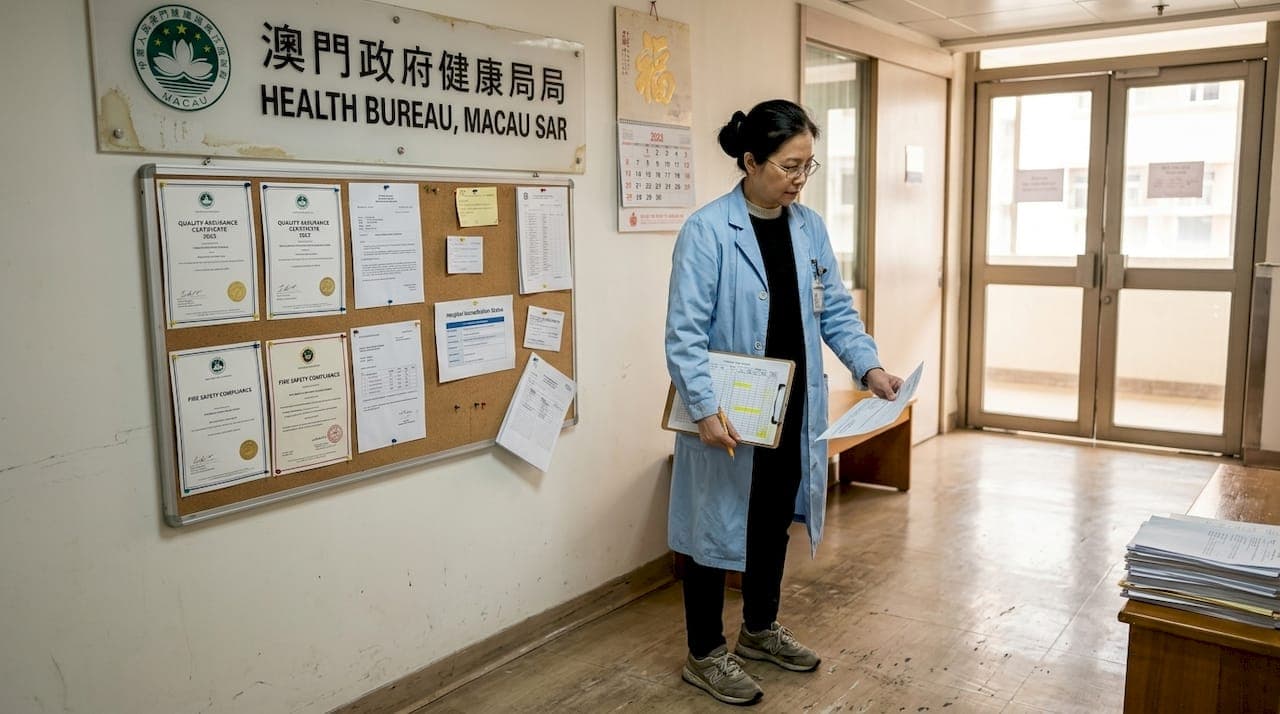
Patients who lack trust in their healthcare providers are significantly more likely to delay or avoid care altogether. For international patients visiting Macau for outpatient services or wellness treatments, this is not a minor concern. It directly affects your safety, your outcomes, and the value you get from every appointment. Trust in qualified staff is linked to lower odds of care delays, meaning who you choose to treat you matters as much as what treatment you receive. This guide breaks down what staff qualification actually means in Macau, how the regulatory system protects you, and how to make confident, informed choices.
Table of Contents
- What does 'qualified medical staff' really mean?
- Regulation and accreditation: Safeguards in Macau's healthcare system
- The direct patient benefits of trusting qualified staff
- Common challenges and real-world solutions in Macau
- Choose your care with confidence at Globallmed Macau
- Frequently asked questions
Key Takeaways
| Point | Details |
|---|---|
| Licensing is strictly regulated | Only licensed professionals can practice in Macau, ensuring a high baseline of trust. |
| Accreditation means higher safety | Hospitals and clinics with international accreditation maintain advanced safety and qualification standards. |
| Trust leads to better outcomes | Patients who trust staff experience fewer delays and overall better care. |
| Know how to verify qualifications | Ask for visible credentials and confirm provider accreditation when seeking medical or wellness services. |
What does 'qualified medical staff' really mean?
The word "qualified" gets used loosely. A spa technician and a licensed physician can both claim to offer "professional" services, but the gap between them is enormous. In Macau's healthcare context, a qualified medical professional holds a recognized academic degree, has completed supervised clinical training, and is actively licensed to practice under government oversight.
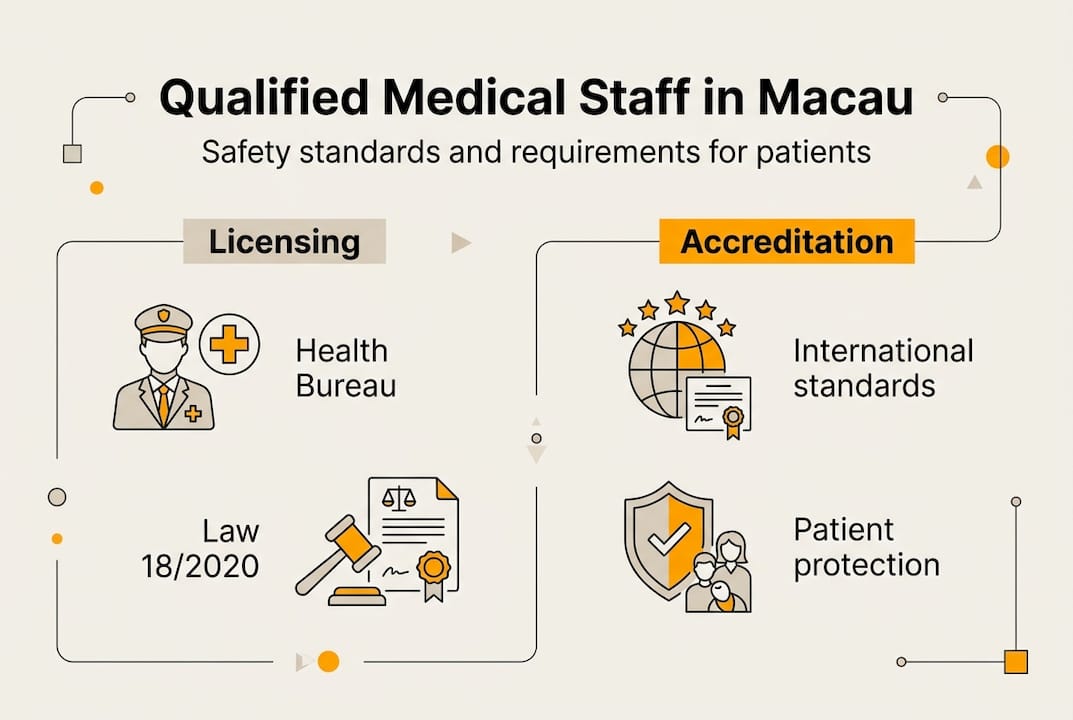
Macau's Health Bureau enforces this through Law No. 18/2020, which governs the registration and practice of healthcare professionals. With 2.9 licensed doctors per 1,000 population regulated under this framework, Macau maintains a structured system that filters out unqualified practitioners. That said, not every clinic or wellness center operates under the same scrutiny. Some beauty and wellness businesses fall into regulatory gray areas, which is why you need to know what to look for.
Here are the key indicators that separate genuinely qualified providers from those who simply appear professional:
- Government registration: Staff should be registered with the Health Bureau and able to provide their license number on request.
- Verifiable credentials: Degrees and certifications should be from recognized institutions, not unverifiable online programs.
- Ongoing training: Qualified professionals participate in continuing medical education, not just initial licensing.
- Transparent communication: They explain procedures, risks, and alternatives clearly, without pressure.
- Facility standards: The clinic should meet hygiene, equipment, and safety requirements set by local regulators.
Understanding medical standards in Macau is the first step toward protecting yourself as a patient. If a provider cannot or will not share their credentials, that is a red flag worth taking seriously.
Pro Tip: Before your first appointment, ask the clinic directly which regulatory body oversees their staff and whether their practitioners are registered with the Health Bureau. A trustworthy provider will answer without hesitation.
Regulation and accreditation: Safeguards in Macau's healthcare system
Knowing what makes a provider qualified leads naturally to the next question: who holds them accountable? In Macau, that accountability comes from two directions: government regulation and international accreditation.
The Health Bureau sets baseline requirements for all licensed practitioners. But international accreditation goes further. It involves independent, external assessment of a facility's systems, staff qualifications, training protocols, and patient safety practices. ACHS accreditation with an "Excellent Rating" in the Person-Centred System, held by Macau's main public hospital CHCSJ, signals that the facility meets rigorous international benchmarks, not just local minimums.
This matters especially for international patients, because accreditation provides a standardized, globally recognized measure of quality. You do not need to interpret local regulations from scratch. You can look for recognized accreditation marks and know that rigorous staff qualification checks and continuous training are already built into the system.
Here is a quick comparison of what different oversight levels mean for you as a patient:
| Oversight level | What it covers | What it means for you |
|---|---|---|
| Government licensing | Basic eligibility to practice | Minimum legal standard met |
| Health Bureau registration | Active, current license verification | Provider is legally authorized |
| International accreditation (ACHS) | Systems, training, safety, patient care | Independently verified high standards |
| Ongoing quality improvement | Continuous staff development | Care quality improves over time |
"Accreditation is not a one-time award. It requires facilities to demonstrate continuous improvement in staff training, patient safety, and care quality, which means the standard you experience today is actively maintained."
For international patients, understanding safe treatment standards before you book is one of the most practical steps you can take.
The direct patient benefits of trusting qualified staff
With regulations and qualifications in place, the real question is: what does this mean for your actual experience as a patient?
Research is clear on this point. Patients who trust their healthcare providers experience fewer delays in seeking care, better access to services, and higher overall satisfaction. Trust is not just a feeling. It is a measurable factor that shapes whether you follow through on treatment, communicate openly with your provider, and return for follow-up care.
Here is how trust in qualified staff translates into tangible outcomes:
- Fewer delays in care: Patients who trust their providers seek help earlier, which often means catching issues before they escalate.
- Better treatment adherence: When you trust the person advising you, you are more likely to follow through on prescribed treatments or lifestyle changes.
- More open communication: Trust creates space for honest conversations about symptoms, concerns, and preferences, leading to more accurate diagnoses.
- Higher satisfaction: Patients who feel safe and respected report better overall experiences, regardless of the complexity of their treatment.
- Improved long-term outcomes: Consistent, trusted care relationships support better health management over time.
For international patients navigating an unfamiliar healthcare system, this is especially relevant. You may not speak the local language fluently. You may be unsure which provider to choose. Starting with a qualified, accredited provider removes a significant layer of uncertainty. Learning about personalized healthcare in Macau can help you understand what a tailored, trust-based care experience looks like in practice.
Key stat: Patients who trust qualified medical staff show measurably lower odds of delaying necessary care, a finding consistent across multiple healthcare systems and patient populations.
If you are also exploring wellness services alongside medical care, reviewing wellness consultation tips will help you apply the same trust-based framework to non-clinical settings.
Common challenges and real-world solutions in Macau
Even a well-regulated system faces real-world pressures. Macau is no exception. Historically, the territory has faced staff shortages addressed by recruiting specialists from mainland China and internationally, a strategy that has helped maintain service levels but also introduced variability in training backgrounds and communication styles.
For international patients, this variability is worth understanding. Here is what you should know and do:
- Ask about language support: Many qualified providers in Macau speak Cantonese, Mandarin, and Portuguese. English-speaking staff or interpreters may be available at private outpatient centers. Confirm this before your appointment.
- Request credential verification: You have every right to ask for a practitioner's registration number and verify it with the Health Bureau. Reputable clinics will support this process.
- Check for staff continuity: Frequent staff turnover can signal instability. A clinic with a consistent, long-term team is generally a stronger indicator of quality.
- Look beyond the reception area: The front desk experience does not always reflect clinical standards. Ask specifically about the qualifications of the practitioner who will treat you.
- Use accredited or registered facilities: Private outpatient centers that operate under Health Bureau oversight and follow recognized standards offer a more reliable baseline.
Pro Tip: When researching providers, check whether the clinic lists its medical team by name and credential on its website. Transparency about who is treating you is one of the clearest signs of a trustworthy operation.
For a closer look at what a qualified outpatient team looks like in practice, the Macau outpatient clinic staff at Globallmed provides a useful reference point for the kind of transparency and credential visibility you should expect.

Choose your care with confidence at Globallmed Macau
Now that you understand why qualification and trust are the foundation of safe, effective care, the next step is finding a provider in Macau that meets those standards consistently. At Globallmed, every practitioner on our team is licensed, registered with the Health Bureau, and selected based on verified clinical credentials and experience.
Our medical center operates in full compliance with Macau's regulatory framework, and our departments participate in ongoing quality improvement to ensure the care you receive today reflects current best practices. International patients benefit from language support, transparent communication about procedures and costs, and a team that prioritizes your safety at every step. Whether you are seeking medical consultation, diagnostic services, or wellness treatments, our medical clinic department and wellness and wellbeing department are structured to give you confidence from your first contact through your final follow-up.
Frequently asked questions
How are medical staff qualifications verified in Macau?
The Health Bureau of Macau verifies qualifications under Law No. 18/2020, ensuring only trained and licensed professionals are permitted to practice. You can request a practitioner's registration number and confirm it directly with the Bureau.
What does international accreditation mean for Macau hospitals?
It means the facility has been independently assessed on staff qualifications, patient safety, and care quality by an organization like ACHS. ACHS accreditation with an "Excellent Rating" signals that standards are actively maintained, not just initially met.
How does trusting medical staff impact my outpatient experience?
Patients who trust qualified providers seek care earlier, follow through on treatment more consistently, and report higher satisfaction. Trust reduces the friction that often leads to delayed or avoided care.
What are the signs of a trustworthy outpatient or wellness provider in Macau?
Look for government registration, visible staff credentials, evidence of accreditation, and a willingness to answer questions about qualifications. Rigorous accreditation standards like those enforced by ACHS include continuous staff training and quality checks, which you should be able to ask about directly.