
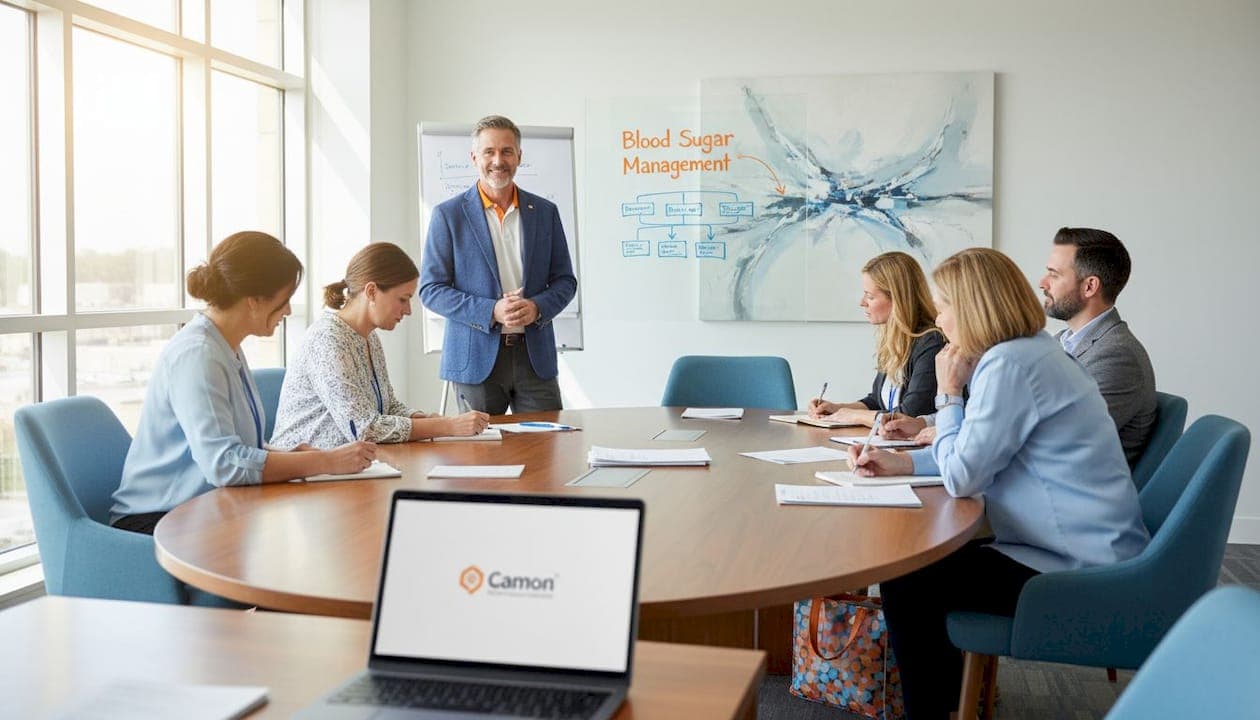
You already know you should eat well, take your medications, and follow your doctor's advice. Yet knowing these things and actually doing them consistently are two very different challenges. Research consistently shows that simply handing a patient a brochure or sending them home with a website link does little to change real health behaviors. Patient education sessions bridge that gap by combining structured knowledge, expert interaction, and practical skill-building into a format that actually moves the needle on your health. For patients in Macau and neighboring regions, these sessions are more accessible than many people realize, and the benefits go far beyond feeling informed.
Table of Contents
- What are patient education sessions?
- How patient education sessions improve health and self-management
- What determines the effectiveness of education sessions?
- Common misconceptions and limits of patient education sessions
- What to expect and how to get started in Macau
- Why information isn't enough: A closer look at what really changes health outcomes
- Take the next step: Find the right patient education session for you
- Frequently asked questions
Key Takeaways
| Point | Details |
|---|---|
| Knowledge isn’t enough | True health improvement comes from learning practical skills and self-management, not just information. |
| Evidence-backed benefits | Education sessions improve knowledge, confidence, and for some conditions, clinical results like HbA1c. |
| Personalization matters | Tailoring the format and content of sessions to patients’ needs and preferences boosts impact. |
| Results can vary | Not all sessions deliver the same outcomes, so ongoing evaluation and realistic expectations are key. |
| Local access in Macau | Public and clinic-based education options in Macau offer direct support and expert Q&A for better health. |
What are patient education sessions?
Patient education sessions are structured programs designed to improve your knowledge, sharpen your self-management skills, and give you direct access to healthcare professionals who can answer your specific questions. They are not the same as reading an article or watching a YouTube video. These sessions have defined goals, trained facilitators, and clear feedback mechanisms that help you apply what you learn to your own situation.
The core goals of a typical session include:
- Teaching practical skills for managing a chronic condition such as diabetes, hypertension, or heart disease
- Reducing anxiety and fear related to diagnoses or treatment plans
- Building confidence so you can make informed decisions between clinic visits
- Creating space for genuine Q&A with doctors, nurses, or specialists
- Connecting you with other patients who are navigating similar experiences
A systematic review of cancer patient education covering 27 studies confirmed that well-designed education sessions improve patient knowledge, psychological well-being, and self-management across a range of conditions. That evidence applies well beyond oncology. The same principles work for chronic disease, post-surgical recovery, and preventive care.
"Education is not the filling of a pail, but the lighting of a fire." This old idea captures something important: the goal is not to stuff you full of facts but to help you engage actively with your own health journey.
In Macau, this model is already in motion. Public health lectures in Macau hosted at institutions like the Macao Union Medical Center give residents direct access to face-to-face Q&A with medical professionals, allowing genuine two-way interaction rather than passive information delivery. Formats vary widely, from one-on-one consultations and small group workshops to digital learning modules and large community lectures. Understanding which format suits your needs is your first practical step, and learning more about best practices for outpatient education can help you navigate those choices.
You can also explore the range of outpatient consultation types in Macau to see how education sessions fit within the broader picture of outpatient care.
How patient education sessions improve health and self-management
With a solid understanding of what education sessions are, it's important to unpack how they make a measurable difference for your health and daily life.
The evidence for patient education sessions is strong across multiple dimensions. Research shows that patients who participate in structured education experience improvements in psychological well-being, reductions in anxiety, and measurable gains in condition-specific knowledge. These aren't soft benefits. When you feel less afraid of your diagnosis and understand your treatment plan, you are significantly more likely to follow through on medical recommendations and catch warning signs early.
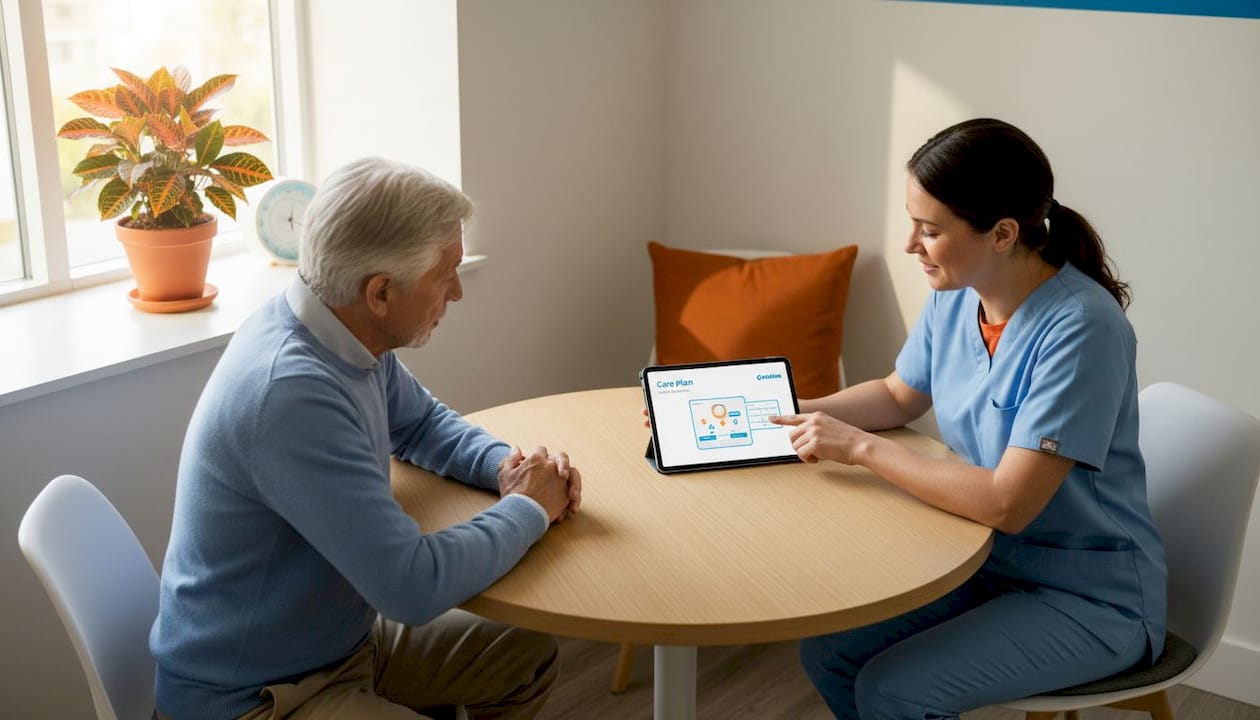
For patients managing diabetes, the results are even more concrete. Diabetes self-management education has been shown in an umbrella review of meta-analyses to produce measurable reductions in HbA1c, which is the blood sugar marker your doctor uses to assess long-term diabetes control. A lower HbA1c means a reduced risk of serious complications including kidney disease, nerve damage, and vision loss.
Here is a snapshot of the types of outcomes you can realistically expect from well-designed education sessions:
| Outcome area | Strength of evidence | Example benefit |
|---|---|---|
| Condition knowledge | Strong | Better understanding of medication and symptoms |
| Psychological well-being | Strong | Reduced anxiety about diagnosis and treatment |
| Self-management behavior | Moderate to strong | Improved medication adherence |
| HbA1c in diabetes | Moderate to strong | Lower blood sugar long-term |
| Physical function | Moderate | Improved activity levels in some conditions |
| Clinical endpoints | Variable | Depends on condition and program design |
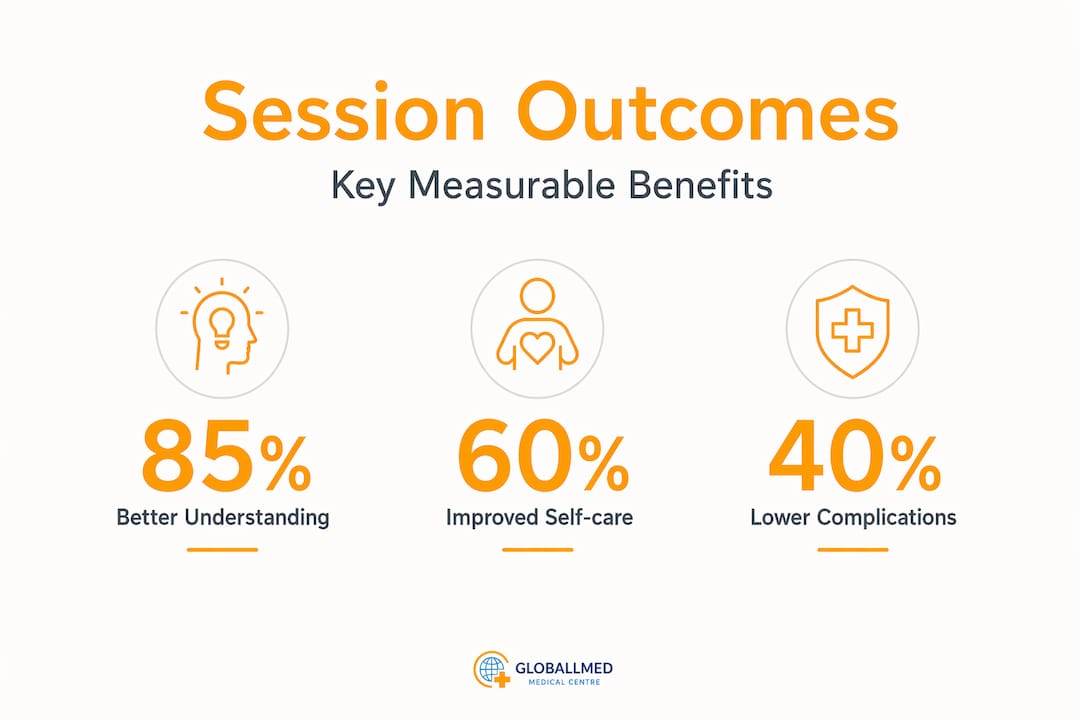
The WHO identifies patient education and self-management support as central pillars of effective chronic disease management. This is not optional guidance. It reflects decades of global evidence showing that health systems that invest in education produce better outcomes at lower overall cost.
To get the most from any session, follow these four steps:
- Identify your primary concern before you arrive. Knowing your top question helps you use the session time more effectively.
- Engage actively. Ask follow-up questions, clarify anything that isn't clear, and take notes you can review at home.
- Apply one new action before your next appointment. Behavioral change happens in small, consistent steps, not all at once.
- Track your own progress. Write down your symptoms, medication responses, or activity levels so you have real data to discuss next time.
Pro Tip: Bring a small notebook or use your phone's notes app during sessions. Reviewing what you wrote within 24 hours significantly improves how much information you retain and act on.
For patients managing long-term conditions, combining session attendance with solid chronic disease management strategies and exploring options like telemedicine for education access can extend the benefits between in-person visits.
What determines the effectiveness of education sessions?
Not all sessions guarantee the same benefits, so let's break down what makes education efforts truly impactful and where they sometimes fall short.
The format of a session matters less than you might think. A network meta-analysis comparing educational formats in breast cancer survivors found that no single delivery modality was statistically superior to others when compared against usual care. In other words, whether a session is online, in-person, in a group, or one-on-one, delivery style alone does not determine success. What does matter is how well the session fits your specific situation, preferences, and readiness to engage.
Evidence from systematic reviews of cancer patient education consistently shows that combining multiple formats, pairing written materials with verbal instruction, adding hands-on practice, or mixing group sessions with individual follow-up, boosts outcomes significantly compared to relying on one approach alone.
Here's a quick comparison of common formats to help you think about what suits your lifestyle:
| Format | Best for | Potential limits |
|---|---|---|
| Group lecture | Building foundational knowledge | Less personalized Q&A time |
| One-on-one consultation | Personalized plans and sensitive topics | Less peer support |
| Written materials | Reference and self-paced review | Passive; no interaction |
| Digital modules | Flexible scheduling and visual learners | Requires tech access and motivation |
| Mixed format | Most patients across conditions | Requires good program coordination |
Key factors that drive effectiveness include:
- Tailored content. A session for a newly diagnosed 40-year-old patient should feel different from one designed for a patient who has managed their condition for a decade.
- Patient preference. Sessions that align with how you prefer to learn are sessions you will actually complete and return to.
- Feasibility. The best program in the world is useless if it doesn't fit your schedule, language, or mobility needs.
- Continuity. One-time sessions rarely produce lasting change. Regular follow-up and reinforcement matter enormously.
The best education session is not the most sophisticated one. It's the one that meets you where you are and gives you something you can act on today.
Pro Tip: Before signing up for any session, ask the organizer about the session format, who delivers it, and whether there is a follow-up component. This one simple step helps you filter out low-quality programs before investing your time.
If mental health is part of your health picture, exploring proactive mental wellness approaches alongside education sessions can significantly strengthen your overall outcomes. You can also learn more about what personalized healthcare looks like in practice.
Common misconceptions and limits of patient education sessions
Understanding what works is half the story. The other half is knowing where evidence is limited and how to be strategic as an informed patient.
Patient education sessions are genuinely valuable, but they are not miracle programs. A critical read of the research reveals important nuance. A systematic review and meta-analysis on patient activation in type 2 diabetes found that while education programs showed moderate benefits for some metrics, effects on other clinical endpoints were often inconclusive or weak. This means you should approach sessions as one powerful tool in your overall care strategy, not a standalone solution.
Here are the most important things to get right about what education sessions can and cannot do:
- They improve knowledge reliably. Almost every well-designed program improves what patients understand about their condition. That's consistent.
- They support mental health and reduce anxiety. This is one of the strongest and most consistent findings across conditions.
- They don't guarantee clinical improvements on every measure. Blood pressure, cholesterol, or specific lab values may or may not improve based on the quality of the program and individual factors.
- They work best when evaluated regularly. Sessions that include patient feedback loops and measure outcomes over time perform significantly better than those that don't.
Patient education is not a prescription you fill once and walk away from. It's an ongoing process that needs to evolve as your health needs evolve.
Setting realistic expectations before you start is one of the most important things you can do. If you attend a session hoping it will replace your medication or eliminate your need for regular follow-up appointments, you'll be disappointed. But if you attend hoping to feel more confident, ask better questions, and build smarter daily habits, you will almost certainly leave with those gains.
Reviewing the evidence on wellness program outcomes can help you set the right benchmarks for what to expect before your first session.
What to expect and how to get started in Macau
With stronger, more realistic expectations set, here's how you can take practical steps to join and benefit from sessions right here in Macau.
Finding a patient education session in Macau is more straightforward than many patients assume. Public health lectures hosted in Macau by institutions such as the Macao Union Medical Center offer accessible entry points, featuring face-to-face interaction with medical professionals and open participation for community members. These sessions often cover chronic conditions, preventive health, and lifestyle management topics.
Here's what you can realistically expect when you attend your first session:
- A structured presentation covering key information about the topic, delivered by a trained healthcare professional
- Time for Q&A where you can ask questions specific to your own situation
- Handouts or resources you can refer back to at home
- Referrals to additional services or specialists if needed
- In some cases, practical demonstrations or group exercises
To get the absolute most from your session experience:
- Arrive early to review any materials provided before the session starts
- Write down your top three questions the night before so you don't forget them under pressure
- Bring a family member or caregiver when possible. Having a support person who heard the same information helps reinforce and apply what was discussed at home
- Follow up with your primary physician after the session to connect what you learned with your personal treatment plan
Pro Tip: If language is a concern, contact the organizing clinic beforehand to ask about translation support or materials in your preferred language. Many programs in Macau accommodate Cantonese, Mandarin, Portuguese, and English speakers.
For a broader look at the types of services available locally, exploring outpatient health services in Macau gives you a useful overview of what's available before you commit.
Why information isn't enough: A closer look at what really changes health outcomes
Having laid out practical steps for starting, it's vital to reconsider the role of pure information versus deeper, skill-based approaches.
Here is something worth sitting with: most people who develop serious complications from manageable chronic conditions already knew what they were supposed to do. They knew they should monitor their blood sugar, take their medication consistently, and reduce stress. Knowledge wasn't the barrier. The gap between knowing and doing is where real health outcomes are won or lost.
Decades of research and the practical experience of clinicians working in Macau confirm the same uncomfortable truth. Passive information delivery, the lecture you sit through and politely nod at, rarely changes behavior. What does change behavior is active learning: practicing skills, receiving feedback, making adjustments, and returning for support.
Evidence from comparative studies of educational formats shows that even well-designed programs may improve some endpoints like HbA1c or anxiety while showing weak or null effects on others, precisely because programs that focus only on information transfer without skill practice and behavioral support leave a critical gap unfilled.
The most effective education programs share several qualities: they are iterative rather than one-time events, they adapt based on patient feedback, they focus explicitly on habit and behavior change rather than just knowledge transfer, and they involve collaborative planning between patient and clinician. A patient who co-designs their care goals is dramatically more likely to follow through than one who passively receives instructions.
This is not just theory. It's the practical reason why at Globallmed, we emphasize personalized patient education as part of a broader, individualized care model rather than offering generic group programs as a checkbox exercise. The goal is skills, confidence, and sustained behavior change, not just an informed patient who feels good about attending a session.
Take the next step: Find the right patient education session for you
If this article has challenged the idea that reading about your health is enough, that's exactly the point. Real improvement starts with the right kind of support, and that support is available to you right here in Macau.
At Globallmed, our approach goes beyond standard consultations. Our outpatient services are built to support patients at every stage of their health journey, from initial diagnosis to long-term management. Whether you are managing a chronic condition, seeking preventive care, or simply want to understand your options better, our medical clinic department and wellness and wellbeing department are ready to connect you with structured, evidence-based education and personalized support. Ask about patient education options at your next appointment and take the first active step toward genuinely better health outcomes.
Frequently asked questions
How do I join a patient education session in Macau?
You can attend public health lectures at hospitals and community centers, or ask your clinic directly about available education programs for your specific condition.
What should I prepare before attending?
List your top health questions the night before, bring any relevant medical records or test results, and consider inviting a family member or caregiver to attend alongside you.
Are online education sessions as effective as in-person sessions?
No single modality has been shown statistically superior to others; the most important factor is how well the session matches your personal needs, preferences, and learning style.
What measurable benefits can I expect from education sessions?
You can expect reliable gains in condition knowledge and psychological well-being; structured education also improves HbA1c in diabetes, and diabetes-specific programs consistently support meaningful blood sugar reduction.
Do all patient education sessions provide the same results?
No. Results vary significantly based on program quality and how well the session content is tailored to your individual health situation and goals.