

Choosing medical treatment abroad can feel overwhelming, especially when quality standards vary dramatically between countries and facilities. Many assume accreditation automatically guarantees safety, but not all certifications carry equal weight. Understanding how to evaluate medical standards protects you from serious complications like infections, inadequate follow-up care, and substandard procedures. This guide breaks down what accreditation really means, how to verify facility credentials, and why these standards directly impact your treatment outcomes and recovery success.
Table of Contents
-
Understanding medical standards for international healthcare
-
Risks of neglecting medical standards in international treatments
-
How to verify medical standards and prepare for treatment abroad
Key Takeaways
| Point | Details |
|---|---|
| Verify accreditation status | Always check official accreditation body websites to confirm a facility meets recognized safety and quality standards. |
| Accreditation reduces risk | Treatment without proper medical standards can lead to infections, medication errors, and other serious complications. |
| Accredited facilities improve outcomes | Facilities with accreditation typically provide better follow up care and treatment outcomes. |
| Check credentials beyond certificates | Verify that physicians hold valid licenses and appropriate board certifications as part of facility quality. |
| Plan post treatment follow up | Planning follow up care after treatment abroad is essential for a successful recovery. |
Understanding medical standards for international healthcare
Medical standards represent systematic protocols that healthcare facilities follow to ensure patient safety, treatment quality, and consistent outcomes. International accreditation bodies like Joint Commission International (JCI) and the National Accreditation Board for Hospitals & Healthcare Providers (NABH) evaluate facilities against rigorous criteria covering everything from infection control to staff qualifications. These organizations conduct thorough audits examining sterilization procedures, emergency response protocols, medication management systems, and patient rights protection.
Accreditation matters because it provides objective proof that a medical center maintains specific quality benchmarks. Facilities lacking proper standards frequently cut corners on sterilization, use outdated equipment, or employ inadequately trained staff. The consequences can be severe: surgical site infections, medication errors, misdiagnoses, and complications requiring emergency intervention. When you prioritize JCI or NABH accredited facilities, you significantly minimize infection and complication risks.
Accreditation organizations evaluate dozens of critical areas. They assess infection prevention protocols, ensuring facilities follow proper hand hygiene, sterilization cycles, and isolation procedures. They review clinical care standards, verifying that treatment protocols align with evidence-based medicine. Staff qualifications receive scrutiny, confirming physicians hold valid licenses and maintain continuing education. Facility infrastructure gets inspected for proper ventilation, emergency equipment, and patient safety features. Quality improvement systems must demonstrate ongoing monitoring and corrective action processes.
Pro Tip: Always verify accreditation status directly on official accreditation body websites before booking any treatment. Facilities sometimes display outdated certificates or claim affiliations they no longer hold. Independent verification takes five minutes and could prevent life-threatening complications.
Comparing medical accreditation systems worldwide
JCI operates globally with standards applied consistently across continents, making it the gold standard for international medical facilities. NABH focuses primarily on healthcare providers in India, adapting international benchmarks to regional healthcare contexts while maintaining rigorous evaluation criteria. Both organizations conduct multi-day onsite surveys, review thousands of documents, and require facilities to demonstrate sustained compliance over time rather than just passing a single inspection.
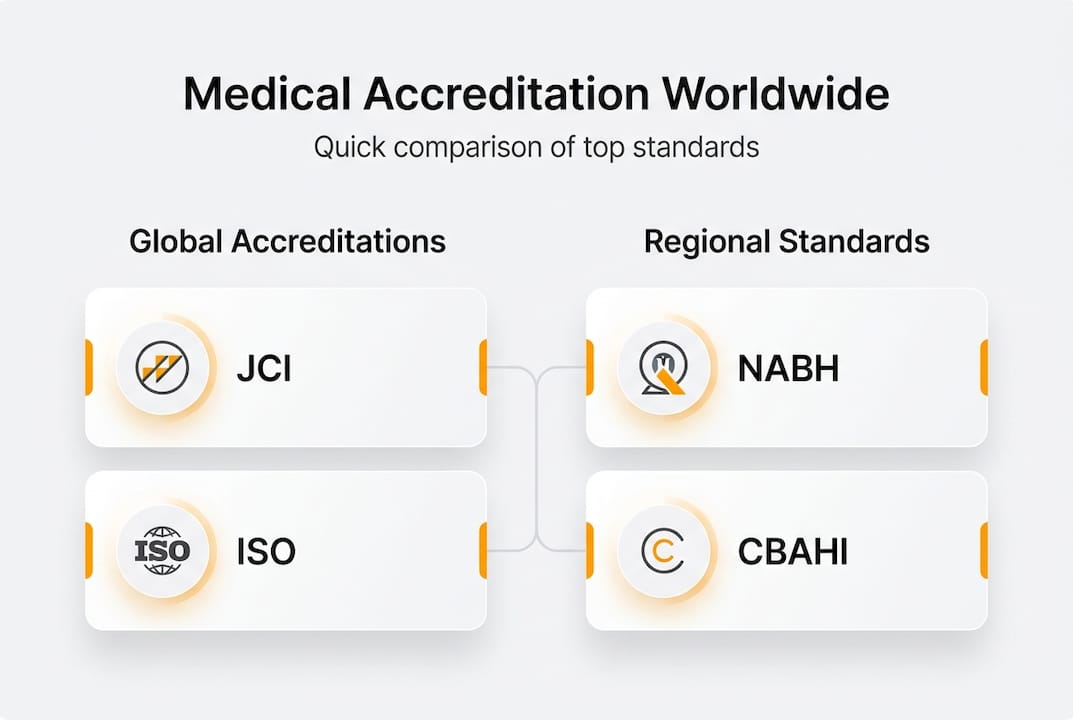
| Accreditation | Geographic focus | Standards scope | Recognition level | Typical facilities |
|---|---|---|---|---|
| JCI | Global | Comprehensive patient care, safety, quality | Highest international | Major hospitals, specialty centers |
| NABH | India-focused | Clinical protocols, infrastructure, patient rights | Strong regional | Hospitals, diagnostic centers, blood banks |
| ISO 9001 | Global | Quality management systems | General business | Various healthcare and non-healthcare |
| Accreditation Canada | Canada, international | Patient safety, governance, clinical excellence | Strong in Commonwealth | Hospitals, long-term care |
The relevance of accreditation varies between cosmetic and medical treatments. Cosmetic procedures often involve elective surgeries with significant infection risks if sterile techniques fail. Medical treatments for chronic conditions or acute illnesses require diagnostic accuracy, appropriate medication protocols, and emergency response capabilities. Both treatment types benefit from accreditation, but the specific standards emphasized differ based on procedural complexity and patient vulnerability.
Beyond accreditation certificates, several additional factors determine facility quality. Individual physician qualifications matter enormously: verify board certifications, specialized training, and years of experience performing your specific procedure. Technology and equipment age impacts outcomes, with newer diagnostic tools and surgical instruments generally providing better precision. Patient volume for your particular treatment indicates expertise, as high-volume centers typically achieve better results. Language support and cultural competency affect communication quality, directly influencing informed consent and post-operative instruction comprehension.
Pro Tip: International patients should consult multiple verification sources and specifically confirm that the facility has established follow-up care protocols before committing to treatment. Ask detailed questions about complication management, emergency contacts, and coordination with your home country physicians.
For specialized services like women and child services, accreditation becomes even more critical given the vulnerability of these patient populations and the specialized protocols required for pediatric and maternal care.
Risks of neglecting medical standards in international treatments
Choosing facilities without proper accreditation or quality controls exposes you to five major risk categories:
-
Healthcare-associated infections from inadequate sterilization practices, contaminated equipment, or poor hand hygiene protocols, potentially leading to sepsis, prolonged recovery, or additional surgeries
-
Procedural errors including wrong-site surgery, incorrect dosing, anesthesia complications, or technical mistakes during operations due to inadequate training or oversight
-
Misdiagnosis or delayed diagnosis resulting from outdated diagnostic equipment, insufficient testing protocols, or lack of specialist consultation, causing inappropriate treatment and disease progression
-
Emergency response failures when complications arise, with facilities lacking proper resuscitation equipment, intensive care capabilities, or trained emergency personnel
-
Substandard medication quality including counterfeit drugs, improper storage conditions, or expired pharmaceuticals that fail to provide therapeutic benefits or cause adverse reactions
Poor follow-up care compounds these initial risks. Non-accredited facilities often lack structured discharge planning, leaving patients without clear instructions for wound care, medication schedules, or warning signs requiring immediate attention. Communication barriers intensify when facilities provide minimal language support or fail to coordinate with your home country physicians. You might return home with incomplete medical records, making it nearly impossible for local doctors to provide appropriate continuing care.
Medical tourists frequently report complications that could have been prevented with proper standards. Surgical site infections requiring hospitalization occur at rates three to five times higher in non-accredited facilities. Patients discover implants or materials were not FDA-approved or equivalent regulatory body certified. Emergency complications arise with no clear protocol for contacting the original surgeon or facility. Promised follow-up consultations never materialize, leaving patients managing serious issues alone.
“Patients who choose facilities based solely on cost rather than verified accreditation face dramatically higher complication rates. The financial savings disappear quickly when factoring in revision surgeries, extended recovery time, and treatment of preventable infections. Prioritizing accredited facilities represents the single most important decision in medical tourism planning.” – International Patient Safety Expert
Your responsibility in facility selection cannot be overstated. Research thoroughly, ask difficult questions, and demand documentation proving accreditation status. If a facility hesitates to provide verification or pressures you to book quickly without proper due diligence, consider it a major red flag. Legitimate, high-quality medical services welcome scrutiny and provide transparent information about their standards, protocols, and outcomes data.
How to verify medical standards and prepare for treatment abroad
Verifying accreditation requires systematic research using official sources. Start by visiting the JCI website’s accredited organizations directory, where you can search by country, facility name, or accreditation type. For facilities claiming NABH accreditation, use the official NABH portal to confirm current certification status and review the specific services covered under accreditation. Check the accreditation date and expiration, as some facilities continue displaying certificates years after accreditation lapsed.
When communicating with facilities, ask specific questions about their quality standards:
-
Request detailed information about infection control protocols, including sterilization methods, hand hygiene compliance rates, and surgical site infection statistics
-
Inquire about physician credentials, asking for board certifications, years performing your specific procedure, and complication rates
-
Ask how they handle emergencies, including available intensive care capabilities, blood bank access, and protocols for patient transfer if needed
-
Clarify language support availability, ensuring interpreters will be present during consultations, consent processes, and discharge instructions
-
Request their policy on medical records, confirming you’ll receive complete documentation in English for your home country physicians
Preparing for treatment abroad requires comprehensive planning:
-
Compile complete medical records including previous surgeries, current medications, allergies, and chronic conditions, translated into English if necessary
-
Obtain pre-treatment medical clearance from your primary physician, ensuring you’re healthy enough for surgery and international travel
-
Research and book accommodations near the medical facility with consideration for post-operative mobility limitations and caregiver space
-
Arrange extended stay duration allowing adequate recovery time before flying, as premature travel increases complication risks
-
Establish emergency contacts including the facility’s 24/7 phone number, local emergency services, and your country’s embassy
-
Purchase comprehensive medical travel insurance specifically covering international treatment, complications, and emergency medical evacuation
Arranging follow-up care locally before you leave represents a critical but often overlooked step. Contact physicians in your home area, explain your planned procedure, and confirm their willingness to provide post-operative monitoring. Share detailed information about the treatment, facility, and surgeon so your local doctor can prepare for potential complications. Planning follow-up care ensures continuity when you return home and provides a safety net if problems develop.
Schedule your first local follow-up appointment before traveling for treatment. This timeline allows your home physician to review your baseline health and establish rapport, making post-treatment care more effective. Discuss potential complications specific to your procedure and establish clear protocols for contacting the doctor if concerns arise.
Pro Tip: Keep multiple copies of all medical records, including surgical reports, pathology results, and discharge summaries. Store digital copies in cloud storage, carry physical copies in your luggage, and email copies to your home country physician. This redundancy proves invaluable if documents get lost or if you need emergency care during your return journey.
Explore comprehensive medical services that prioritize international standards and patient safety throughout your treatment journey.
Reliable international healthcare with Globallmed
Navigating international medical standards becomes simpler when you choose providers committed to maintaining rigorous quality protocols. Globallmed’s outpatient medical center in Macau operates with a comprehensive approach to patient safety, combining international best practices with personalized care coordination designed specifically for international patients.
The medical clinic department provides diagnostic services, treatment planning, and ongoing monitoring that follows structured protocols ensuring consistency and safety. Every aspect of care, from initial consultation through post-treatment follow-up, adheres to systematic quality standards.

As a trusted medical center, Globallmed emphasizes transparent communication about treatment protocols, realistic outcome expectations, and comprehensive discharge planning. The integrated care model means your medical, wellness, and aesthetic needs receive coordinated attention from qualified professionals working collaboratively.
The beauty wellness department applies the same rigorous safety standards to cosmetic treatments, ensuring procedures meet international protocols for sterility, patient monitoring, and complication management. This consistency across departments provides peace of mind regardless of which services you need.
Frequently asked questions about medical standards abroad
What does JCI accreditation mean for patients?
JCI accreditation confirms a facility meets over 1,200 specific standards covering patient safety, infection control, medication management, and quality improvement. It means the facility underwent rigorous multi-day evaluation by independent surveyors and demonstrated sustained compliance with international best practices. For patients, this translates to significantly lower complication risks and more reliable treatment outcomes.
How can I verify a hospital’s accreditation status?
Visit the official accreditation body website directly, such as JCI’s accredited organizations directory or NABH’s verification portal. Search for the specific facility by name and location, then confirm the accreditation is current and covers the services you need. Never rely solely on certificates displayed at the facility, as these can be outdated or fraudulent. Independent verification through official channels takes minutes and provides definitive confirmation.
Are all international accreditations equally reliable?
No, accreditation rigor varies significantly between organizations. JCI and NABH represent gold standard accreditations with comprehensive evaluation criteria and regular re-surveys. Some regional or specialty accreditations focus on narrow aspects of care rather than comprehensive quality. ISO 9001 certifies quality management systems but doesn’t specifically evaluate clinical care standards. Research the specific accreditation body’s requirements and reputation before assuming it guarantees medical quality.
What should I do if complications arise after treatment abroad?
Contact the treating facility immediately using the 24/7 emergency number you received at discharge. Simultaneously seek evaluation from a local emergency department or your pre-arranged follow-up physician at home. Provide complete medical records from your treatment abroad to help local doctors understand the procedure and potential complications. Document everything, including symptoms, timing, and communications with the original facility. Your medical travel insurance should cover complication treatment, but review policy terms carefully.
Why is follow-up care important after surgery overseas?
Follow-up care detects complications early when they’re most treatable, monitors healing progress, and adjusts treatment plans based on your recovery. Surgical sites can develop infections days or weeks post-procedure, requiring prompt antibiotic intervention. Wound healing problems, medication side effects, or unexpected symptoms need professional evaluation to prevent serious outcomes. Coordinated follow-up between your international surgeon and home country physician ensures continuity of care and provides local support throughout recovery.
How long should I stay abroad after a medical procedure?
Stay duration depends on procedure complexity, but plan at least 7-10 days for minor surgeries and 2-3 weeks for major operations. This allows initial healing, suture removal if needed, and at least one post-operative check before traveling. Flying too soon increases blood clot risks, puts stress on healing tissues, and removes you from immediate medical support if complications develop. Consult your surgeon about minimum safe recovery time before booking return flights, and build in extra days for unexpected delays.