

Skipping your yearly medical review because you feel fine is one of the most common health misconceptions in Macau and across Asia. Feeling healthy and being healthy are not always the same thing. Conditions like high blood pressure, elevated blood sugar, and early-stage cancers rarely announce themselves with obvious symptoms until they have already caused significant damage. This article cuts through the confusion around annual medical reviews, shows you what the research actually says, and gives you practical tools to make every review count for your long-term health and peace of mind.
Table of Contents
- What are annual medical reviews and who needs them?
- The core reasons for annual medical reviews
- What does the science say about annual checkups?
- Annual reviews and chronic disease management
- Making the most of your annual medical review: practical tips
- Why annual checkups aren't 'one-size-fits-all': Our take
- Connect with reliable care for your next annual medical review
- Frequently asked questions
Key Takeaways
| Point | Details |
|---|---|
| Early detection saves lives | Annual reviews catch problems before they become serious and improve long-term outcomes. |
| Chronic disease benefits | Regular reviews are crucial for monitoring and adjusting chronic disease treatment. |
| Not all benefits are equal | Science shows annual reviews help most when tailored to your risk and followed by action. |
| Preparation maximizes value | Arriving prepared with questions and history ensures you get personalized care from your review. |
| Choose trusted providers | Partner with reputable clinics for thorough reviews and reliable follow-up partnered care. |
What are annual medical reviews and who needs them?
To understand why these reviews matter, it helps to first clarify what they actually involve and what they aim to address.
An annual medical review is a scheduled, once-a-year health assessment with a qualified physician or care team. It is not just a quick blood pressure check. A proper review covers your full physical examination, updated health history, vital sign measurements, targeted lab tests, and age-appropriate preventive screenings. Think of it as a yearly audit of your body's systems before small problems compound into serious ones.
In Macau, a standard adult annual review typically includes:
- Blood pressure measurement to detect hypertension, which often shows no symptoms
- Fasting blood glucose and HbA1c for diabetes screening
- Full lipid panel covering cholesterol and triglycerides for cardiovascular risk
- Body mass index (BMI) and waist measurement for metabolic risk assessment
- Cancer screenings appropriate for age and sex (such as cervical smear, breast exam, or colorectal screening)
- Lifestyle counseling on diet, physical activity, alcohol use, and smoking
- Review of current medications and any supplements being taken
As health screening benefits show, early detection through routine checkups dramatically improves outcomes across a wide range of conditions. Annual health checkups can help detect risk factors and certain conditions early, addressing preventable complications before they progress.
Who benefits? Almost everyone over 18 gains something from a yearly review. The benefits are even stronger for people with existing chronic conditions, those with a family history of heart disease or cancer, anyone over 40, smokers, and people managing high levels of stress or sedentary lifestyles.
Pro Tip: Keep a personal health log and bring it to every annual review. Tracking blood pressure readings, weight, or sleep patterns between visits gives your doctor trend data, not just a snapshot from one morning.
Knowing which wellness checklists for Macau apply to your age group can help you walk into your review already prepared for what to expect.
The core reasons for annual medical reviews
Knowing the structure of an annual medical review, let's examine the most important reasons health professionals recommend them.

The most persuasive argument for annual reviews is early detection. Many of the most serious conditions affecting adults in Macau, including hypertension, type 2 diabetes, and colorectal cancer, develop silently over years before symptoms appear. A single blood test or blood pressure reading can catch these conditions at a stage when lifestyle changes or simple treatments are still highly effective.
Annual reviews also give you a structured opportunity to reduce your risk factors before they escalate. Your doctor can work with you on cholesterol management, weight loss strategies, or smoking cessation plans. This is not reactive care. It is proactive, targeted intervention.
"An annual review creates a dedicated time each year for you and your doctor to focus entirely on prevention, not just treatment of what's already broken."
Some studies suggest annual checkups help with early risk-factor detection and short-term improvement, particularly for metabolic and cardiovascular markers. Understanding the importance of regular screening is central to building a sustainable wellness strategy over the years.
The psychological benefit is real too. Knowing your numbers, understanding your health status, and having a plan reduces the health anxiety that many people carry silently. Annual reviews hand you ownership of your own health rather than leaving you guessing.
There are also broader preventive healthcare strategies that become easier to act on once your baseline health data is established through consistent yearly reviews.
Pro Tip: Write down three health questions or concerns before your appointment. Patients who arrive with specific questions consistently report more satisfying and productive consultations.
What does the science say about annual checkups?
While the reasons for annual reviews are persuasive, it is also important to see what the science says, where the evidence is strong, and where more research is still needed.
Research on annual medical reviews is genuinely nuanced, and being honest about that nuance makes the case for them more credible, not less. Evidence for the benefits of annual checkups is mixed, stronger for detection and short-term factors, but weaker for long-term outcomes or mortality for the general population.
| What annual reviews achieve clearly | Where evidence is less conclusive |
|---|---|
| Early detection of hypertension and diabetes | Long-term reduction in mortality for low-risk adults |
| Short-term improvement in cholesterol and BP | Overall lifespan extension for already-healthy patients |
| Patient reassurance and reduced health anxiety | Preventing all forms of cancer across populations |
| Identifying medication side effects early | Behavioral change beyond the review visit itself |
| Building an ongoing doctor-patient relationship | Cost-effectiveness in very young, low-risk adults |
The honest picture: for people with risk factors, existing conditions, or a family history of serious illness, the evidence supporting annual reviews is quite strong. For very young, low-risk adults with no lifestyle concerns, the benefit-to-effort ratio may be slightly lower, though even they benefit from establishing a baseline.
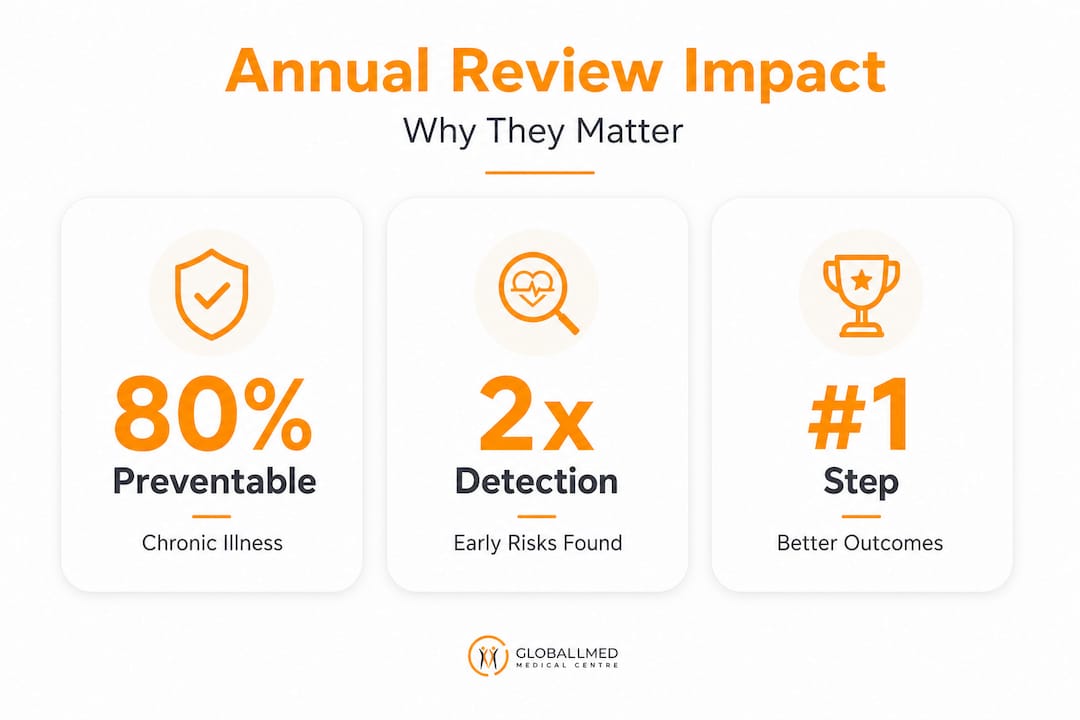
Over 80% of chronic illnesses are considered preventable with timely intervention, and annual reviews serve as the primary gateway to catching the warning signs that make that prevention possible. Learning more about screening for prevention helps put these statistics into a practical framework you can act on.
The key takeaway from current research is that the quality of the annual review matters enormously. A review that includes appropriate screenings, meaningful counseling, and clear follow-up plans delivers far more than a routine visit where basic measurements are recorded and forgotten. More detail on evidence-based approaches can be found through annual checkup research for Macau.
Annual reviews and chronic disease management
Beyond prevention, annual reviews deliver even stronger benefits to those living with chronic illnesses.
For patients managing conditions like type 2 diabetes, hypertension, heart disease, asthma, or thyroid disorders, the annual review is not optional. It is the mechanism by which their treatment plans get updated, their risk of complications gets assessed, and their medication doses get fine-tuned to match where their health actually stands today. Annual reviews allow earlier identification and better control of chronic conditions such as diabetes and hypertension.
Chronic conditions that benefit most from yearly reviews include:
- Type 2 diabetes (monitoring blood glucose control, kidney function, nerve health, eye health)
- Hypertension (tracking blood pressure response to treatment)
- Coronary heart disease (reviewing medication, cholesterol, stress levels)
- Asthma and COPD (evaluating lung function and inhaler technique)
- Thyroid disease (checking hormone levels, energy, and weight)
- Chronic kidney disease (monitoring GFR and electrolyte balance)
Here is a practical look at the markers typically tracked and how often your team will want to see them:
| Condition | Key marker tracked | Recommended frequency |
|---|---|---|
| Type 2 diabetes | HbA1c (blood glucose control) | Every 3 to 6 months; reviewed annually |
| Hypertension | Blood pressure readings | Monthly at home; reviewed annually |
| High cholesterol | LDL and total cholesterol | Annually or after medication changes |
| Thyroid disease | TSH (thyroid-stimulating hormone) | Annually once stable |
| Chronic kidney disease | eGFR and creatinine | Annually or more often if declining |
| Asthma | Peak flow and spirometry | Annually or at symptom change |
For patients in Macau managing these conditions, the annual review also serves as a touchpoint for coordinating care between specialists, updating pharmacy records, and making sure nothing has been missed between specialist appointments. Understanding how to manage chronic disease long-term becomes much more practical when annual reviews create a structured rhythm for your care.
The annual review is also where side effects from long-term medications get caught early. Statins, blood pressure medications, and diabetes drugs all carry the potential for metabolic or organ-related side effects that only show up in lab tests, not in how you feel day to day.
Making the most of your annual medical review: practical tips
Having grasped the broader impact of annual reviews, let's see how you can make each visit work harder for your health.
Most people underuse their annual medical review because they show up without a plan. Here is how to change that:
- Gather your records before the visit. Bring a written list of all current medications, vitamins, and supplements with dosages. Include any hospital letters, specialist reports, or test results from the past year.
- List your symptoms, even minor ones. Mild fatigue, occasional dizziness, or changes in sleep quality may seem trivial but can point to meaningful health shifts. Write them down so you don't forget in the room.
- Write your questions in advance. Ask about specific screenings for your age group, whether any medications should be adjusted, and what your numbers mean compared to last year.
- Discuss your lifestyle honestly. Diet, alcohol intake, exercise habits, and stress levels all influence your results and your care plan. Your doctor can only give you personalized advice based on accurate information.
- Understand your results before you leave. Ask what your key numbers mean, what is normal for you specifically, and what the follow-up plan is if anything looks unusual.
- Act on referrals promptly. If your doctor advises a specialist referral, an ultrasound, or a repeat test, follow through within the recommended timeframe. Effective annual reviews depend not just on tests, but on patient engagement and follow-up.
Knowing how to maximize screening benefits is not complicated, but it does require that you show up as an active participant rather than a passive recipient.
Pro Tip: Before you leave the clinic, book your next year's appointment. Setting it immediately removes the single biggest barrier to consistent care, which is simply forgetting.
Treat the annual review as a genuine partnership. Your doctor brings clinical knowledge. You bring your lived experience of how your body has felt and changed over the past year. Together, those two perspectives are far more powerful than either one alone.
Why annual checkups aren't 'one-size-fits-all': Our take
The case for annual medical reviews is strong, but here is the part most health articles skip over: the review itself is only as valuable as the thought that goes into designing it and the action that follows it.
We have seen patients who complete their annual review every year without fail yet never see meaningful improvement in their health metrics because the visit has become a routine box-checking exercise rather than a meaningful clinical conversation. Evidence for the benefit of annual reviews varies by population and how well recommendations are followed up. That variation is not random. It tracks almost exactly with how personalized and follow-through-oriented the review process was.
A 35-year-old with no risk factors needs a different review than a 58-year-old with hypertension and a family history of stroke. A patient who travels frequently for work has different health exposures than someone with a sedentary desk job. Generic annual reviews that apply the same checklist to every adult miss this entirely.
"An annual review is only as effective as its follow-up."
The best reviews are tailored conversations, not pre-printed forms. They factor in your personal history, your family background, your work environment, and the results from the previous year. Wellness through regular screening builds cumulative value, not just one-time insights.
Our genuine advice: push for specificity. Ask your doctor which tests are actually relevant for your risk profile, not just which ones are on the standard checklist. And when you get your results, request a written summary. Tracking changes from one year to the next is far more informative than looking at a single year's numbers in isolation.
Connect with reliable care for your next annual medical review
If you are ready to take control of your well-being, here is how you can find the right support for your annual review.
Globallmed provides thorough annual reviews for adults in Macau, designed around your personal health history and risk profile rather than a generic checklist. Our clinical team covers everything from preventive screenings and chronic disease monitoring to lifestyle counseling and follow-up care, all under one roof.

You can explore our full range of outpatient clinic services or learn more about what our medical clinic department offers for ongoing wellness and chronic disease management. Ready to get started? Book a checkup online and let our team build a review plan that actually fits your health, your history, and your goals. Proactive care starts with one appointment.
Frequently asked questions
Are annual medical reviews necessary for everyone?
Not everyone needs the same intensity of review, but most adults benefit from at least a yearly checkup to catch early issues and update prevention plans. Benefits vary by population and individual risk level, so reviews should be personalized rather than skipped altogether.
How do annual medical reviews help with chronic disease management?
Yearly reviews help track progress, adjust treatment, and catch complications early for patients with chronic conditions. Useful for detection and management of conditions like diabetes and hypertension, they also help coordinate care across specialists.
Is there strong evidence that annual checkups reduce death rates?
The evidence is mixed; benefits are more consistent for early detection and short-term health improvements than for reducing long-term mortality. Mixed evidence on mortality means the value is strongest when the review is personalized and followed by real action.
What should I bring to my annual medical review?
Bring a written list of all current medications and supplements, your health history, a note of any new or ongoing symptoms, and a prepared list of questions for your doctor. The more context you provide, the more useful the review becomes.
How often should healthy adults in Macau get medical reviews?
Most healthy adults should have at least one annual checkup for preventive care, though review frequency depends on risk factors and age and can be adjusted based on your individual health profile.