
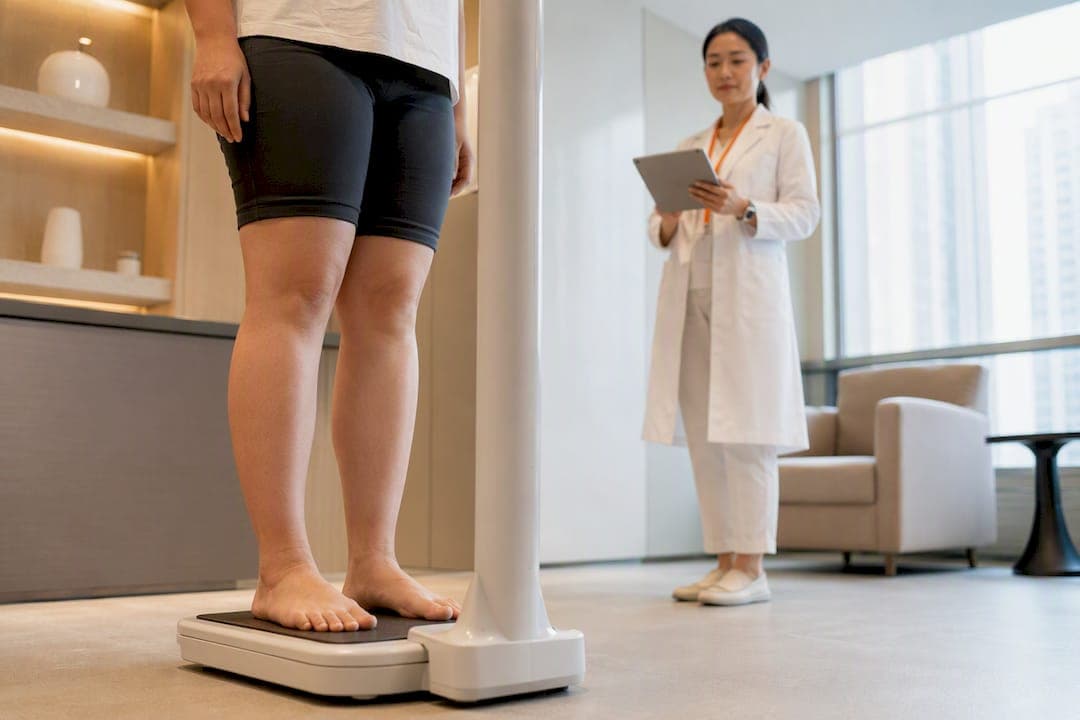
For anyone in or near Macau seeking safe, measurable weight loss, medically led multidisciplinary programs are the recommended first step, not a commercial diet plan or a fitness challenge alone. Globallmed offers integrated outpatient services locally that follow this model. The goal is not a lower number on the scale but better glucose, lipid, and liver markers, tracked over time by a coordinated clinical team.
TL;DR:
- A medically led weight management program in Macau involves a multidisciplinary team that monitors metabolic markers such as blood sugar, cholesterol, and liver enzymes, not just weight.
- These programs are recommended for individuals with conditions like hypertension, prediabetes, fatty liver, PCOS, or a history of bariatric surgery, requiring comprehensive health evaluation.
- Structured programs include initial labs, personalized diet and exercise plans, behavioral support, medication when necessary, and ongoing adjustments based on progress.
- Most clinics accept online booking, require baseline testing, and support international patients with multilingual services and insurance billing options.
- The most effective programs feature coordinated care teams, measurable progress tracking, clear outcome goals, extended support, and license validity, tailored to Macau’s local food and lifestyle environment.
Table of Contents
- What Does "Medically Led" Weight Management Mean in Macau?
- Who Actually Needs a Medically Supervised Program?
- What Happens Inside a Medically Led Weight Management Program?
- How to Book an Appointment and Handle Insurance Logistics
- What Progress Should You Expect, and What Will It Cost?
- How to Choose the Right Program: A Practical Checklist
- Cultural and Dietary Factors That Shape Macau Weight Management Programs
- Local Success Stories: What the Data From Macau Shows
- Challenges Unique to Weight Management in Macau
- Is Weight Management Care in Macau Regulated?
- How Globallmed Supports Medically Led Weight Management
- Authoritative Sources Referenced
What Does "Medically Led" Weight Management Mean in Macau?
A medically led program puts a clinical team, not a single trainer or nutritionist, in charge of your results. In Macau, this model has moved from niche to mainstream. The Macao Medical Center of PUMCH launched a Weight Management Joint Clinic that pairs dietetics, endocrinology, gastroenterology, and rehabilitation specialists under one coordinated plan, covering everything from adult obesity to preconception weight loss for patients with PCOS to post-bariatric nutrition. Kiang Wu Hospital followed with its own medically led weight management center, built explicitly around comprehensive assessment and long-term chronic disease prevention rather than short-term slimming.
The reason multiple specialties matter is simple: weight is rarely just a calorie problem. A gastroenterologist checks for fatty liver disease. An endocrinologist screens for insulin resistance. A dietitian builds a plan your metabolism can actually sustain.
These teams track metabolic indicators, not just weight:
- Fasting glucose and HbA1c
- Lipid panel (cholesterol, triglycerides)
- Liver enzyme tests for fatty liver risk
- Blood pressure and body composition
Statistic callout: Macau's citywide weight-loss challenge expanded from a small initial number of slots to several thousand, signaling strong demand and how far medically supervised weight management has moved into the public health mainstream here.
Who Actually Needs a Medically Supervised Program?
Not everyone trying to lose weight needs a clinical team. But certain conditions change the calculation entirely, because diet and exercise alone can be ineffective or even risky without medical oversight.
You should strongly consider a medically led program if you have any of the following:
- Hypertension or borderline high blood pressure
- Prediabetes, type 2 diabetes, or a strong family history of it
- Diagnosed or suspected fatty liver disease
- PCOS or other hormone-related metabolic conditions
- Metabolic syndrome (a cluster of high blood pressure, high blood sugar, and abdominal fat)
- Prior bariatric surgery requiring nutritional follow-up
Before starting any structured program, a baseline screening should cover BMI, blood pressure, fasting glucose or HbA1c, liver enzymes, and a lipid panel. Globallmed's checkups services cover this kind of baseline testing.
Pro Tip: If you notice unexplained fatigue, swelling in your legs, or shortness of breath with mild activity, treat that as a signal to see a physician before you start any new diet or exercise routine, not after.
What Happens Inside a Medically Led Weight Management Program?
The pathway is more structured than most people expect, and that structure is the point. A generic diet app can't order a lab panel or adjust a medication.
- Intake and assessment. Your first visit covers medical history, a physical exam, baseline labs, and often a body-composition measurement rather than a bathroom-scale number alone.
- Individualized dietetics counseling. A dietitian builds a nutrition plan around your labs, lifestyle, and any comorbidities, not a one-size-fits-all calorie target.
- Safe exercise prescriptions. Rehabilitation or physiotherapy input matters especially for patients with joint issues, cardiovascular risk, or a history of injury.
- Behavior-change support. Sustainable weight loss usually depends on habit change as much as biology, so many programs include structured behavioral counseling.
- Medication when clinically indicated. Not every patient needs it, but endocrinology oversight means it's available and monitored when appropriate.
- Follow-up and data-driven adjustment. Plans shift based on what your labs and progress actually show, not on a fixed calendar.
Weight management joint clinics in Macau describe this as a stepwise approach: lifestyle changes first, medical therapy added when needed, and procedural or nutritional therapy reserved for more complex or post-surgical cases.
Statistic callout: In Macau's Health Bureau weight-loss challenge, a large majority of participants who completed the program met the target of losing a clinically meaningful percentage of their body weight within about three months, evidence that structured, monitored goals produce real results at scale.
How to Book an Appointment and Handle Insurance Logistics
Getting started is more straightforward than most people assume. Most outpatient clinics in Macau allow online booking through a form that asks for basic identification details, your reason for visit, and preferred appointment timing.
Before your first visit:
- Bring a government-issued ID and, if applicable, your insurance card
- Bring a current medication list, including supplements
- Bring any prior lab results or imaging from the past six to twelve months
- Ask whether pre-visit lab work can be scheduled ahead of your consultation to save time
International patients benefit from multilingual support and direct-billing arrangements with participating insurers, which removes a common friction point for medical tourists and expats. Telemedicine consultations are increasingly available as an alternative for initial screening or follow-up visits when an in-person appointment isn't practical, though baseline labs still typically require an in-person draw.
What Progress Should You Expect, and What Will It Cost?
Realistic benchmarks matter more than aspirational ones.
Typical timeline and monitoring pattern:
- First 3 months: Initial labs, plan adjustments, and early progress toward the 3% benchmark
- 6 to 12 months: Maintenance focus, with visits spacing out from every few weeks to monthly or quarterly
- Cost categories to budget for: consultation fees, lab panels, dietetics counseling sessions, supervised program charges, and optional procedures for patients who need them
Costs vary by clinic and by how many specialists your case requires, so ask for an itemized estimate at your first visit.
How to Choose the Right Program: A Practical Checklist
Not all programs marketed as "medical" weight loss actually deliver multidisciplinary care. Use this checklist when comparing options in Macau:
- Team access. Does the clinic offer direct access to dietetics, endocrinology, and gastroenterology under one coordinated care pathway, or just a single provider?
- Measurable tracking. Will your progress be tracked through labs and metabolic markers, not just a scale reading at each visit?
- Clear outcome targets. Does the program set a specific, time-bound goal, such as a percentage of body weight lost within a defined window?
- Follow-up duration. Is there a maintenance phase built in after initial weight loss, or does support end once you hit a target?
- Insurance and billing support. Does the clinic offer direct billing or facilitate paperwork for insured patients and international visitors?
A program that scores well on all five is far more likely to produce durable results than one built around a single restrictive diet plan.
Cultural and Dietary Factors That Shape Macau Weight Management Programs
Macau's food culture sits at a crossroads, and any program that ignores that reality will fail its patients. Cantonese, Portuguese, and broader pan-Asian influences all shape daily eating habits, and that means dietitians here design plans around dishes like congee, dim sum, and Macanese-Portuguese fusion staples such as African chicken or minchi, rather than asking patients to abandon them outright.

Rich, oil-forward comfort foods and dense pastries, a well-known local specialty, are woven into social and family life in ways a generic low-carb template cannot accommodate. A dietitian working in Macau typically adjusts portion sizes, cooking methods, and meal timing rather than eliminating entire food categories, because sustainable change respects what people actually eat with their families.
Dining culture adds another layer. Shared meals, multi-course family dinners, and frequent social eating occasions mean individual willpower matters less than having a plan that works within those settings. A program that teaches someone how to navigate a ten-dish family banquet is more useful than one that only works in isolation.
Government-backed initiatives have leaned into this reality by offering practical, locally relevant resources: healthy-cooking videos, calorie calculators, and nutrition workshops designed around dishes people actually cook at home rather than imported diet templates. That local relevance is part of why participation in Macau's citywide weight-loss initiatives has scaled so quickly. A plan that fits your actual kitchen and your actual family table is one you can follow for a year, not just for a month.
Local Success Stories: What the Data From Macau Shows
The clearest evidence that medically led weight management works in Macau isn't anecdotal. It's aggregate. The city's Health Bureau weight-loss challenge attracted thousands of participants and reported a significant collective weight loss, with most of those who completed the program meeting a modest weight-loss target within about three months.
Numbers at that scale tell you something a single testimonial can't: the model is repeatable across a large, ordinary population, not just a handful of highly motivated outliers.
The hospital side of the story reinforces the same pattern. Both the Macao Medical Center of PUMCH and Kiang Wu Hospital expanded their weight management services specifically because demand for coordinated, medically supervised care outpaced what single-provider clinics could offer. Clinics don't typically expand multidisciplinary capacity, adding endocrinology and gastroenterology alongside dietetics, unless patient outcomes and demand justify it.
What this data doesn't capture, but clinicians who run these programs consistently report, is the metabolic side of the story: patients who complete these programs generally see improvement in liver enzymes and lipid panels alongside the weight change itself, not just a smaller number on the scale. That distinction is exactly why the medically led model exists in the first place: weight is a visible marker, but metabolic health is the actual target.
Challenges Unique to Weight Management in Macau
Macau's environment presents specific obstacles that a program designed elsewhere won't anticipate. Population density is a genuine constraint. Limited outdoor space for exercise, combined with a compact urban footprint, means many residents rely on gyms, indoor facilities, or walking routes that compete with heavy foot traffic and tourist crowds, especially near the historic center and casino districts.
The city's economy adds another layer. Shift work tied to the hospitality and gaming industries, which employ a substantial share of the working population, disrupts sleep schedules and meal timing in ways that standard diet advice rarely addresses. A dietitian working with a casino floor employee on rotating night shifts needs a fundamentally different meal-timing strategy than one working with a standard nine-to-five office worker.
Humidity and heat for much of the year also discourage outdoor activity for a meaningful part of the calendar, pushing exercise indoors and increasing reliance on air-conditioned gyms or home workouts. And the sheer density of food options, from street snacks to all-you-can-eat buffets tied to the tourism economy, means constant exposure to convenient, calorie-dense choices in a way that's harder to avoid than in less food-saturated cities.
These aren't excuses. They're design constraints. A medically led program that accounts for shift work, limited outdoor space, and near-constant food availability will succeed where a generic template, built for a different environment entirely, tends to fail.
Is Weight Management Care in Macau Regulated?
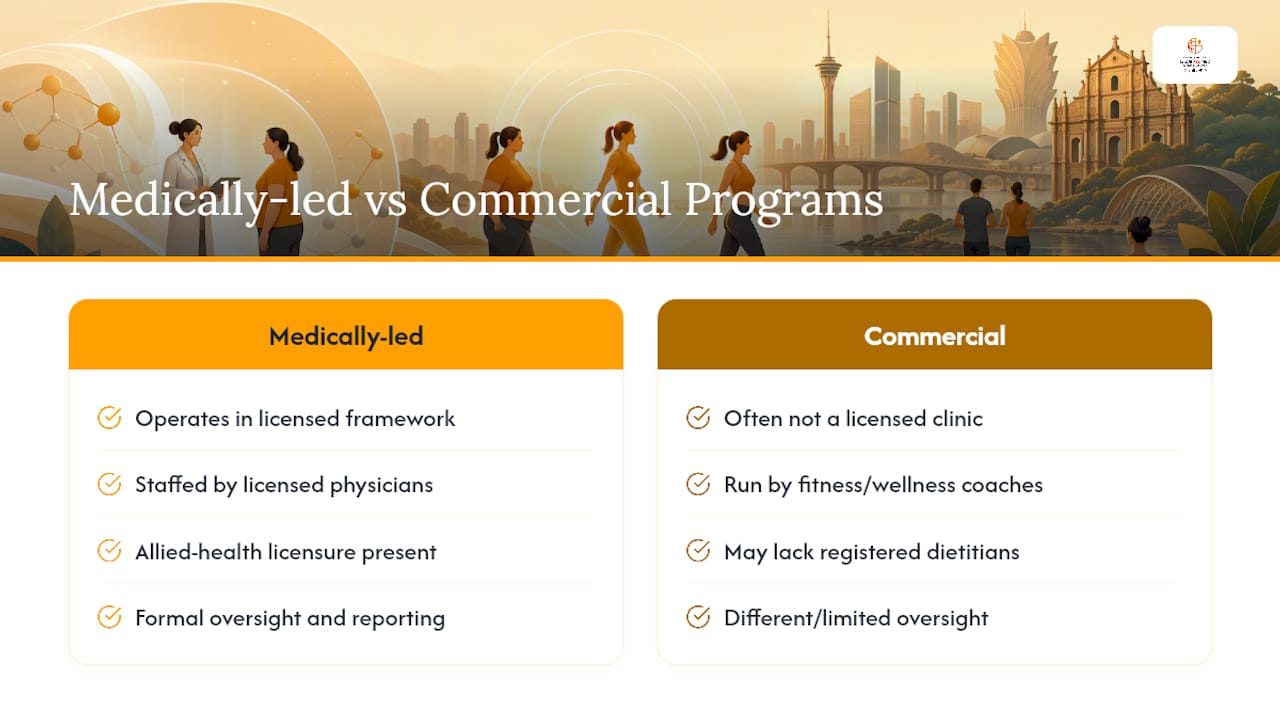
Outpatient medical services in Macau, including weight management programs run through hospital-affiliated clinics or private outpatient centers, operate within the territory's licensed healthcare framework. Programs positioned as "medically led," like the joint clinics at the Macao Medical Center of PUMCH and Kiang Wu Hospital, are staffed by licensed physicians across their respective specialties: endocrinology, gastroenterology, and dietetics among them.
This distinction matters when comparing providers. A commercial weight-loss service run by a fitness coach or wellness consultant operates under different oversight than a clinic where a licensed endocrinologist reviews your labs and a registered dietitian designs your nutrition plan. When you're evaluating a program, ask directly whether the clinicians involved hold recognized medical or allied-health licensure, and whether the facility itself operates as a licensed outpatient medical center rather than a wellness studio using medical-sounding language.
Public health authorities in Macau have also taken a visible role, running citywide weight-loss challenges with structured targets and reporting outcomes publicly. That kind of government involvement functions as an informal trust signal for residents: when a health bureau backs a specific weight-loss benchmark and expands its own program capacity tenfold, it reflects institutional confidence in the medically supervised model over ad hoc alternatives. For patients, the practical takeaway is straightforward: favor providers who can point to licensed clinical staff, documented care pathways, and measurable outcome tracking over those relying on marketing language alone.
How Globallmed Supports Medically Led Weight Management
Private outpatient clinics in Macau may offer integrated models similar to those used by hospital-based weight management clinics, providing coordinated care without navigating a large hospital system. Instead of referring you between separate providers for nutrition, checkups, and specialist review, Globallmed's medical clinic department coordinates that care under one roof, with your baseline labs, dietetics counseling, and follow-up visits managed by a team that already has your history.
!
Booking starts with the clinic's checkups services, where baseline metabolic screening, including glucose, lipid, and liver panels, establishes the starting point every medically led plan needs. Men and women have access to dedicated pathways through executive men checkups and executive women checkups, both designed to catch the metabolic and reproductive-health considerations that shape a weight management plan from day one. The full range of services, including dietetics support and complementary beauty and wellness offerings, is listed on Globallmed's services page.
For international patients and expats, some clinics provide multilingual support and direct-billing coordination with participating insurers, which removes much of the paperwork friction that typically slows down a first visit. Start by visiting the Globallmed medical center page to review the clinic's outpatient services and book an initial assessment.
Authoritative Sources Referenced
The Macao SAR Government Portal documents the Weight Management Joint Clinic launch at the Macao Medical Center of PUMCH, the primary record of that program's multidisciplinary structure. Macau Post Daily's coverage of the Health Bureau's citywide weight-loss challenge provides the participation and outcome figures cited throughout this guide. Macau Daily Times reported separately on Kiang Wu Hospital's medically led weight management center launch.
This article is general information, not a substitute for advice from a qualified doctor. Consult a qualified healthcare professional about your own circumstances before acting on anything here.