

Choosing the right outpatient service has never been more complex, or more important. The range of options now spans from physical rehabilitation and mental health therapy to cosmetic procedures and advanced wellness treatments, all without a single overnight hospital stay. With so many providers claiming international standards, knowing how to separate genuine quality from marketing noise is the real challenge. This guide walks you through the major outpatient service categories, how they compare, and exactly what to look for when selecting a provider you can trust.
Table of Contents
- How to evaluate outpatient services
- Outpatient rehabilitation services
- Outpatient mental health services
- Cosmetic and wellness outpatient services
- Comparison of outpatient service types
- How to choose the best outpatient service for you
- Explore top-quality outpatient care with Globallmed
- Frequently asked questions
Key Takeaways
| Point | Details |
|---|---|
| Wide outpatient options | Outpatient services now span medical, mental health, cosmetic, and wellness treatments. |
| Quality matters most | Certified providers, safety protocols, and international standards are crucial for safe, effective care. |
| Informed choices | Knowing how to compare services helps you match your needs and reduces risks. |
| Check accreditation | Always verify credentials and safety standards before selecting a clinic or provider. |
How to evaluate outpatient services
Before jumping into specific service types, it's crucial to know how to judge the quality and safety of any outpatient option. Outpatient services are defined by one key feature: you receive care and go home the same day. No overnight stay, no hospital admission. But the scope of what falls under this category is surprisingly wide.
Facilities delivering outpatient care generally fall into three types:
- Clinics and private medical centers: Ideal for consultations, minor procedures, and ongoing therapy
- Ambulatory surgical centers (ASCs): Specialized for same-day surgical procedures with dedicated recovery areas
- Hospital outpatient departments (HOPDs): Attached to hospitals, offering more complex services with immediate backup care
Each setting has different capabilities and cost structures. Medicare outpatient guidelines outline specific standards for what qualifies as outpatient care, and these benchmarks are widely referenced internationally. When evaluating any facility, check for international accreditation, board-certified staff, and clear safety protocols. The medical standards for outpatient care in Macau, for example, align closely with these global benchmarks, which is what you should expect from any reputable provider. You can also review what a quality medical clinic setting looks like in practice.
Outpatient programs are also structured by hours and supervision levels. SAMHSA and ASAM criteria define these structures especially for mental health services, but the principle applies across all outpatient care: the intensity of treatment should match the complexity of your condition.
Pro Tip: Always verify provider credentials and accreditation before booking. Ask specifically whether the facility holds any international certification, not just local registration.
Outpatient rehabilitation services
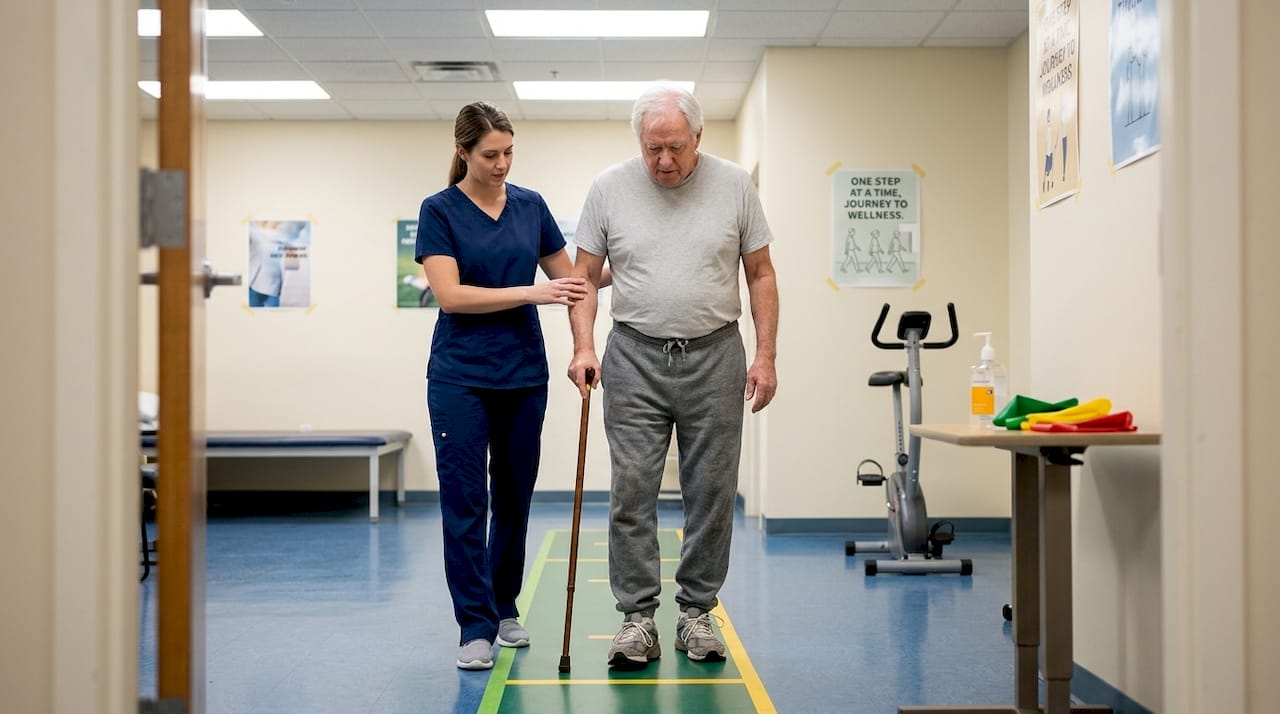
Now that you know what to look for in a quality provider, let's start with a core category: rehabilitation services. These are among the most commonly used outpatient services globally, and they cover a broad range of needs.
The three main types are:
- Physical therapy (PT): Focuses on restoring movement, strength, and function after injury or surgery
- Occupational therapy (OT): Helps patients regain the ability to perform daily tasks, especially after neurological events
- Speech-language pathology (ST): Addresses communication disorders, swallowing difficulties, and cognitive-communication issues
Physical therapy, OT, and speech therapy are all covered under Medicare Part B when prescribed by a physician with a formal plan of care. Most international insurers follow similar requirements. Recertification typically happens every 90 days to confirm ongoing medical necessity.
| Therapy type | Average duration | Main goals | Key requirement |
|---|---|---|---|
| Physical therapy | 6 to 12 weeks | Mobility, pain relief, strength | Physician referral |
| Occupational therapy | 4 to 16 weeks | Daily function, independence | Physician plan of care |
| Speech therapy | 8 to 20 weeks | Communication, swallowing | Formal diagnosis |
Risk monitoring matters here too. Rehabilitation outcome data shows that complications are rare when patients are properly selected and supervised. The multi-therapy department model, where PT, OT, and other therapies are coordinated under one roof, tends to produce better outcomes than fragmented care across multiple providers.
Outpatient mental health services
Rehabilitation isn't just physical. Mental and emotional health support is another critical aspect of outpatient care, and it's an area where the right program structure makes a significant difference.
Outpatient mental health services generally fall into three tiers:
- Standard outpatient therapy: Weekly or biweekly sessions with a licensed therapist or psychiatrist
- Intensive outpatient programs (IOP): Structured group and individual therapy running 9 to 20 hours per week
- Partial hospitalization programs (PHP): The most intensive outpatient level, often 20 or more hours per week, for those stepping down from inpatient care
Psychotherapy, medication management, and IOP/PHP programs use validated tools like the PHQ-9 to screen for depression severity and track progress over time. This kind of structured measurement is a sign of a quality program. Outpatient mental health care is appropriate when a person is stable enough to function at home but still needs consistent professional support. If safety is a concern, inpatient care is the right call.
Quality indicators include licensed and supervised clinical staff, clear session documentation, and structured follow-up protocols. Patient selection and outcome data consistently shows that matching the right patient to the right program intensity is the single biggest driver of positive results. You can explore mental health outpatient options that meet these standards as part of a broader care plan.
Pro Tip: Look for programs using validated screening tools and structured follow-ups. If a provider can't tell you how they measure progress, that's a red flag.
Cosmetic and wellness outpatient services
With confidence in medical and mental health options, more people now seek outpatient cosmetic and wellness care as part of their total health plan. This category has grown dramatically, and the quality range is wide.
Non-surgical options include:
- Botox and dermal fillers
- Laser skin resurfacing and hair removal
- Skin tightening treatments
- Body contouring without surgery
Surgical outpatient options include liposuction, breast augmentation, and rhinoplasty, all performed in certified ASCs or private surgical suites. The ISAPS Global Survey 2024 confirms that board certification, safety protocols, and proper facility standards are non-negotiable requirements for cosmetic outpatient procedures. Global cosmetic treatment trends show continued growth in minimally invasive procedures, driven by shorter recovery times and lower costs compared to surgical alternatives.
"Choose clinics with certified specialists and advanced equipment for the best outcomes."
When evaluating a cosmetic provider, check their credentials carefully. Understanding outpatient cosmetic procedures in detail helps you ask the right questions. The wellness and beauty services available at a reputable center should always be backed by medical standards for cosmetic safety that protect you before, during, and after treatment.
Pro Tip: Ask about aftercare and what to do in case of complications post-procedure. A quality clinic will have a clear protocol, not just a phone number.
Comparison of outpatient service types
To finalize your selection, compare your options directly across what matters most: safety, results, and value.
| Service type | Complexity | Typical cost savings vs. inpatient | Complication risk | Accreditation needed |
|---|---|---|---|---|
| Rehabilitation | Low to moderate | 20 to 40% | Very low | Yes |
| Mental health | Low to moderate | 30 to 50% | Low | Yes |
| Cosmetic (non-surgical) | Low | 40 to 60% | Very low | Yes |
| Cosmetic (surgical) | Moderate to high | 15 to 35% | Low to moderate | Essential |
| Wellness therapy | Low | 30 to 50% | Very low | Recommended |
Outpatient cost savings range from 15 to 60% compared to inpatient care for equivalent procedures, depending on the service type and facility. Outpatient complication rates are consistently lower than inpatient rates when patients are properly selected. The key phrase there is "properly selected." Not every patient or procedure is a good fit for outpatient delivery.
The outpatient center services that deliver the best outcomes are those that integrate multiple service types under one quality framework, rather than operating each department in isolation.
How to choose the best outpatient service for you
Now that the options and comparisons are clear, here's how to apply this information to your own search.
- Define your primary health goal. Are you recovering from an injury, managing a mental health condition, or pursuing cosmetic improvement? Your goal determines the service category.
- Assess your health status. Some conditions require inpatient care first. Be honest about your current stability before committing to outpatient-only treatment.
- Verify facility credentials. Check for international accreditation, not just local registration. Ask for the names of certifying bodies.
- Review the clinical team. Board certification and recertification timelines matter. Ask how often providers update their training.
- Understand the follow-up plan. Quality outpatient care doesn't end when you walk out the door. Ask what happens if you have a complication at home.
Patient selection is the most critical factor in outpatient outcomes. Specialized centers consistently outperform general facilities because they see higher volumes of specific cases and refine their protocols accordingly. When you review outpatient quality benchmarks, look for transparency in reporting, not just marketing claims. Qualified outpatient centers will welcome your questions rather than deflect them.
Pro Tip: See what follow-up care and emergency protocols are in place before you commit. A provider who can't answer this question clearly is not ready to treat you.
Explore top-quality outpatient care with Globallmed
When you're ready to act on these recommendations, here's where you can find world-class outpatient services. Globallmed, based in Macau, brings together medical, cosmetic, and wellness care under one roof, all delivered by certified professionals operating to international standards. Whether you're looking for rehabilitation support, mental health therapy, or a cosmetic procedure, the team is equipped to guide you from consultation to recovery.

The beauty and wellness department offers a full range of non-surgical and wellness treatments, while the medical clinic department handles complex medical consultations and ongoing care. For patients needing physical, occupational, or speech therapy, the multi-therapy department provides coordinated, evidence-based rehabilitation. Book a consultation today and experience outpatient care that genuinely meets the standard you deserve.
Frequently asked questions
What is the difference between inpatient and outpatient services?
Outpatient services do not require an overnight hospital stay, while inpatient care does. Outpatient options offer convenience and lower costs for many health needs that don't require continuous monitoring.
Are cosmetic treatments safe in outpatient settings?
Yes, when performed in certified clinics with board-certified specialists. Safety protocols and board certification are the two non-negotiable requirements for safe cosmetic outpatient procedures.
Does insurance cover outpatient rehabilitation therapy?
Medicare Part B covers PT, OT, and speech therapy when prescribed by a physician and recertified regularly. Most international insurers follow similar coverage structures.
What risks exist with outpatient procedures?
Risks are lower than inpatient procedures, but complications occur in about 2.1% of cases within 30 days, particularly for higher-risk patients. Proper patient selection significantly reduces this rate.
What should I look for in a high-quality outpatient clinic?
Prioritize international accreditation, board-certified staff, and transparent safety protocols. Quality monitoring standards like those from Leapfrog provide a useful benchmark for evaluating any outpatient facility.