

The role of dietitian in outpatient care is defined as a clinical, evidence-based practice in which a Registered Dietitian Nutritionist (RDN) delivers personalized nutrition interventions to manage and improve patient health outside of a hospital setting. This practice centers on Medical Nutrition Therapy (MNT), a structured clinical service that requires a physician referral and is recognized by Medicare and most insurance providers. Only RD/RDN credentialed professionals can deliver billable MNT. That credentialing distinction, issued by the Commission on Dietetic Registration (CDR), separates dietitians from general nutritionists or wellness coaches in both legal standing and clinical scope.
What specific responsibilities do dietitians have in outpatient care?
Outpatient dietitian responsibilities go well beyond handing out printed meal plans. RDNs in outpatient settings conduct comprehensive nutritional assessments, develop personalized care plans, deliver behavioral counseling, and coordinate with the broader medical team across repeated sessions. The clinical depth surprises many patients who expect a simple list of foods to avoid.
Core clinical duties
The assessment phase is the foundation of every outpatient dietitian visit. An outpatient dietitian spends substantial initial session time reviewing a patient's nutritional history, laboratory results, and current medication usage before any goal setting begins. This review prevents dangerous interactions, such as high-potassium foods conflicting with certain kidney medications, and ensures the care plan reflects the patient's full medical picture.
Personalized nutrition care plans follow the assessment. These plans address specific clinical targets, such as reducing HbA1c in a patient with type 2 diabetes or lowering LDL cholesterol in a patient with cardiovascular disease. The plan is not static. It changes with each follow-up session based on lab trends, patient feedback, and shifts in medical treatment.

Behavioral counseling is equally central to the dietitian's work. Motivational interviewing techniques address cultural food preferences, household budgets, and daily schedules, not just macronutrient targets. A patient who cannot afford fresh salmon still needs a workable protein strategy, and the dietitian's job is to find it.
Telehealth has expanded access significantly. Telehealth in outpatient dietetics now enables RDNs to reach wider patient populations and supports private practice growth, particularly for patients in regions with limited specialist access.
Pro Tip: Before your first outpatient dietitian appointment, write down every supplement, medication, and recent lab result you have. This single step shortens the assessment phase and gets you to goal-setting faster.
How does Medical Nutrition Therapy define the dietitian's role in outpatient care?
Medical Nutrition Therapy is the formal clinical term for the structured nutrition intervention that defines the outpatient dietitian's scope of practice. It is not general diet advice. MNT is a reimbursable medical service with specific billing codes, eligibility criteria, and a defined clinical process.
The Nutrition Care Process
The Nutrition Care Process (NCP) provides the four-step framework that RDNs follow during every MNT engagement. Each step builds on the last, creating a continuous cycle of clinical improvement.
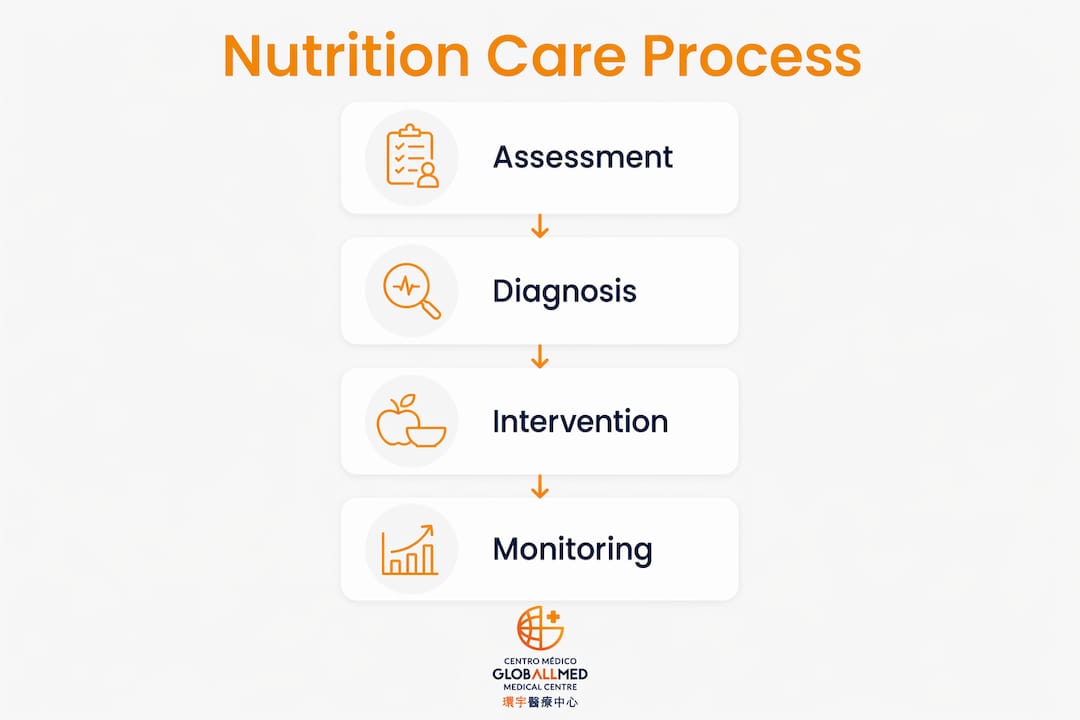
| NCP Step | What the dietitian does |
|---|---|
| Assessment | Reviews labs, medications, dietary history, and anthropometric data |
| Diagnosis | Identifies specific nutrition problems using standardized diagnostic language |
| Intervention | Implements a personalized nutrition plan targeting the diagnosed problems |
| Monitoring and evaluation | Tracks outcomes against clinical benchmarks at follow-up sessions |
This four-step process distinguishes MNT from a one-time consultation. The monitoring and evaluation phase is what produces measurable clinical outcomes over time.
Insurance, billing, and physician referral
Medicare requires a written physician referral for MNT sessions to qualify for reimbursement under CPT codes 97802 through 97804. Without that referral, the service is classified as patient education rather than medical treatment. That classification difference determines whether insurance pays.
CPT code 97802 covers the initial individual MNT session. CPT code 97803 covers follow-up individual sessions. CPT code 97804 covers group MNT sessions. Patients managing diabetes or kidney disease typically qualify for the most covered sessions per year under Medicare guidelines.
MNT is commonly applied to conditions including type 2 diabetes, chronic kidney disease, cardiovascular disease, obesity, eating disorders, and cancer-related malnutrition. Each condition requires a distinct nutritional approach, which is why the RDN credential and the NCP framework matter so much.
Pro Tip: Ask your primary care physician to include a specific diagnosis code on your MNT referral. A vague referral can delay insurance approval by weeks.
What are the benefits of outpatient dietitian services for patients managing chronic conditions?
The clinical benefits of outpatient dietitian services are measurable and well-documented. Patients who receive consistent MNT show improvements in blood sugar control, cholesterol levels, and blood pressure, three of the most common markers tracked in chronic disease management.
"Medical Nutrition Therapy by RDNs reduces hospital stays by 2–3 days and improves health outcomes such as blood sugar and blood pressure control for patients managing chronic conditions."
That reduction in hospital length of stay represents a direct cost saving for patients and health systems alike. Shorter stays also reduce the risk of hospital-acquired complications, which are a significant concern for patients with compromised immune function or metabolic instability.
The benefits extend beyond acute episodes:
- Blood sugar management: Consistent MNT lowers HbA1c in patients with type 2 diabetes, reducing the risk of neuropathy, retinopathy, and kidney damage.
- Cardiovascular protection: Dietary interventions targeting saturated fat and sodium intake reduce LDL cholesterol and systolic blood pressure.
- Wound healing support: Adequate protein and micronutrient intake accelerates tissue repair in patients with non-healing wounds or post-surgical recovery needs.
- Metabolic stability: Patients with cancer or chronic kidney disease benefit from nutrition plans that prevent muscle wasting and metabolic decline.
- Long-term behavior change: Unlike short-term diets, MNT builds sustainable eating patterns through repeated counseling sessions focused on real-world adherence.
Nutrition functions as a core medical intervention, not a supplementary service. Dietitians act as gatekeepers in interdisciplinary teams, preventing complications that would otherwise require costly hospital readmissions. That gatekeeper role is most effective when the dietitian is embedded within the care team rather than operating as a separate referral destination.
How do outpatient dietitians collaborate within healthcare teams?
Outpatient dietitians work within interdisciplinary teams, not in isolation. Effective chronic disease management requires coordinated input from multiple specialists, and the dietitian's nutrition plan must align with the medical decisions made by physicians, nurses, and other allied health professionals.
Outpatient RDNs collaborate closely with primary care doctors, cardiologists, and endocrinologists to integrate nutrition plans with broader medical treatment strategies. That collaboration prevents conflicting recommendations, such as a cardiologist prescribing a low-sodium diet while a separate provider recommends high-sodium electrolyte supplements.
The practical steps of interdisciplinary collaboration in outpatient dietetics follow a clear sequence:
- Receive the physician referral with a confirmed diagnosis and relevant clinical notes attached.
- Review the electronic medical record (EMR) to access current medications, recent labs, and specialist notes before the first session.
- Conduct the initial MNT assessment and document findings in the shared EMR so all team members see the same nutritional picture.
- Communicate care plan updates to the referring physician and any relevant specialists after each follow-up session.
- Participate in case conferences or multidisciplinary team meetings when the patient's condition involves multiple specialties.
Embedding dietitians within integrated care teams improves physician referral rates and patient outcomes because accessibility drives utilization. When a cardiologist can walk across the hall to consult an RDN, the patient benefits from same-day coordinated decisions. Co-location and real-time consultation are not logistical conveniences. They are clinical advantages.
The role of the dietitian also includes educating other healthcare team members. Physicians and nurses who understand the clinical scope of MNT make more appropriate referrals and set more realistic patient expectations. That education function strengthens the entire care model. For context on how other allied health professionals contribute to outpatient care, the role of the pharmacist in outpatient settings follows a similar interdisciplinary model.
What should patients expect during outpatient dietitian visits?
Knowing what to expect from an outpatient dietitian visit reduces anxiety and improves the quality of the session. The structure of these visits follows a predictable pattern across initial and follow-up appointments.
The initial session typically lasts 45–60 minutes. The dietitian uses this time to complete the full NCP assessment before proposing any interventions. Patients should arrive prepared with the following:
- A complete list of all medications, including over-the-counter drugs and supplements
- Recent laboratory results, particularly blood glucose, HbA1c, lipid panel, and kidney function markers
- A three-day food diary or a general account of typical daily eating patterns
- Information about food allergies, intolerances, cultural dietary practices, and household cooking habits
- Any previous nutrition plans or dietary advice received from other providers
Preparing a detailed nutritional history including supplements, medications, labs, and daily intake is critical for a productive first session. Patients who arrive without this information often spend the first session gathering data rather than setting goals.
Follow-up sessions are shorter, typically 30 minutes, and focus on reviewing progress against the goals set in the previous session. Patients should track any dietary changes made between sessions, note challenges encountered, and bring updated lab results when available.
Telehealth sessions follow the same clinical structure as in-person visits. Patients connect via a secure video platform, share relevant documents digitally, and receive the same personalized counseling. For patients managing outpatient care in Macau, telehealth options expand access to specialist dietitian services without requiring travel.
Key Takeaways
Outpatient dietitians deliver structured Medical Nutrition Therapy through the four-step Nutrition Care Process, producing measurable clinical benefits including reduced hospital stays and improved chronic disease control.
| Point | Details |
|---|---|
| MNT requires physician referral | Medicare and most insurers only reimburse MNT under CPT codes 97802–97804 with a written physician referral. |
| RDN credential is mandatory | Only CDR-credentialed RD or RDN professionals can deliver billable Medical Nutrition Therapy. |
| Clinical outcomes are measurable | MNT reduces hospital stays by 2–3 days and improves blood sugar, cholesterol, and blood pressure control. |
| Preparation improves session quality | Bringing labs, medications, and a food diary to the first visit shortens assessment time and accelerates goal setting. |
| Interdisciplinary collaboration is central | RDNs work alongside physicians, cardiologists, and endocrinologists to align nutrition plans with full medical treatment. |
Why the clinical depth of outpatient dietitians still surprises people
After years of observing how patients interact with outpatient dietitian services, one pattern stands out consistently. Patients arrive expecting a list of foods to eat and foods to avoid. What they encounter instead is a clinician who has already reviewed their labs, cross-referenced their medications for nutrient interactions, and prepared a care plan that accounts for their cultural background and household budget. That gap between expectation and reality is the single biggest barrier to patients fully utilizing dietitian services.
The clinical expertise of an RDN is not about knowing which foods are "healthy." It is about understanding how nutrition intersects with pharmacology, pathophysiology, and behavioral psychology simultaneously. A patient on dialysis cannot follow the same high-potassium diet recommended for cardiovascular health. A patient on warfarin needs consistent vitamin K intake, not elimination. These are medical decisions, not lifestyle suggestions.
Telehealth has changed the access equation in a meaningful way. Patients who previously could not reach a specialist dietitian due to geography or mobility now have consistent access to the same quality of MNT. That expanded reach matters most for patients managing complex chronic conditions who need frequent follow-up sessions to maintain clinical progress.
The most productive outpatient dietitian relationships are the ones where patients treat the sessions as medical appointments, not optional wellness check-ins. Bring your labs. Track your meals between sessions. Ask specific questions about your medications and your diet. The dietitian's clinical tools are only as effective as the information you bring to the table.
— IGHS
Outpatient dietitian care at GLOBALLMED Medical Center
GLOBALLMED Medical Center provides outpatient dietitian services as part of its integrated medical care model in Macau, built to international clinical standards.

Patients managing diabetes, cardiovascular disease, kidney conditions, or post-surgical recovery receive evidence-based Medical Nutrition Therapy delivered by credentialed RDN professionals. Each care plan is developed through the Nutrition Care Process and coordinated with the center's physicians, endocrinologists, and specialists. That coordination means your nutrition plan works with your medical treatment, not separately from it. Patients can access the full range of outpatient medical services at GLOBALLMED Medical Center, including specialist dietitian consultations, through a straightforward appointment process designed for both local and international patients.
FAQ
What is the role of a dietitian in outpatient care?
An outpatient dietitian delivers Medical Nutrition Therapy using the Nutrition Care Process to assess, diagnose, treat, and monitor patients with chronic conditions. The role includes personalized nutrition planning, behavioral counseling, and coordination with the patient's medical team.
Do I need a doctor's referral to see an outpatient dietitian?
Medicare and most insurance providers require a written physician referral for MNT sessions billed under CPT codes 97802–97804. Without a referral, the service may not be covered and could be classified as patient education rather than medical treatment.
What conditions do outpatient dietitians commonly treat?
Outpatient dietitians commonly manage type 2 diabetes, chronic kidney disease, cardiovascular disease, obesity, eating disorders, and cancer-related malnutrition through structured MNT programs.
How is a dietitian different from a nutritionist?
Only RD or RDN professionals credentialed by the Commission on Dietetic Registration can deliver billable Medical Nutrition Therapy recognized by Medicare and most insurers. Nutritionists and wellness coaches generally do not meet this billing standard.
What should I bring to my first outpatient dietitian appointment?
Bring a complete medication and supplement list, recent laboratory results, and a record of your typical daily food intake. This preparation allows the dietitian to complete a full clinical assessment and begin goal setting in the first session.