

Staying on top of your health in Macau isn't as simple as booking one test and calling it done. With recommendations coming from local hospitals, regional government programs, and international health bodies, it's genuinely hard to know which checks actually matter, how often you need them, and what numbers you're aiming for. Most residents we speak with have either missed key screenings or undergone tests that didn't match their age or risk profile. This guide cuts through the noise by laying out a practical, region-specific preventive health checklist that works for adults living in Macau and the surrounding region in 2026.
Table of Contents
- What makes a preventive health checklist effective?
- Core preventive health checks for adults in Macau
- Cancer screening programs: Hong Kong and Macau eligibility
- Lifestyle preventive measures for ongoing wellness
- Our perspective: why checklist culture matters and what most guides miss
- Next steps: preventive care made simple with Globallmed
- Frequently asked questions
Key Takeaways
| Point | Details |
|---|---|
| Local screening standards | Macau and Hong Kong have distinct, evidence-based screening schedules for preventive health. |
| Essential annual checks | Blood pressure, BMI, cholesterol, and glucose should be checked yearly or per doctor's advice. |
| Cancer screening eligibility | Age and gender determine eligibility for cervical, colorectal, and breast screenings—check your local subsidy. |
| Lifestyle makes a difference | Regular exercise, a healthy diet, and vaccination are central to ongoing prevention. |
| Personalization matters | Effective checklists adapt to your risk factors, life stage, and medical history—not just a fixed list. |
What makes a preventive health checklist effective?
Not all health checklists are created equal. Some are too generic to be useful. Others are pulled from Western guidelines that don't account for the metabolic risk profiles common in East Asian populations. An effective preventive checklist has three core qualities: it's regular, it's evidence-based, and it's tailored to the person using it.
Regular means assessments happen on a defined schedule, not just when something feels wrong. Most conditions that kill people silently, like hypertension and elevated cholesterol, produce no symptoms until they become dangerous. Evidence-based means the benchmarks come from clinical research, not marketing copy. Tailored means your checklist accounts for your age, gender, family history, and existing conditions.
For Macau residents, local benchmarks matter. The AIA Vitality Health Check program, conducted at Yinkui Hospital, offers a useful reference point. It covers blood pressure (healthy: under 140/90 mmHg), BMI between 18.5 and 22.9 (or 23 to 24.9 with waist under 80 cm for women and under 90 cm for men), total cholesterol under 5.2 mmol/L, and fasting blood glucose under 7.8 mmol/L. These are the core metabolic markers that define your cardiovascular and metabolic health baseline.
A well-structured Macau medical checkup checklist should be your starting point for understanding what's truly essential versus what's optional based on individual risk factors. Pairing that with a wellness consultation guide helps you understand how each result fits into your bigger health picture.
Key components every effective checklist should include:
- A defined measurement for each test (not just "check blood pressure," but what the target number is)
- A stated frequency (annual, bi-annual, or based on a physician's recommendation)
- A plan for follow-up if results fall outside the healthy range
- Consideration for life stage: a 28-year-old woman and a 60-year-old man need very different checklists
Pro Tip: Set calendar reminders 30 days before your scheduled checkup date. This gives you time to fast if needed, avoid strenuous exercise, and prepare any questions for your doctor. Consistency matters more than perfection.
Core preventive health checks for adults in Macau
With the criteria established, let's look at the actual tests every adult should consider building into their annual or bi-annual schedule. These aren't optional extras. They are the foundation of proactive health management.
The checkup essentials for adults in Macau align closely with the metabolic screening framework used in regional hospital programs. Below is a structured breakdown of each core test, its healthy range, and recommended frequency.
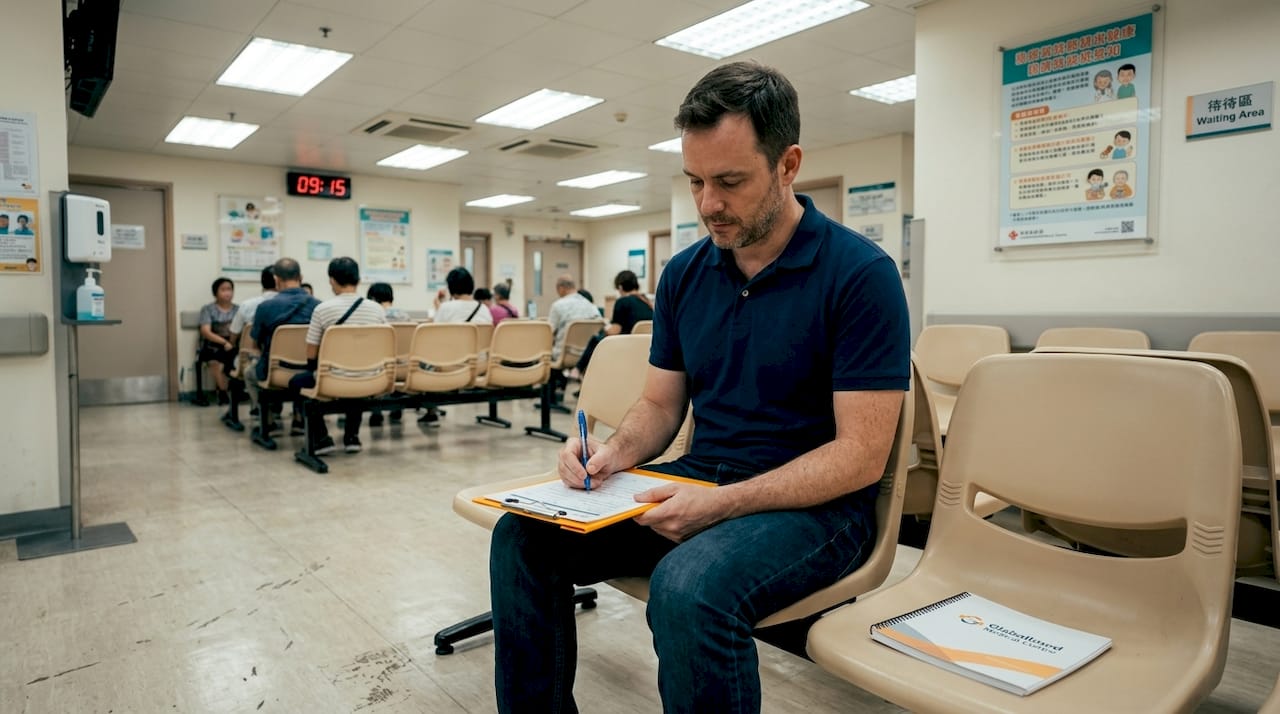
| Checklist item | Healthy range | Recommended frequency |
|---|---|---|
| Blood pressure | Under 140/90 mmHg | Annually (or more often if borderline) |
| BMI | 18.5 to 22.9 kg/m² | Annually |
| Waist circumference | Under 80 cm (F) / Under 90 cm (M) | Annually |
| Total cholesterol | Under 5.2 mmol/L | Annually |
| Blood glucose (fasting) | Under 7.8 mmol/L | Annually |
| Kidney function (eGFR/creatinine) | Within lab reference range | Every 1 to 2 years |
| Complete blood count (CBC) | Within lab reference range | Annually |
The medical standards in Macau for outpatient care increasingly align with these benchmarks, reflecting both international evidence and local population needs.
Here's why each marker matters beyond just a number on paper:
- Blood pressure is the single biggest modifiable risk factor for stroke and heart disease in the region. Even readings in the 130 to 139 / 85 to 89 range (called "high normal") warrant lifestyle review.
- BMI and waist circumference together are more predictive of metabolic risk than BMI alone. Many East Asian adults carry visceral fat at BMIs that would be considered "healthy" by Western cutoffs.
- Total cholesterol above 5.2 mmol/L increases arterial plaque risk. Your doctor may also want to check LDL and HDL separately for a fuller picture.
- Fasting blood glucose identifies pre-diabetes before it becomes type 2 diabetes. Catching it early allows dietary and lifestyle changes that can fully reverse the trajectory.
- Kidney function is often overlooked until the damage is significant. An annual eGFR gives early warning of conditions affecting filtration, particularly important if you take regular medication.
Fasting requirements apply to glucose and cholesterol tests. Plan your checkup for the morning and avoid food for 8 to 12 hours beforehand. Bring any current medications to your appointment.
Cancer screening programs: Hong Kong and Macau eligibility
Routine metabolic checks are essential, but screening for cancer is a key preventive measure, especially as you age. The earlier a cancer is detected, the more treatment options are available and the better the outcomes.
For residents in Macau and Hong Kong, cancer screening eligibility depends primarily on age and gender. The Hong Kong government subsidizes cancer screening for three major cancer types:
- Cervical cancer: Women aged 25 to 64, every 3 years using Pap smear or HPV testing
- Colorectal cancer: Adults aged 50 to 75, with fecal immunochemical test (FIT) every 2 years; colonoscopy if FIT is positive
- Breast cancer (pilot program): High-risk women aged 35 to 74
For colorectal cancer specifically, the Hong Kong Cancer Expert Working Group outlines tiered screening intervals based on risk: for average-risk adults aged 50 to 75, the options include a fecal occult blood test every 1 to 2 years, sigmoidoscopy every 5 years, or colonoscopy every 10 years.
Adopting a healthy lifestyle, including regular exercise and a diet rich in fiber and low in processed meats, can reduce colorectal cancer risk by up to 48%. Prevention doesn't start in the clinic. It starts at every meal and every decision to move your body.
Below is a comparison of the major cancer screening programs relevant to adults in the region:
| Test name | Age range | Interval | Subsidy status (HK) |
|---|---|---|---|
| Cervical Pap / HPV test | Women 25 to 64 | Every 3 years | Subsidized |
| FIT (colorectal) | 50 to 75 | Every 1 to 2 years | Subsidized |
| Colonoscopy | 50 to 75 | Every 10 years (if FIT positive, sooner) | Subsidized if positive FIT |
| Mammogram / breast screening | 35 to 74 (high risk) | As recommended | Pilot program |
Macau residents should check directly with SSM (Macau Health Services) or their private provider for updated subsidy and eligibility information specific to their residency status. Even without subsidies, the cost of a missed cancer diagnosis is incomparably higher than the cost of an early screening. Review these screening tips to prepare yourself for each type of test, from fasting requirements to bowel prep for colonoscopy. Understanding preventive diagnostics as a field will also help you ask better questions at your next appointment.
Lifestyle preventive measures for ongoing wellness
Routine tests and screenings are crucial, but daily habits make a lasting impact on health. No checklist is complete without addressing what you do outside the clinic.
The HK Primary Healthcare Blueprint recommends 150 to 300 minutes of moderate aerobic activity each week, or the equivalent in vigorous activity, plus muscle-strengthening exercises on at least 2 days per week. This isn't just for weight management. Regular physical activity measurably reduces your risk of type 2 diabetes, cardiovascular disease, certain cancers, and depression.
On the nutrition side, the same blueprint emphasizes a diet rich in fruits and vegetables while limiting saturated fats, sodium, and added sugars. In practical terms for Macau residents: reduce deep-fried and high-salt restaurant meals, prioritize vegetables in at least two meals per day, and limit sugary drinks including fruit juices.
Vaccinations are also part of a complete preventive picture. Macau SSM promotes vaccination for measles and flu as baseline immunizations, alongside campaigns for dengue and chikungunya prevention through mosquito bite protection. For seniors, there's particular attention to tuberculosis (TB) monitoring, with a new tongue-swab TB screening program planned for the second half of 2026.
Here is a practical lifestyle preventive checklist you can start using today:
- Aim for at least 30 minutes of brisk walking, cycling, or swimming on most days of the week
- Add resistance training (bodyweight exercises, resistance bands, or weights) twice a week
- Fill half your plate with non-starchy vegetables at each main meal
- Limit processed meats, high-salt sauces, and fried snacks to occasional treats
- Stay up to date with flu vaccination each autumn season
- Check SSM announcements for seasonal campaigns (dengue alerts, TB outreach)
- If you are over 60, ask specifically about senior-focused screening programs
A useful holistic prevention guide can help you see how these lifestyle choices connect to your clinical results. For example, reducing sodium intake directly affects your blood pressure numbers at your next checkup.
Pro Tip: Follow SSM's official social media channels for real-time updates on vaccination campaigns and free screening events. The timing of these campaigns matters. Flu vaccinations, for example, are most effective when received before peak winter season.
Our perspective: why checklist culture matters and what most guides miss
Most preventive health guides treat checklists as static documents. Download the PDF, check the boxes, and you're done for the year. That approach misses something important.
What we've observed working with patients across Macau is that the most common failure isn't skipping tests. It's skipping context. Someone gets a cholesterol result of 5.4 mmol/L and doesn't know whether that's mildly elevated or a cause for immediate concern given their family history of early cardiac events. Numbers only make sense when your physician knows your full picture.
Standard hospital programs, including the well-designed AIA Vitality framework at Yinkui, are genuinely useful starting points. They capture the metabolic baseline that matters most. But they weren't designed to account for personal triggers. If your father had a stroke at 55, your checklist needs to include earlier and more frequent vascular screening. If you've traveled to dengue-endemic areas, your checklist needs an infectious disease lens. If you're planning a pregnancy, several tests that appear on standard checklists (X-rays, some Pap guidelines, certain medications used during prep) need to be revisited with your doctor first.
The other thing most guides miss is the record-keeping layer. Having your test results filed in three different hospital systems, spread across paper reports and apps, means no single doctor ever sees your full trajectory. A rising fasting glucose from 5.4 to 6.1 to 6.8 over three years is a clear warning. But only if someone is tracking it.
We recommend streamlining your consultation workflow by maintaining one consolidated health record, whether digital or a simple folder, and bringing it to every appointment. Ask your doctor to review trends, not just single data points.
Checklist culture works when it becomes a living practice, not a one-time event. Build it into your calendar, personalize it for your risk profile, and use it as a starting point for conversation rather than a destination.
Next steps: preventive care made simple with Globallmed
If you've made it this far, you're already ahead of most people in your community when it comes to thinking about preventive wellness. Taking action is the logical next step.

At Globallmed, Macau's private outpatient center built to international standards, we make it easy to put this checklist into practice. Our outpatient clinic services cover the full range of preventive assessments, from core metabolic panels to specialized screenings. The medical clinic department handles everything from blood pressure monitoring to comprehensive blood work, while our wellness department supports the lifestyle side of your prevention plan. Our clinical team will review your results in context, not just against a reference range, but against your history, your goals, and your risk profile. Book your assessment today and start building your personalized preventive health record.
Frequently asked questions
How often should adults in Macau get preventive health checks?
Most adults should undergo core checks including blood pressure, BMI, cholesterol, and glucose annually or as advised by their physician, with some tests shifting to every two years once results are consistently healthy.
What preventive screenings are subsidized for residents in Macau and Hong Kong?
Hong Kong residents can access subsidized cervical, colorectal, and pilot breast screenings; Macau residents should check with SSM for current local programs and hospital-based essential check availability.
Are vaccinations part of preventive health checklists in Macau?
Yes, SSM promotes vaccinations for measles, flu, and dengue prevention as core components of Macau's preventive health initiatives, alongside emerging programs like senior TB screening.
Can lifestyle changes really reduce cancer risk?
Adopting regular exercise and a healthy diet can cut colorectal cancer risk by up to 48%, making lifestyle modification one of the most powerful tools in cancer prevention.
How do I adapt preventive checklists for special conditions like pregnancy?
Always consult your physician first, as certain tests such as Pap smears and X-rays may have contraindications during pregnancy, and your checklist should be reviewed and adjusted based on your specific health situation.