

Choosing outpatient wellness services in Macau is rarely straightforward. Whether you're a local resident booking a routine checkup or a medical tourist planning cosmetic or therapeutic treatments, the landscape can feel overwhelming fast. You're weighing physician credentials, facility standards, aftercare availability, and the very real question of whether a provider operates at an internationally recognized level of safety. The stakes are especially high for services that blur the line between medical and cosmetic care. This guide gives you a practical, evidence-based framework to evaluate your options clearly and confidently, so your wellness decision is built on facts rather than guesswork.
Table of Contents
- What to look for in outpatient wellness services
- Top outpatient wellness essentials for medical tourists and locals
- Comparing outpatient wellness: accredited vs. non-accredited options
- Making the best choice: decision checklist for outpatient wellness
- Why checklist culture isn't enough for outpatient wellness
- Choose Globallmed for accredited outpatient wellness in Macau
- Frequently asked questions
Key Takeaways
| Point | Details |
|---|---|
| Verify accreditation | Always check for recognized international accreditation before selecting any outpatient service. |
| Clarify staff roles | Ensure you know exactly who will perform your procedures and ask for their qualifications. |
| Prioritize aftercare | Select providers with comprehensive aftercare and clear follow-up protocols for all services. |
| Compare before choosing | Use a structured comparison to weigh accredited vs. non-accredited facilities for safety and quality. |
| Prepare with a checklist | Follow a step-by-step decision checklist to cover every detail before starting your outpatient journey. |
What to look for in outpatient wellness services
With the need for trustworthy providers established, let's break down the essential criteria to evaluate any outpatient wellness service. Not all facilities carry the same level of rigor, and in a city like Macau where both public and private providers coexist, knowing what to check first saves you real time and real risk.
International accreditation is the clearest benchmark you have. It's not just a badge on a wall. Accreditation means an independent body has audited the facility's practices, protocols, and equipment against a recognized global standard. For diagnostic laboratories, the gold standard is ISO 15189, which covers medical laboratory quality and competence. CHCSJ's Clinical Pathology Service received this exact accreditation with all 47 laboratory tests approved following an in-person evaluation. That matters because when a lab runs your blood work or diagnostic tests, you want the result to be trustworthy, not just technically produced.
Key criteria for evaluating any outpatient facility:
- Accreditation documentation: Ask directly for ISO certificates, licensing numbers, or other external validation. Legitimate providers will share this without hesitation.
- Physician access and supervision: Especially important in medical aesthetic or spa-adjacent services, where the line between supervised and unsupervised treatment can blur easily.
- Transparent compliance policies: Does the facility publish or share written policies on treatment scope, staff qualifications, and patient rights?
- Defined escalation pathways: What happens if something goes wrong? Is there a physician on call, or a referral protocol to a hospital?
- Aftercare documentation: Are post-procedure instructions written and provided, or just verbal and informal?
Understanding the ambulatory care overview helps clarify which services fall within outpatient scope versus those requiring admission. Many patients are surprised by how wide that range actually is.
Public facilities in Macau operate under government regulation and often have more standardized protocols. Private outpatient centers vary significantly. Some match or exceed public standards, especially those pursuing international accreditation. Others operate with less oversight. Knowing the top outpatient services available in 2026 helps you understand what to expect from high-performing private providers.
Pro Tip: Always ask for written confirmation of accreditation status before booking any service involving diagnostics, procedures, or treatments with recovery periods. A provider that hesitates to produce this information is a provider worth reconsidering.
Top outpatient wellness essentials for medical tourists and locals
Once you've set your evaluation framework, it's important to know which services are considered true essentials in outpatient wellness. These five categories represent the core of what any credible provider should offer and support with appropriate clinical oversight.
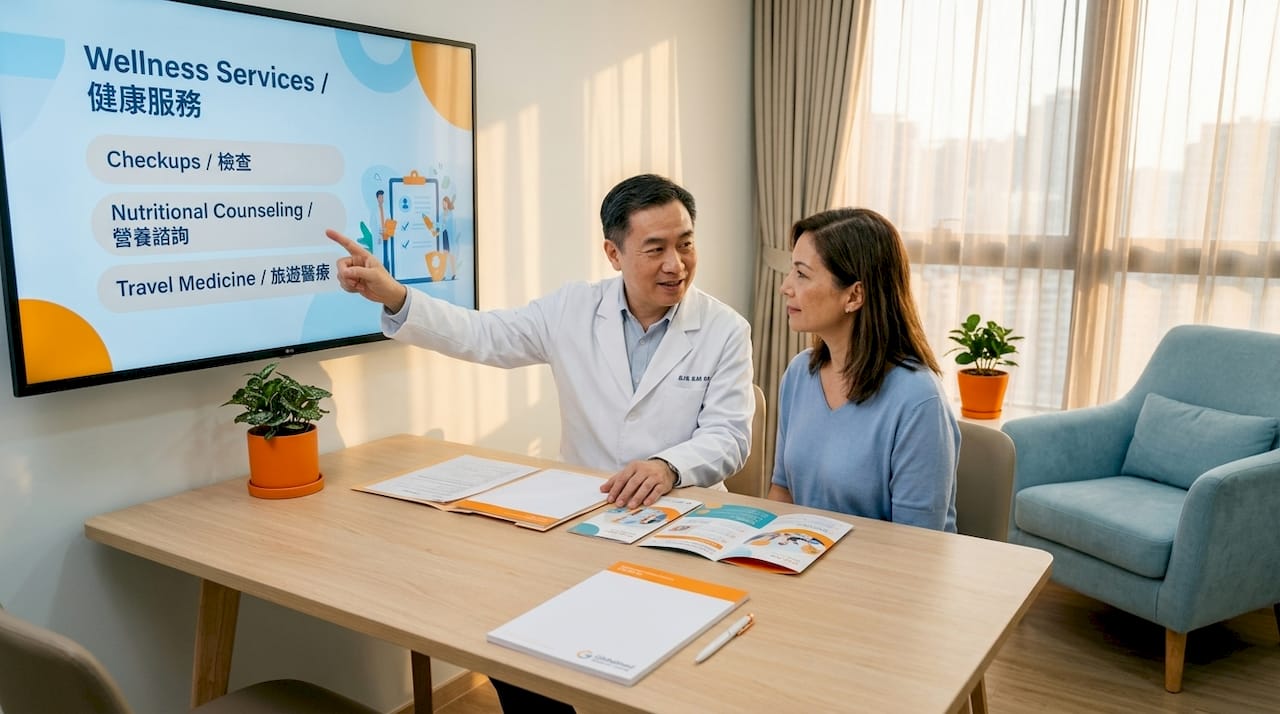
1. Medical consultations A general or specialist consultation is typically the entry point for any wellness journey. What separates a quality consultation from a box-ticking exercise is the time a physician spends understanding your full health picture, not just the presenting complaint. For medical tourists especially, an initial consultation should include a thorough review of existing records and a realistic discussion of treatment timelines.
2. Diagnostics and imaging From X-rays to ultrasound to advanced imaging, diagnostics underpin nearly every decision that follows. The quality of equipment matters, but so does the reporting process. Accredited facilities follow standardized reporting protocols, reducing the chance of a misread result influencing your treatment path.
3. Laboratory testing Lab results drive clinical decisions. Knowing that a lab operates under ISO-certified conditions gives you confidence in the accuracy of results. ISO 15189 accreditation covers everything from sample handling to result interpretation, which is why it's the standard serious facilities pursue. Understanding the details of outpatient procedures in Macau helps you know what to expect at each stage of the process.
4. Day procedures and minor surgeries These include everything from mole removals and biopsy procedures to joint injections and infusions. They're called "day procedures" because you go home the same day. That convenience is real, but it also means your aftercare plan needs to be airtight. A quality provider will give you written post-procedure instructions, a follow-up appointment, and a direct contact for any complications.
5. Medical aesthetics and cosmetic services This is where things get complicated. Medical spas are hybrid facilities with both physician and non-physician roles, and they require clearly defined policies on who performs each service and under what supervision. Botulinum toxin injections, laser treatments, chemical peels, and similar services all carry clinical risk. Without physician oversight and a defined treatment scope, patients are exposed to complications that exceed a standard spa's ability to manage.
"The distinction between a wellness treatment and a medical procedure isn't always visible from the outside, but it has direct consequences for how your outcome is managed when something doesn't go as expected."
For out-of-town patients, the overlooked essentials are coordination services: help navigating records, a single point of contact, and clear post-visit communication. Exploring holistic care approaches can also reveal how wellness-focused providers integrate preventive and lifestyle services into a broader care model.
Pro Tip: For any cosmetic or aesthetic procedure, ask specifically whether the supervising physician will be physically present during treatment or just nominally responsible. Physical presence during higher-risk treatments is a meaningful safety difference.
Comparing outpatient wellness: accredited vs. non-accredited options
Now that you know your options, it's critical to see exactly how trusting an accredited provider changes the outpatient experience compared to less-regulated alternatives.
| Feature | Accredited provider | Non-accredited provider |
|---|---|---|
| Lab testing standards | ISO 15189 or equivalent | Variable, self-reported |
| Physician supervision | Defined and documented | Inconsistent |
| Aftercare protocols | Written, structured follow-up | Informal or absent |
| Complaint process | Formal channel exists | Often unclear |
| Emergency escalation | Defined referral pathway | Ad hoc |
| Transparency | Certificates available on request | Often unavailable |
| Cosmetic treatment oversight | Physician-led with scope documentation | May be unsupervised |
The ISO 15189 accreditation at CHCSJ illustrates what international standard compliance looks like in practice for Macau's public diagnostic services. Private facilities that pursue equivalent standards signal a genuine commitment to patient safety, not just competitive positioning.
Advantages of accredited outpatient care:
- Significantly lower risk of diagnostic error
- Predictable, documented treatment protocols
- Clearer legal and ethical accountability
- More reliable post-procedure support
- Better documentation for insurance or follow-up care in home countries
Known limitations even for accredited providers:
- Accreditation covers defined service areas, not the entire facility experience
- Staff turnover can create gaps even within accredited systems
- The accreditation itself doesn't guarantee the right treatment was chosen, only that it was performed to standard
For medical tourists, the gap between these two columns is even more significant. Research shows that medical tourists minimize perceived risks, often relying on anecdotal online reviews and omitting cost and aftercare from their decision-making process. That's a real vulnerability when you're traveling across borders for treatment. Understanding the landscape of international outpatient care helps set realistic expectations for what quality providers actually deliver. You can also review outpatient care best practices to benchmark what you should be receiving at every stage.
Making the best choice: decision checklist for outpatient wellness
With the pros and cons now clear, here's a hands-on checklist you can rely on for your next outpatient wellness decision. Following these steps in order protects you from the most common and avoidable mistakes.
| Step | Action | Why it matters |
|---|---|---|
| 1 | Confirm accreditation in writing | Verifies the facility meets recognized standards |
| 2 | Review staff qualifications for your specific treatment | Ensures the right person performs your care |
| 3 | Ask about physician supervision policy | Critical for cosmetic and aesthetic services |
| 4 | Request written aftercare instructions in advance | Prevents post-procedure confusion |
| 5 | Identify your emergency contact at the facility | Essential if complications arise |
| 6 | Confirm follow-up appointment availability | Continuity is part of quality care |
| 7 | Verify communication options for international patients | Ensures ongoing support after you travel home |
Step-by-step decision process:
- Research the facility before any contact. Look for published accreditation certificates, physician bios, and patient policies.
- Make first contact by phone or email to ask your top three questions. A quality provider answers clearly and promptly.
- Book a consultation before committing to any procedure. Use that visit to verify what you read online matches what you experience in person.
- Confirm your treatment plan in writing, including what success looks like and what the escalation path is if it doesn't go as planned.
- For doctor-led cosmetic or aesthetic procedures, legitimate medical-aesthetic pathways require clearly defined scope and documented before/after plans. If yours doesn't have this, stop and ask why.
- Check whether telemedicine in outpatient care is available for post-visit follow-up, which is especially useful for international patients who can't easily return in person.
- Review the facility's outpatient aftercare guide to understand what a quality follow-up process looks like in practice.
Pro Tip: Before traveling to Macau for treatment, document the local emergency services number, the nearest hospital with emergency care, and your facility's 24-hour contact. Keep all three saved in your phone and on paper.
Why checklist culture isn't enough for outpatient wellness
Here's the uncomfortable truth that most outpatient guides won't tell you directly. A checklist is a floor, not a ceiling. It catches the obvious gaps, but it doesn't protect you from the subtler failures that define most poor patient experiences.
We've seen this pattern consistently: patients arrive with every box checked. Accredited facility. Physician on file. Written aftercare instructions. And yet the outcome falls short because no checklist item asked whether the provider would actually follow through on those promises after you left. Accreditation validates a system; it doesn't guarantee how that system behaves on any given Tuesday afternoon.
The real risks are relational and communicative. Did the physician actually explain what could go wrong? Was the aftercare plan realistic for someone who would be on a flight home within 48 hours? Was there a specific person you could call, or just a general contact number that leads to a voicemail box?
Research confirms that medical tourists weight emotional factors heavily in their decisions, often more than objective data. That's not irrational. It's human. But it creates a blind spot. The facility that felt warm and professional during your consultation may have no structured aftercare capacity at all.
Our view at Globallmed is that the most meaningful question to ask any provider isn't about their certifications. It's this: "If something goes wrong after I leave, who is responsible for managing it, and how do I reach them?" A confident, specific answer to that question tells you more about a facility's real commitment to patient safety than any certificate on the wall. Review how a structured outpatient workflow should look in practice to better identify when a provider is genuinely following through versus just describing a process.
Always ask about local aftercare partnerships. Ask whether the facility has relationships with nearby hospitals or specialists for escalation. These aren't alarming questions. They're the questions every quality provider should welcome and answer with specifics.
Choose Globallmed for accredited outpatient wellness in Macau
Selecting a provider that genuinely supports you from first consultation through full recovery is what separates a safe outpatient experience from an uncertain one.

At Globallmed, we've built our practice around exactly that standard. Our medical clinic department covers general and specialist consultations, diagnostics, and day procedures carried out by qualified physicians operating under transparent clinical protocols. Our beauty wellness and wellbeing department delivers cosmetic and aesthetic services with defined physician oversight, so you always know who is responsible for your care and what your aftercare plan includes. For families and female patients, our women and child checkups provide structured, thorough preventive care. Whether you're a Macau resident or traveling internationally, we make booking and follow-up support straightforward from day one.
Frequently asked questions
How can I verify if a wellness facility is internationally accredited in Macau?
Check for ISO certification such as ISO 15189:2022 for labs and request documentation directly from the provider before booking any service.
Why is accreditation important for outpatient wellness services?
Accreditation confirms the facility meets international diagnostic standards for quality and patient safety, which directly reduces the risk of errors and complications throughout your care.
What should I ask before choosing a medical spa or cosmetic service?
Ask specifically who will perform your procedure, what their clinical qualifications are, and what structured aftercare is included, since medical spas require clear staff role policies to operate safely.
Are there special risks for medical tourists choosing outpatient services?
Yes. Research shows medical tourists minimize perceived risks and often overlook aftercare planning, which creates real vulnerabilities when complications arise after returning home.
What types of outpatient wellness services are considered essential?
Core essentials include medical consultations, diagnostics, laboratory testing, day procedures, and doctor-supervised cosmetic or aesthetic treatments with documented before-and-after care plans.