
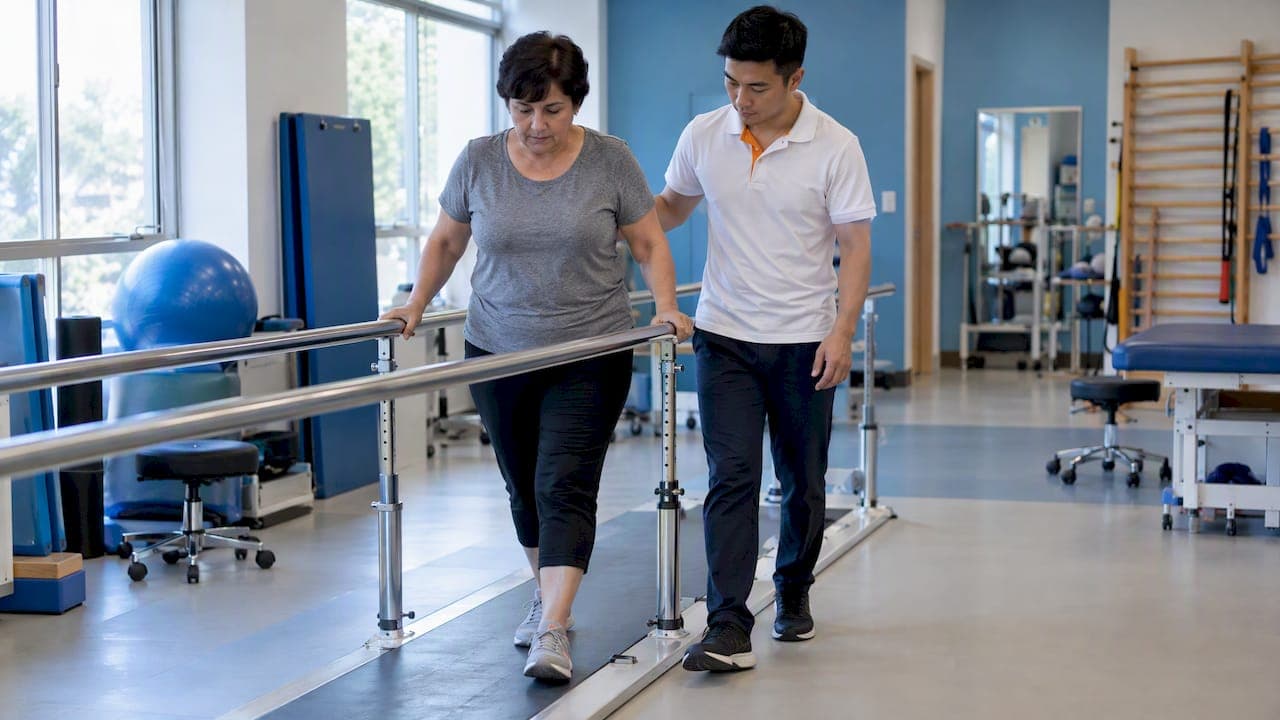
Physiotherapy restores movement, strength, and physical function, while occupational therapy helps you apply that function to daily life, such as dressing, working, or cooking. If pain or mobility is your main problem, physiotherapy is the usual starting point; if the challenge is completing everyday tasks, occupational therapy fits better. Many conditions call for both at once.
Table of Contents
- Core differences in goals, techniques, and training
- Where physiotherapy and occupational therapy overlap
- Which conditions and goals fit physiotherapy, occupational therapy, or both
- What a first appointment and treatment course typically look like
- How to choose between physiotherapy and occupational therapy
- Clinical authority behind integrated PT and OT care
- Book physiotherapy or occupational therapy with our team
- FAQ
- Sources
Core differences in goals, techniques, and training
Physiotherapy centers on the body's physical capacity: range of motion, strength, balance, and pain management. Clinicians use exercise prescription, manual therapy, gait training, and modalities like heat, ice, or electrical stimulation to rebuild movement and reduce pain.

Occupational therapy centers on independence in daily life. Occupational therapists work on fine motor skills, sensory processing, and the practical adaptations that let someone manage activities of daily living, from brushing teeth to returning to a job. Typical techniques include task-based practice, environmental modification, assistive technology, and custom splinting.
Both are regulated health professions with university-level clinical training, though their coursework diverges early: physiotherapy programs emphasize biomechanics and exercise science, while occupational therapy programs emphasize activity analysis and psychosocial function alongside anatomy.
- Physiotherapy: movement, strength, pain relief, exercise-based and manual techniques.
- Occupational therapy: daily activities, fine motor skills, sensory and environmental adaptation.
- Shared ground: both require licensure, both measure progress against functional goals, and both commonly work in outpatient, hospital, and home settings.
Where physiotherapy and occupational therapy overlap
Several conditions commonly involve both professions at once, which is one reason the two fields are often confused.
- Stroke recovery, where physical therapists rebuild strength and balance while occupational therapists rebuild the ability to dress, cook, or manage finances.
- Post-surgical recovery, especially hand or orthopedic surgery, where physiotherapy restores range of motion and occupational therapy restores task-specific use of the limb.
- Pediatric developmental delays, where physiotherapy targets gross motor milestones and occupational therapy targets fine motor and sensory skills needed for school.
- Geriatric frailty, where physiotherapy improves strength and fall risk while occupational therapy adapts the home environment for safety.
A patient recovering from hand surgery illustrates the division clearly: physiotherapy works on swelling, joint mobility, and grip strength, while occupational therapy teaches the patient to use that recovering hand for buttoning a shirt or typing again.
Which conditions and goals fit physiotherapy, occupational therapy, or both
Matching your situation to the right discipline usually comes down to the problem you most want solved.
- Physiotherapy tends to fit sports injury recovery, post-operative mobility after joint replacement, chronic back or neck pain, and balance disorders.
- Occupational therapy tends to fit hand and upper-limb rehabilitation, difficulty with self-care tasks, sensory processing challenges, and workplace or home adaptations after illness or injury.
- Combined care tends to fit stroke, traumatic brain injury, complex pediatric cases, and frail older adults managing multiple conditions at once.
Settings vary by population. Children are often seen in schools or pediatric outpatient clinics, older adults in home health or geriatric outpatient programs, and working adults in general outpatient therapy departments. The right setting usually follows the primary diagnosis and the patient's daily environment rather than the therapy type itself.
What a first appointment and treatment course typically look like
A physiotherapy assessment usually starts with a history, a physical exam, and functional testing of strength, range of motion, and gait. An occupational therapy assessment leans more on observing how you perform specific tasks, such as reaching, gripping, or managing stairs at home.
- Physiotherapy sessions often include guided exercise, manual therapy, and a home exercise program.
- Occupational therapy sessions often include task practice, adaptive equipment training, and strategies for managing fatigue or sensory sensitivity.
- Course length varies by condition: a mild sprain may need a few weeks of physiotherapy, while stroke recovery can involve months of combined therapy with periodic reassessment.
- Most outpatient clinics require a referral for insurance purposes, though policies differ by provider and plan.
Pro Tip: Bring a short list of your three hardest daily tasks to your first visit so the clinician can prioritize sessions around what matters most to you.
How to choose between physiotherapy and occupational therapy
Start by naming your primary goal, since that single answer usually points to the right first appointment.
- If your main complaint is pain, stiffness, or difficulty moving, book a physiotherapy assessment first.
- If your main complaint is trouble completing daily tasks such as cooking, dressing, or working, book an occupational therapy assessment first.
- If both apply, for example after a stroke or major surgery, ask the clinic for a combined assessment rather than choosing one discipline alone.
- At booking, ask which clinician will manage your case, what outcomes are realistic within the first few weeks, how often sessions are scheduled, and whether a home program or equipment will be needed.
- Ask whether progress will be measured against a specific functional goal, such as walking a set distance or dressing independently, so you can track improvement objectively.
Clinical authority behind integrated PT and OT care
Coordinated rehabilitation works best when physiotherapists and occupational therapists share records, goals, and timelines rather than operating as separate referrals. Our multi-therapy department brings physiotherapy, occupational therapy, speech therapy, and psychology under one outpatient team, which lets clinicians coordinate a single care plan instead of patients managing two disconnected appointments.
A combined PT and OT assessment typically reviews physical capacity and daily function in the same visit, so the care plan addresses both the body and the task from day one.
In practice, this means a patient recovering from surgery or a neurological event can have strength, balance, and task performance evaluated together, with both disciplines working from one shared set of goals.
Book physiotherapy or occupational therapy with our team
Outpatient physiotherapy and occupational therapy can be provided as part of multi-therapy services, alongside speech therapy and psychology, so care plans may draw on more than one discipline when the condition calls for it.
- Review physiotherapy and occupational therapy details on our multi-therapy services page.
- Request a combined assessment if your goals involve both movement and daily task performance.
- Browse our full services overview to see how therapy fits alongside our other outpatient care.
This article is general information, not a substitute for advice from a qualified doctor. Consult a qualified healthcare professional about your own circumstances before acting on anything here.
FAQ
Is physical therapy different from occupational therapy?
Yes. Physical therapy focuses on restoring movement, strength, and physical function, while occupational therapy focuses on helping you perform daily activities and tasks independently. The two often work together on the same patient but address different parts of recovery.
What is a physical therapist for children called?
A physical therapist who treats children is typically called a pediatric physical therapist, a specialist within physiotherapy who focuses on gross motor development and movement milestones. Pediatric occupational therapists work alongside them on fine motor and sensory development.
What is an OT?
An OT, or occupational therapist, is a licensed clinician who helps patients perform meaningful daily activities, from self-care to work tasks, often through task-based practice, environmental changes, and assistive equipment. Occupational therapy is commonly delivered in outpatient clinics, hospitals, schools, and home settings.
Which is better to study, physiotherapy or occupational therapy?
Neither field is objectively better to study since the right choice depends on whether you are more drawn to restoring physical movement or helping people regain independence in daily tasks. Both require accredited clinical training and offer similar outpatient, hospital, pediatric, and geriatric career paths.