
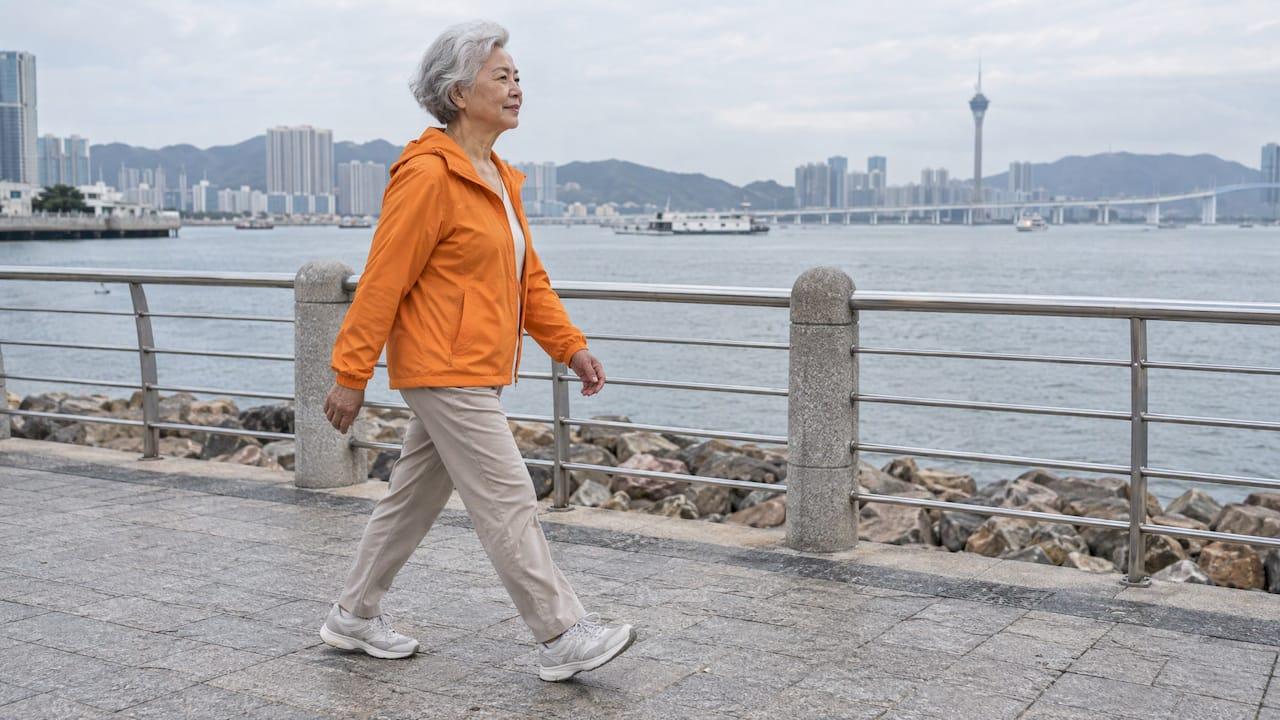
Mobility is the ability to move purposefully through your day: to rise from a chair, walk to the shops, climb stairs, bend to tie a shoe and carry what you need. It underpins independent living, and it can usually be maintained or improved when limitations are identified early. This article explains what mobility involves, why it declines, how back pain interacts with it, which signs call for a professional assessment, and which measures are generally recommended to keep moving safely.
Table of Contents
- What mobility means in practice
- Mobility, flexibility and strength: how they differ
- Why mobility matters for health and independence
- Common mobility problems in older adults
- Back pain and mobility
- Signs that call for a medical assessment
- Practical ways to maintain and improve mobility
- Which specialist for which problem
- Assessment and rehabilitation at Globallmed in Macau
- Frequently asked questions
What mobility means in practice
In everyday medical usage, mobility describes functional movement: the capacity to get from one place to another and to perform daily tasks without undue difficulty, pain or risk of falling. Walking is the clearest example. It looks simple, but it depends on the coordinated work of several body systems at once: muscles and joints, the heart and lungs, the senses (especially vision and balance) and the nervous system.
Because so many systems contribute, a limitation in mobility rarely has a single cause. A person may walk more slowly because of weak thigh muscles, a stiff hip, reduced endurance, poor eyesight, pain in the lower back, or a combination of these. Identifying which factors apply is the purpose of a clinical assessment, and it determines which treatment is appropriate.
Mobility can be considered at three levels:
- Joint mobility: the range of movement available at a joint, such as the hip, shoulder or spine, without restriction.
- Functional mobility: the ability to carry out movements that daily life requires, such as standing up, turning, stepping over a kerb or getting in and out of a vehicle.
- Community mobility: the ability to travel beyond the home, on foot or by public transport, and to take part in work, family and social life.
A problem at one level often leads to problems at the next. Stiff hips, for example, shorten the stride, which slows walking, which in turn discourages trips outside the home.
Mobility, flexibility and strength: how they differ
The terms are often used interchangeably, but they describe different qualities.
Flexibility is the ability of a muscle to lengthen passively. Strength is the ability of a muscle to produce force. Mobility combines these with joint range, balance and motor control, so that you can actually use the available range in a movement. A person may be able to touch their toes while seated yet struggle to rise from a low chair, because the movement demands strength and balance rather than flexibility alone.
This distinction matters when choosing exercise. Stretching alone rarely restores mobility. An effective programme usually addresses joint range, muscle strength, balance and endurance together, and is adjusted to the individual's diagnosis, age and fitness.
Why mobility matters for health and independence
Mobility is closely linked to the ability to live independently. Public health authorities in the United States and in Hong Kong both treat it as a central marker of healthy ageing. Research summarized by the US National Institute on Aging indicates that older adults who lose mobility are less likely to remain living at home, and that they experience higher rates of disease, disability, hospitalization and death.
The effects extend beyond the physical:
- Cardiovascular and metabolic health. Regular movement supports blood pressure, blood sugar control and healthy body weight.
- Bone and muscle health. Weight-bearing activity helps preserve bone density and muscle mass.
- Mental health. Reduced movement is associated with low mood, social isolation and loss of confidence. Hong Kong primary care guidance notes that musculoskeletal conditions that limit function are commonly linked with depression.
- Safety. Good strength and balance lower the risk of falls, which are among the most common causes of injury in older people.
These points apply to adults of every age. Office workers, parents, athletes and people recovering from surgery all depend on mobility, and a gradual decline is easier to correct early than late.
Common mobility problems in older adults
Geriatric guidance describes a recognizable group of difficulties: unsteadiness when walking, trouble getting in and out of a chair, and falls. Muscle weakness, joint problems, pain, chronic disease and neurological conditions can each contribute.
Muscle loss and joint disease
Sarcopenia, the age-related decline in muscle mass, strength and function, is associated with difficulty standing, walking and climbing stairs. Osteoarthritis of the knee or hip adds pain and stiffness. A clinical review published in JAMA in 2013 described mobility limitation in older patients as common and frequently linked to obesity, low physical activity and chronic diseases such as diabetes or arthritis. These are largely modifiable factors, which is why prevention and early treatment are worthwhile.
Falls
The revised Hong Kong Reference Framework for preventive care in older adults (2021) explains that falls usually involve intrinsic factors, such as muscle weakness, extrinsic factors, such as obstacles in the home, and sometimes risky behavior. Geriatric guidance also describes a damaging cycle: a fall leads to injury, the injury leads to fear of falling, fear leads to reduced activity, and reduced activity further weakens the person.

Hidden decline
Research on ageing describes a stage before obvious difficulty appears, in which people quietly adapt. They take the lift rather than the stairs, walk shorter distances, or avoid uneven ground. These adaptations feel sensible but may mask early loss of function. A change in habit that you cannot explain by preference alone is worth mentioning to a doctor.
Back pain and mobility
Back pain is among the most frequent reasons adults reduce their activity, and it interacts closely with mobility. Hong Kong primary care guidance on common musculoskeletal problems (2022) states that conditions such as low back pain can significantly limit mobility and function. Pain makes people guard their movements, the trunk and hips stiffen, the supporting muscles weaken from disuse, and everyday tasks such as bending, lifting and rising from a seat become harder.
Typical effects on movement
- Difficulty standing up from a chair or getting out of bed.
- Reduced walking distance or speed.
- Stiffness when bending forward or rotating the trunk.
- Avoidance of lifting, stairs or longer periods of sitting.
- Altered posture or gait to protect the painful area.
Contributing factors
The 2022 Hong Kong Reference Framework lists smoking, obesity, occupation, psychological distress and low physical activity among the risk factors for low back pain. Most are within a person's influence. Prolonged sitting at a desk, repetitive manual work, and persistent stress all feature in clinical discussions of why back pain recurs.
What current guidance recommends
Hong Kong guidance for acute or chronic low back pain emphasizes education about the condition, avoiding bed rest, staying active and continuing usual activities as far as comfort allows. A 2025 Hong Kong clinical guideline for first-contact physiotherapists identifies mechanical back pain as a common musculoskeletal problem that can be managed effectively by physiotherapy, including education, ergonomic advice and exercise therapy.
The practical message is that rest is rarely the answer. Gentle, graded movement, guided by a professional when pain is significant, generally supports recovery better than prolonged inactivity.
Signs that call for a medical assessment
Some changes can be monitored at home. Others warrant an appointment without delay.
Arrange an assessment if you or a relative:
- has fallen more than once, or has had a fall that needed medical attention;
- reports or shows problems with walking or balance, such as shuffling, veering or holding on to furniture;
- trips repeatedly for no apparent reason, which geriatric guidance associates with conditions such as Parkinson's disease, dementia or poor eyesight;
- has back pain that persists, recurs often or limits work, sleep or daily tasks;
- has noticed a steady decline in walking distance, stair climbing or the ability to rise from a chair;
- takes several medicines and has become drowsy or unsteady.
Hong Kong guidance notes that people at high risk of falling, including those with recurrent falls, acute falls needing medical attention or demonstrated gait and balance problems, may benefit from referral. The same guidance advises primary care providers to review the medicines of older patients, because some psychoactive drugs, including certain antidepressants and hypnotics, increase fall risk. Never stop or change a prescription yourself: discuss it with the prescribing doctor.
Seek urgent care if back pain follows a significant injury, or comes with new weakness or numbness in the legs, loss of bladder or bowel control, fever, or unexplained weight loss. These features need prompt medical evaluation, not a wait-and-see approach.
How clinicians measure mobility
Assessment typically combines a history, a physical examination and a few simple functional tests. The Timed Up and Go (TUG) test, in which you stand from a chair, walk a short distance, turn, return and sit, is widely used to examine gait and balance. The Hong Kong framework notes that a time of 14 seconds has been found to separate fallers from non-fallers in healthy, highly functional older people. A slower time does not provide a diagnosis by itself, but it tells the clinician where to look next. A physiotherapist will usually add tests of strength, joint range and balance, and a general practitioner will review medical conditions, medicines, vision and bone health.
Practical ways to maintain and improve mobility
The following measures reflect mainstream guidance from Hong Kong health authorities. They are general, and your own plan should be adjusted to your health.
1. Keep moving every day
Avoid long uninterrupted periods of sitting. Stand, walk and change position regularly. For back pain, continue ordinary activities as far as comfort allows rather than resting in bed.
2. Train balance
The revised Hong Kong Reference Framework states that challenging balance exercise, such as Tai Chi or the Otago Exercise Programme, for two hours or more per week is effective in preventing falls. Balance training is most useful when it is regular and progressively challenging, so ask a physiotherapist to set the level.
3. Build strength
The Hong Kong Elderly Health Service recommends moderate-intensity strengthening exercise to build muscle, protect joints, increase bone density and help prevent falls. Legs, hips and the trunk deserve particular attention, since they carry out most mobility tasks. Sit-to-stand repetitions, step-ups and supported squats are common examples, performed with correct technique.

4. Consult before you intensify
The Elderly Health Service advises older adults with chronic diseases to consult a healthcare professional before starting a physical activity plan or increasing its intensity. This applies equally to anyone with heart disease, diabetes, osteoporosis or recent surgery.
5. Make the home safer
Remove loose rugs and clutter, improve lighting, fit grab rails in bathrooms and use non-slip mats. Extrinsic hazards are among the factors the Hong Kong framework names in falls, and they are among the easiest to correct. An occupational therapist can assess the home and recommend adjustments and aids tailored to your routine.
6. Look after the other contributors
Nutrition affects muscle maintenance, and sufficient protein and a healthy body weight reduce load on the back and joints. Low mood and chronic stress influence pain and activity levels, so they deserve attention too. Have eyesight and, where relevant, footwear checked.
7. Have regular check-ups
Many causes of declining mobility, including high blood pressure, diabetes, bone loss and vision changes, are found through routine screening. A periodic health check gives a baseline and allows trends to be tracked.
Which specialist for which problem
The right first contact depends on what is limiting movement.
| Concern | Usual first contact | What the assessment covers |
|---|---|---|
| New or recurring back pain | General practitioner or physiotherapist | Examination, red-flag screening, movement and strength tests, exercise plan |
| Stiffness, weakness or reduced walking after illness or injury | Physiotherapist | Joint range, strength, gait, balance, graded rehabilitation |
| Difficulty with dressing, bathing, cooking or using the home safely | Occupational therapist | Task analysis, home recommendations, adaptive techniques |
| Falls, unsteadiness, multiple medicines | General practitioner | Medical review, medicine review, vision, blood tests, referral |
| Low mood or fear of falling after an incident | Psychologist | Assessment and support to rebuild confidence in activity |
| Weight, muscle loss or diabetes affecting movement | Dietitian | Nutritional assessment and a practical eating plan |
Assessment and rehabilitation at Globallmed in Macau
Globallmed Medical Center is a private outpatient clinic in Macau, which describes itself as the largest in the territory, with an integrated care model, multilingual staff and direct billing arrangements with major international insurers. For readers in Hong Kong and the wider Greater Bay Area, this means that several of the disciplines named above can be reached within a single outpatient setting.
The centre's multi-therapy department brings together physiotherapy, occupational therapy, speech therapy and psychology. Physiotherapy addresses back pain, joint stiffness, post-injury weakness and balance training, while occupational therapy focuses on performing daily tasks safely. Where a medical opinion comes first, the general practice and clinical departments provide a physician's evaluation and can coordinate further care across the centre's specialties. If weight or muscle maintenance is part of the picture, dietetics is offered within the wellness department.
For those who want a broader baseline rather than a response to a particular symptom, the centre offers regular and executive health check-ups, including executive check-ups for men and for women, as well as basic packages. Published prices are not listed online, so please request details when you book. You can make an appointment through the Globallmed website.
Frequently asked questions
Why is mobility important?
Mobility allows you to carry out daily activities and to remain independent. Research summarized by the US National Institute on Aging links lost mobility in older adults to higher rates of disability, hospitalization and reduced ability to remain at home. Keeping mobility also supports heart health, bone strength and mood.
Can back pain reduce mobility, and should I rest?
Yes. Hong Kong primary care guidance recognizes that low back pain can significantly limit movement and function. Current guidance advises against bed rest and recommends staying active and continuing usual activities as far as comfort allows. If pain is severe, persistent, or accompanied by leg weakness, numbness or loss of bladder or bowel control, see a doctor promptly.
When should an older person see a doctor about walking or balance?
After more than one fall, after any fall that needs medical attention, or when you notice unsteadiness, shuffling or repeated tripping without a clear cause. A general practitioner can review medical conditions, medicines and eyesight, and refer to a physiotherapist for gait and balance training where appropriate.
What exercise is best for improving mobility?
No single exercise suits everyone. Hong Kong guidance supports balance training such as Tai Chi for two hours or more each week, combined with moderate-intensity strengthening. People with chronic disease should consult a healthcare professional before starting or intensifying a programme. A physiotherapist can tailor the exercises to your diagnosis, ability and goals.