
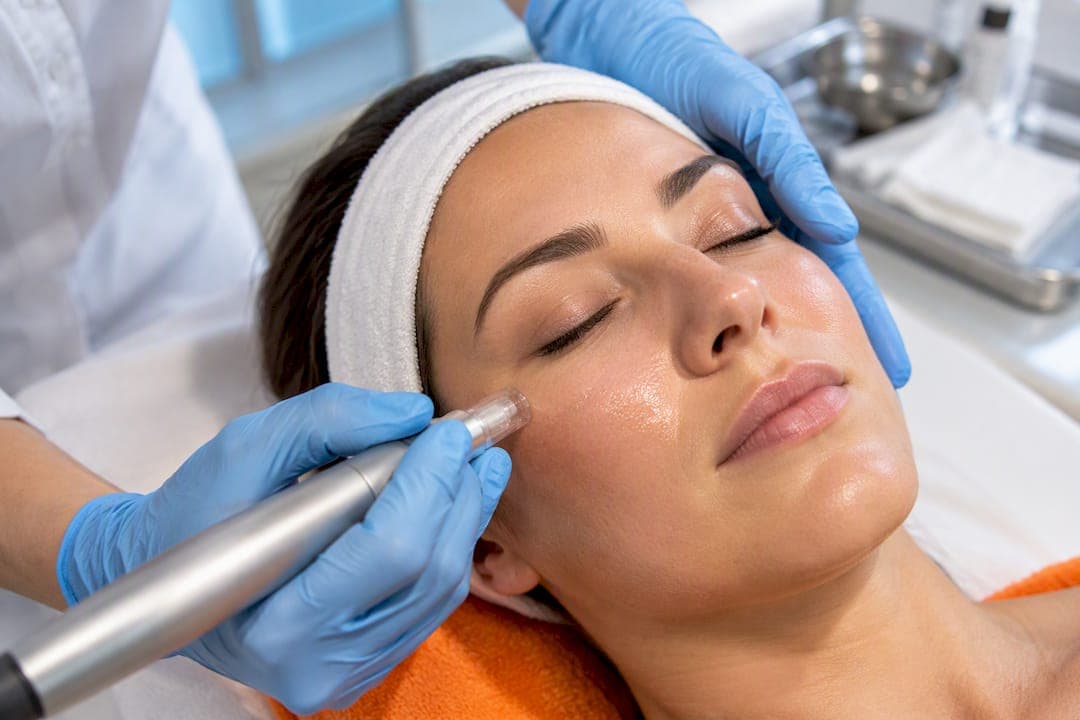
Microneedling suits deeper concerns like acne scarring, stretch marks, and fine lines because it works below the skin's surface to trigger collagen remodeling over several weeks. Microdermabrasion suits surface dullness, mild pigment irregularities, and quick brightening because it exfoliates only the outermost layer with almost no downtime. Neither wins outright; a clinician needs to assess your skin, medical history, and goals before recommending one over the other.
Table of Contents
- How Microneedling and Microdermabrasion Actually Work
- Which Skin Concerns Does Each Treatment Treat Best?
- What Happens During Treatment and Afterward
- Who Should Avoid These Treatments, and What Can Go Wrong
- How to Choose: A Consultation Checklist
- Combining Treatments: What the Evidence Actually Supports
- The GLOBALLMED Clinical Pathway for Skin Rejuvenation
- Booking a Consultation at GLOBALLMED
- Authoritative References and Internal Resources
- FAQ
How Microneedling and Microdermabrasion Actually Work
The two treatments operate on completely different layers of skin, and that distinction explains nearly every other difference between them.
Microneedling uses fine needles to create controlled micro punctures through the epidermis into the upper dermis. Those tiny wounds trigger a healing cascade that produces new collagen and elastin, a process dermatologists call dermal remodeling. The American Academy of Dermatology notes that this response is gradual: visible improvement in scarring or texture builds over multiple sessions spaced weeks apart, not overnight. Devices range from manual pen-style tools to motorized versions with adjustable needle depth, and a newer category adds radiofrequency (RF) energy delivered through the needles to heat deeper tissue.
Microdermabrasion, by contrast, works only on the stratum corneum, the outermost dead-cell layer. A handheld device sprays fine crystals or uses a diamond-tipped wand, paired with suction, to mechanically sand away that surface layer. Because it never breaches the epidermis, healing time is measured in hours, not weeks. Research on microdermabrasion has also found it can temporarily boost how well topical products absorb into skin, since removing the dead-cell barrier improves percutaneous diffusion.
Device safety differs sharply between the two categories:
- Standard microneedling devices carry manageable risk when used by trained clinicians with single-use cartridges and proper infection control.
- RF microneedling introduces additional risk. The FDA has issued safety communications flagging burns, scarring, fat loss, disfigurement, and nerve damage tied to certain RF microneedling uses.
- Microdermabrasion has a comparatively simple risk profile, mostly limited to transient redness and increased sun sensitivity right after treatment.
Pro Tip: Ask directly whether your provider's microneedling device includes RF energy. If it does, ask what specific safety protocols they follow, since the FDA has singled out RF variants for more serious complication reports than standard needling.
Which Skin Concerns Does Each Treatment Treat Best?
Matching the treatment to the concern is where most of the decision-making actually happens.
Microneedling performs best on concerns that live in the dermis:
- Atrophic acne scars (the pitted, indented type left by cystic breakouts)
- Stretch marks
- Fine lines and early wrinkles
- Enlarged pores and uneven texture
The AAD is explicit that microneedling is inappropriate over active inflammatory or cystic acne. The needles can spread bacteria and worsen inflammation, so active breakouts need to clear first.
Microdermabrasion performs best on concerns that sit at the surface:
- Overall dullness and lackluster tone
- Mild age spots or superficial pigmentation
- Rough texture from dead-cell buildup
- Light acne marks that are flat, not indented
The trade-off is durability. Microdermabrasion's brightening effect is real but temporary, often requiring monthly maintenance visits to sustain it. Microneedling's collagen gains take longer to show, generally three to six months for full remodeling, but the structural improvement tends to hold once it arrives.
One important caveat: evidence for both treatments is concern-specific, not universal. A randomized trial of 120 patients found that combining microneedling with a chemical peel produced significantly better acne scar improvement than microneedling alone, using four sessions spaced 20 days apart. That finding matters because it shows monotherapy is not always the ceiling. If your primary concern is scarring, ask your provider whether a combination protocol might outperform microneedling by itself.
What Happens During Treatment and Afterward
A microneedling session typically runs 30 to 60 minutes. Providers usually apply a topical numbing cream first, since the needle passes can cause a prickling sensation and occasional pinpoint bleeding. Microdermabrasion sessions run a similar 30 to 60 minutes but almost never require anesthesia. Patients describe it as a mild sanding or vibrating sensation across the skin.
Recovery timelines diverge sharply:
- Microneedling downtime: Expect redness and sensitivity for one to three days. Makeup is usually safe after 24 hours, but sun exposure needs strict avoidance and sunscreen becomes non-negotiable during healing.
- Microdermabrasion downtime: Pinkness typically settles within a single day. Most patients can apply makeup and resume normal activities almost immediately.
- Active ingredients: Hold off on retinoids and acid-based serums until your clinician clears you to restart. Microneedling creates open channels that can amplify how those ingredients penetrate, raising the risk of irritation or post-inflammatory hyperpigmentation.
Pro Tip: Keep aftercare simple for the first 48 to 72 hours after microneedling: gentle cleanser, fragrance-free moisturizer, and mineral sunscreen. Skip exfoliating acids and retinoids entirely until your provider gives the green light, and report any spreading redness, warmth, or pus immediately since those can signal infection.
Who Should Avoid These Treatments, and What Can Go Wrong
Not everyone is a candidate for either procedure, and skipping the screening step is where most preventable complications start.
Certain conditions rule out treatment entirely or call for extra caution:
- Active skin infection, open lesions, or unhealed cold sores at the treatment site
- Isotretinoin use within the past six months, which the AAD flags as a specific pre-procedure question
- Pregnancy or breastfeeding, which warrants a conversation with your obstetric provider first
- A personal or family history of keloid scarring
- Uncontrolled diabetes or other systemic conditions that impair wound healing
Common side effects for both treatments are mild: temporary redness, swelling, and minor pigment shifts that resolve within days. The more serious risks concentrate almost entirely around RF microneedling and at-home devices. The FDA's consumer guidance specifically warns against at-home microneedling tools, citing higher rates of infection, scarring, and pigment changes tied to inconsistent hygiene and uncontrolled needle depth. Clinic-grade devices with single-use cartridges and documented infection control protocols carry a meaningfully lower risk profile.
Before any mechanical skin procedure, a dermatologist should examine the treatment area for suspicious lesions. This exam is not optional theater. It is the step that catches something like an atypical mole before a device passes over it.

How to Choose: A Consultation Checklist
Work through the decision in order rather than jumping straight to a treatment name.
- Identify the primary concern. Is it texture and scarring (leans microneedling) or dullness and tone (leans microdermabrasion)?
- Set your timeline expectations. Want visible change today? Microdermabrasion delivers that. Willing to wait three to six months for structural improvement? Microneedling is built for that horizon.
- Weigh downtime tolerance. A day of pinkness versus several days of redness and light sensitivity is a real scheduling factor, not a minor detail.
- Disclose full medical history. Isotretinoin use, scarring tendency, pregnancy status, and any active skin conditions all affect eligibility.
- Ask the provider directly: Who performs the procedure, and are they a licensed clinician? Which device and brand are used, and does it include RF? Are cartridges single-use? How many sessions are typically needed, and what is the total cost? Can they show real before-and-after examples from patients with a similar concern?
- Ask about referral paths. If your case involves deep scarring or complex pigmentation, ask whether a combination protocol or a referral to a specialist in laser or advanced dermatology makes more sense than either treatment alone.
Combining Treatments: What the Evidence Actually Supports
Combination protocols are gaining traction because monotherapy has real limits for certain concerns.
The clearest evidence sits with acne scarring. The 120-patient randomized trial mentioned earlier found microneedling paired with a chemical peel produced measurably better outcomes than microneedling alone, using four sessions 20 days apart. Smaller trials point to similar gains when microneedling is paired with platelet-rich plasma (PRP). That said, sample sizes in this research area remain modest and follow-up periods are often short, so these results support cautious optimism rather than a blanket recommendation.
Sequencing microdermabrasion and microneedling in the same overall plan can also make sense, but the two are not typically layered in a single session. Microdermabrasion sometimes serves as a preparatory step to clear surface buildup, followed by microneedling scheduled separately once skin has settled. Stacking treatments too close together raises irritation risk without adding proportional benefit.
- Combination protocols work best for concern-specific goals like scarring, not general skin maintenance.
- Any combination plan should be individualized to your skin type, history, and the specific concern being treated.
- Realistic framing matters: combination therapy improves odds, but it does not guarantee a specific outcome.
The GLOBALLMED Clinical Pathway for Skin Rejuvenation
GLOBALLMED Medical Center approaches microneedling and microdermabrasion through its beauty, wellness & wellbeing department, where cosmetic procedures are paired with dermatology oversight rather than offered as standalone spa services.
A standard consultation follows a structured workflow: a review of your medical history and medication use, a skin exam to check for lesions or contraindications, a discussion of device options suited to your concern, informed consent covering realistic outcomes and risks, and documented infection-control steps before any needle or abrasive tool touches your skin. This mirrors the assessment structure used across GLOBALLMED's medical clinic department, where clinician-led evaluation precedes every procedure.
Booking a Consultation at GLOBALLMED
A medically supervised alternative to standalone aesthetic studios is available for this exact decision. Rather than a technician recommending whichever device the studio happens to own, treatment plans should ideally start with a licensed clinician reviewing skin, history, and goals side by side, as done in comprehensive medical departments. That matters most for concerns like acne scarring, where the wrong treatment or an unsupervised RF device carries real risk.
The beauty, wellness & wellbeing department covers dermatology and plastic surgery consultations relevant to skin rejuvenation planning, including dietetics support where nutrition affects skin healing. Before your visit, bring a list of current medications and supplements, note any history of isotretinoin use or keloid scarring, and prepare questions about the specific device your provider plans to use.
If you want a broader medical review before committing to a cosmetic procedure, GLOBALLMED's Basic 1, Basic 2, and Basic 3 checkup packages offer a baseline health assessment worth considering first. To move forward directly, visit the services page to review consultation options and request an appointment.
Authoritative References and Internal Resources
Medical claims in this article draw on guidance from the American Academy of Dermatology and FDA safety communications on microneedling devices, along with a randomized controlled trial on combination acne scar treatment and a peer-reviewed evidence summary on microdermabrasion. For clinic services, see GLOBALLMED's beauty, wellness & wellbeing department and medical clinic department.
This article is general information, not a substitute for advice from a qualified doctor. Consult a qualified healthcare professional about your own circumstances before acting on anything here.
FAQ
Is 40 Too Old for Microneedling?
No. Microneedling is commonly used on mature skin specifically because collagen production naturally slows with age, and the treatment's core mechanism, triggering new collagen, addresses that directly. Suitability depends on skin condition and medical history, not age alone, so a clinician exam still matters.
What Does Your Face Look Like Two Days After Microneedling?
Most patients see lingering redness and mild sensitivity at the 48 hour mark, similar to a mild sunburn, though it is usually fading by then. Some pinpoint scabbing or dryness can appear as skin heals, and makeup is generally safe to apply once 24 hours have passed.
How Much Do Three Sessions of Microneedling Cost?
Pricing varies by clinic, device type, and treatment area, and fixed rates for cosmetic procedures are generally not published online. Current pricing is available by contacting the beauty, wellness & wellbeing department directly for a personalized quote based on your consultation.
What Are the Disadvantages of Microdermabrasion?
The main drawbacks are that results are temporary and often require ongoing maintenance sessions, it only addresses surface-level concerns and does nothing for deep scarring or wrinkles, and it temporarily increases sun sensitivity right after treatment. It is also not appropriate over active inflammatory acne or open lesions, and it cannot match microneedling's collagen-building effect for texture or scarring.
Which Is Better, Microneedling or Microdermabrasion?
Neither is universally better; the right choice depends on your specific concern. Microneedling suits deeper issues like acne scarring and fine lines through gradual collagen remodeling, while microdermabrasion suits surface dullness and mild pigmentation with faster, shorter-lived results.