
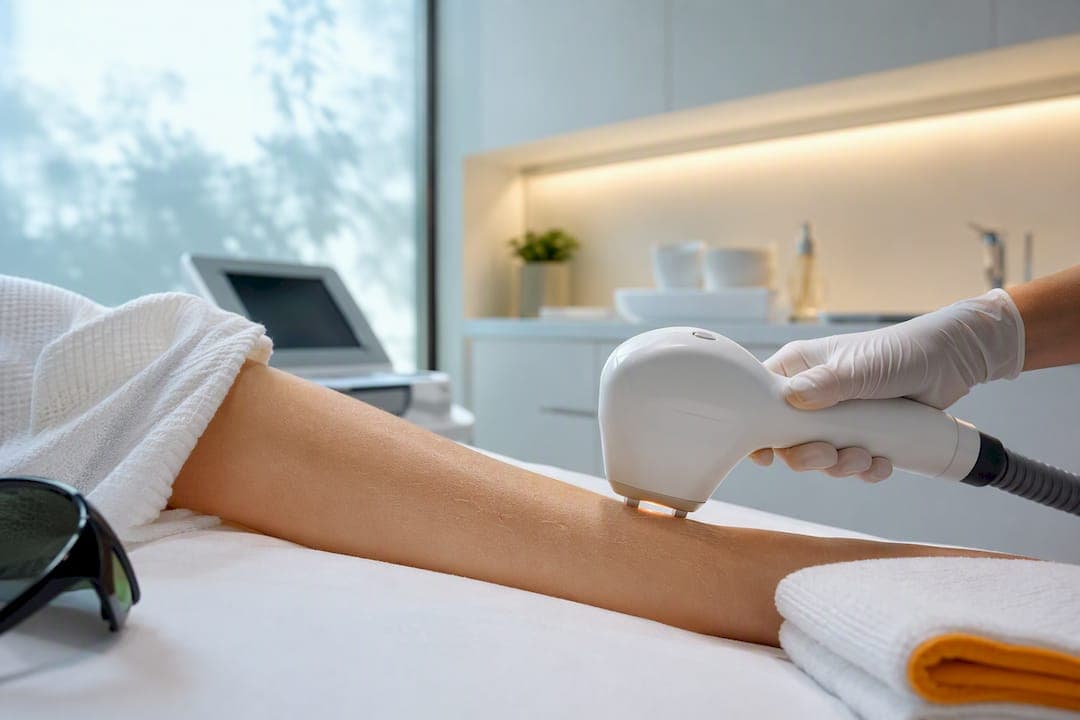
For most patients seeking long-term hair reduction across a range of skin tones, laser treatment delivered by a qualified clinician is the stronger clinical choice. IPL remains a reasonable option for those with light skin and dark hair, for anyone prioritizing comfort and lower cost, or for at-home maintenance between clinic visits. Either way, treatment should happen under a medically qualified practitioner to limit the risk of burns or pigment changes.
Table of Contents
- Laser Hair Removal vs IPL: How Each Technology Works
- What Results Should You Actually Expect?
- Which Skin Tones and Hair Types Suit Each Method?
- What Treatment Day Actually Feels Like
- Why Operator Skill Determines Your Safety
- How GLOBALLMED Approaches Light-Based Hair Reduction
- Ready to Discuss Your Options? Here's the Process
- Useful Sources for Further Reading
- FAQ
Laser Hair Removal vs IPL: How Each Technology Works
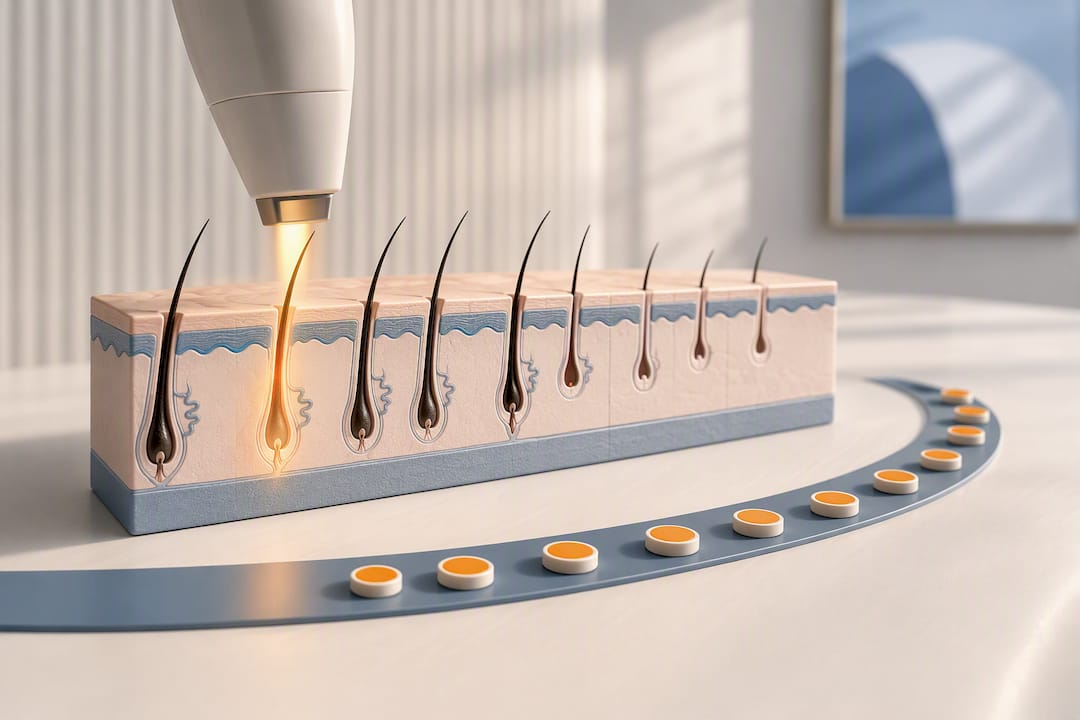
Laser hair removal uses a single, focused wavelength of light aimed directly at melanin in the hair follicle. IPL, or intense pulsed light, scatters a broader spectrum of wavelengths across the skin in each pulse, more like a controlled flash than a beam. That difference in precision is the reason laser and IPL hair removal effectiveness diverge in clinical settings, even though both rely on the same basic principle: heat damages the follicle enough to slow regrowth.
Clinics typically choose from a handful of laser wavelengths depending on skin tone and hair color:
- 755 nm alexandrite for lighter skin with coarse, dark hair
- 810 nm diode, the most common workhorse for a wide range of skin types
- 1064 nm Nd:YAG, which penetrates deeper and suits darker complexions
IPL devices operate across a much wider band, roughly 590 to 1,200 nanometers, which makes them versatile but harder to fine-tune for any one skin type. Both methods only damage follicles that are actively growing, called the anagen phase, which is why a single session never finishes the job. Hair cycles through growth, rest, and shedding on its own schedule, so repeat sessions are built into the process from the start.
What Results Should You Actually Expect?
Here's the number that matters most: NHS patient information puts typical laser-driven hair reduction at a substantial level after multiple treatments, depending on the area treated and the device used. That range is not a guarantee. It reflects averages across body zones, skin tones, and hair textures, and it assumes sessions are spaced correctly to catch hair in the anagen phase.
Comparative studies through 2014 and beyond have generally found that laser and IPL produce similar short-term reduction, with the real divergence showing up over time and across skin types. A 2026 randomized split-body trial comparing diode laser against IPL for underarm hair found the diode side delivered better long-term reduction at follow-up, though it also scored higher on pain during treatment. That trade-off, more durable results from laser against greater comfort from IPL, shows up consistently enough that it's worth planning around rather than treating as a surprise.
A few points worth holding onto:
- Expect 6 to 12 sessions for meaningful reduction, not permanent elimination
- Diode lasers tend to outperform IPL at longer-term follow-up, per split-body trial data
- Neither method reliably clears light, gray, or red hair, since both target melanin
- "Hair reduction" is the accurate term; treat "permanent removal" claims with skepticism
Maintenance sessions once or twice a year are common for both technologies, since some follicles recover partial function over time.
Which Skin Tones and Hair Types Suit Each Method?
Skin tone and hair color determine outcomes more than the device brand ever will. Dermatologists classify skin using the Fitzpatrick scale, and darker Fitzpatrick types (IV through VI) generally do better with longer wavelengths like Nd:YAG, which passes through surface melanin without overheating the epidermis. Diode lasers, properly calibrated, also work across a broad range of tones when operated by someone trained to adjust fluence for the patient in the chair.
IPL performs best under a narrower set of conditions: light skin paired with dark, coarse hair, where the contrast between skin and follicle melanin is high. That contrast is exactly what an IPL device depends on to target hair without overheating skin, so:
- Light or gray hair responds poorly to both laser and IPL, regardless of skin tone
- Red or blond hair often has too little melanin for consistent results
- Sensitive zones like the upper lip or bikini line sometimes call for a specialist consult
- Small, stubborn areas that don't respond well to light-based methods may be better candidates for electrolysis
Anyone with darker skin considering IPL should ask specifically about the device's calibration for their tone before booking.
What Treatment Day Actually Feels Like
Pain tolerance varies by person, but diode lasers consistently score higher on discomfort scales than IPL. Patients often describe the sensation as a rubber band snap against the skin, more intense on the diode side, milder and more diffuse with IPL. Numbing cream is not routinely applied for standard hair-reduction sessions, since most clinics reserve it for more invasive procedures.
Immediately afterward, mild redness and swelling around each follicle, similar to a light sunburn, are normal and usually settle within a few hours. Less common but possible reactions include blistering, temporary dark or light patches, and, rarely, scarring if the device settings don't match the skin type.
A short aftercare routine keeps things simple:
- Avoid direct sun exposure on treated skin for at least two weeks
- Apply a fragrance-free soothing gel or aloe if redness persists
- Skip hot showers, saunas, and vigorous exercise for 24 to 48 hours
- Contact the clinic promptly if blistering, unusual pain, or discoloration appears
Pro Tip: Book sessions during months when you can realistically avoid sun exposure on the treated area. Sun-exposed, tanned skin is one of the biggest reasons patients experience uneven results or pigment changes after either laser or IPL.
Why Operator Skill Determines Your Safety
The single biggest safety variable in laser and IPL hair removal isn't the device. Its who is operating it. Dermatology guidance from the American Academy of Dermatology stresses that medically qualified practitioners reduce the risk of scarring and pigment changes, particularly on darker skin, because they know how to match wavelength, pulse duration, and fluence to the person in front of them. Most adverse events trace back to inadequate screening or an undertrained operator rather than any flaw in the technology itself.
Certain conditions and medications rule out treatment, at least temporarily:
- Pregnancy
- Active skin infection or open lesions in the treatment area
- Recent tanning, whether from sun or self-tanning products
- Photosensitizing medications, including some acne treatments
- Oral retinoids, which typically require a washout period before treatment to avoid delayed healing
A thorough patch test on a small area, followed by documented informed consent, is standard practice before any full session begins. Skipping this step is one of the clearest warning signs of an under-qualified provider.
Anyone with a complex medical history should bring a full medication list to the initial consultation, not just a verbal summary.
How GLOBALLMED Approaches Light-Based Hair Reduction
Medically supervised treatment starts with an assessment, not a walk-in session. At GLOBALLMED Medical Center, licensed clinicians evaluate skin type, hair characteristics, and medical history before recommending a device or treatment plan, and a patch test precedes any full session to confirm how the skin responds.
That assessment draws on the clinic's broader clinical infrastructure rather than treating hair reduction as an isolated cosmetic add-on:
- Dermatology and aesthetic evaluation through the beauty and wellness department
- General medical intake and screening through general practice and specialty services
- Documentation of medication history and contraindications as part of standard pre-treatment protocol
Specific outcome data, staff credentials for this service line, and patient case examples are available directly through the clinic for readers who want specifics beyond what's covered here.
Ready to Discuss Your Options? Here's the Process
GLOBALLMED Medical Center's advantage isn't a gimmick device or a discount package. It's the fact that hair reduction here happens inside a full outpatient medical infrastructure, with licensed clinicians who can screen for contraindications a standalone beauty studio might miss entirely. The path is straightforward: an initial consultation to assess skin and hair type, a patch test to confirm the plan is safe, then a tailored treatment schedule built around your Fitzpatrick type and goals.
Bring a current medication list and be upfront about any recent sun exposure or tanning, since both affect what a clinician can safely recommend that day. Readers interested in broader dermatology or cosmetic evaluation before starting can review the dermatology and plastic surgery services, while anyone who wants a fuller health picture first might consider pairing the consult with an executive health check-up. Booking a consultation is the first step toward a plan that's actually built around your skin, not a generic protocol.
Useful Sources for Further Reading
Readers who want to verify the clinical claims in this article can look to NHS patient information on laser hair removal, American Academy of Dermatology guidance on operator qualifications and safety, and peer-reviewed comparative trials on diode laser versus IPL outcomes. Clinic service pages, including those linked throughout this article, provide operational details on booking and consultation processes.
This article is general information, not a substitute for advice from a qualified doctor. Consult a qualified healthcare professional about your own circumstances before acting on anything here.
FAQ
Which Is Better, IPL or Laser Hair Removal?
Laser generally produces stronger long-term hair reduction, particularly with diode or Nd:YAG devices matched to the right skin tone. IPL is often better tolerated and lower cost, making it a reasonable choice for light skin with dark hair or for at-home maintenance between clinic sessions.
How Many Sessions Does Laser Hair Removal Take?
Most patients need 6 to 12 sessions to see meaningful reduction, spaced several weeks apart to catch hair in its active growth phase. NHS patient information cites reduction rates of roughly 50% to 80% within that session range, though results vary by area and hair type.
What Is the Downside of IPL Treatment?
IPL is more sensitive to operator skill and device calibration than laser, since its broader wavelength range is harder to fine-tune for a specific skin and hair combination. It also tends to produce less durable long-term results compared to diode laser, based on split-body trial data.
Does IPL Destroy the Hair Follicle?
IPL damages the follicle enough to slow or reduce future growth, but it doesn't guarantee permanent destruction of every treated follicle. That's why practitioners describe outcomes as "hair reduction" rather than permanent removal, since some follicles recover partial function over time.
Can IPL Remove All Pubic Hair Permanently?
No method, including IPL or laser, guarantees permanent removal of all hair in any area, including the bikini line. Results depend heavily on skin-to-hair contrast and consistent maintenance sessions, and a specialist consult is worth considering for stubborn or sensitive zones.