

Every year, thousands of people find out they have a serious condition only after symptoms appear and treatment options narrow. The frustrating part? Many of those conditions could have been caught far earlier with a simple blood draw or imaging scan. Routine screening rates vary widely across the population, and missing them quietly allows diseases like hypertension, diabetes, and early-stage cancers to progress without a single warning sign. This guide breaks down the most important health screening procedures, walks you through what to expect, and helps you make confident, informed decisions about your preventive care.
Table of Contents
-
What to know before your health screening: Key prerequisites
-
Step-by-step overview: Major health screening procedures and intervals
-
Beyond cancer: Screening for chronic diseases and mental health
Key Takeaways
| Point | Details |
|---|---|
| Prevention saves lives | Routine screenings catch diseases early, improving outcomes and lowering treatment costs. |
| Personalized recommendations matter | Your age, risk factors, and health history change which screenings you need and how often. |
| Insurance covers most basics | Key preventive screenings are often free under the ACA if you meet age and risk criteria. |
| Follow expert guidelines | USPSTF A/B recommendations form the safe, evidence-based foundation for personal screening plans. |
Understanding the importance of health screening
Health screenings are tests performed on people who feel perfectly fine. That distinction matters. Unlike diagnostic tests ordered because you have symptoms, screenings look for disease before it shows up in daily life. The goal is simple: catch a problem when it is still small, treatable, and far less disruptive to your life.
Who benefits most from screening? Everyone, but in different ways. Age, biological sex, family history, lifestyle habits, and environmental exposures all shape which tests apply to you and how frequently you need them. A 45-year-old male smoker and a 30-year-old woman with no chronic conditions have very different screening needs, yet both benefit enormously from following a structured, evidence-based schedule.
Conditions detected early are almost always easier and less costly to treat. Stage I colorectal cancer has a five-year survival rate dramatically higher than stage IV. Blood pressure caught at the prehypertension stage can often be managed with lifestyle changes alone, avoiding lifelong medication. These are not small differences.
Here is why routine screening deserves a permanent spot on your healthcare calendar:
-
Silent diseases progress without symptoms. High blood pressure, prediabetes, and early-stage cancers rarely announce themselves until significant damage has occurred.
-
Screening intervals are evidence-based. They are not arbitrary. They reflect how quickly conditions develop and how much lead time a test provides.
-
Cost savings are real. Prevention and early treatment consistently cost far less than managing advanced disease.
-
Coverage exists for most recommended tests. USPSTF A/B recommended screenings are covered without cost-sharing under the Affordable Care Act for eligible plans.
The importance of regular screenings goes beyond individual benefit. Population-wide screening programs reduce disease burden, cut hospitalizations, and lower long-term healthcare spending. Understanding these screening benefits for early detection helps you prioritize appointments even when life gets busy.
What to know before your health screening: Key prerequisites
Knowing that you should get screened is the first step. Knowing how to prepare makes the visit far more productive. Before you book a single appointment, there are factors you need to understand.
Your personal risk profile shapes everything. Screening is individualized by family history, smoking status, body mass index, ethnicity, and prior test results. Two people the same age can have completely different screening schedules based on these factors. Your primary care provider reviews your medications, lifestyle habits, and exposures to determine which tests apply to you and at what frequency.
Some screenings also require specific physical preparation:
-
Fasting: Lipid panels and fasting glucose tests require 9 to 12 hours without food or caloric drinks.
-
Bowel preparation: Colonoscopy requires a full bowel cleanse the day before using prescribed laxatives.
-
Abstaining from certain products: Pap smears are most accurate when you avoid intercourse or vaginal products for 48 hours beforehand.
-
Medication pauses: Some medications can interfere with stool-based colorectal tests.
Pro Tip: Build a short checklist before every appointment. Include your current medications and dosages, dates of past screening tests and results, known allergies, family history updates, and at least three questions for your provider. Walking in prepared means walking out with better answers.
Here is a quick-reference table to guide your preparation:
| Screening test | Preparation required | Interval (average risk) |
|---|---|---|
| Lipid panel | Fast 9-12 hours | Every 5 years (ages 40-75) |
| Colonoscopy | Full bowel prep | Every 10 years (ages 45-75) |
| Mammogram | No deodorant on exam day | Every 2 years (ages 40-74) |
| Pap test | No vaginal products 48 hrs | Every 3-5 years (ages 21-65) |
| Fasting blood glucose | Fast 8-12 hours | Every 3 years (ages 35-70, overweight) |
Review your insurance plan before every screening. Know which tests are covered under preventive benefits versus diagnostic categories, as that distinction changes your out-of-pocket cost. The common screening tests list can help you match preparation steps to specific procedures, and this prevention and wellness screening guide provides deeper context on how to personalize your schedule.
Step-by-step overview: Major health screening procedures and intervals
Let’s get specific. The following evidence-based recommendations cover the most common and highest-impact screening categories.
Breast cancer screening
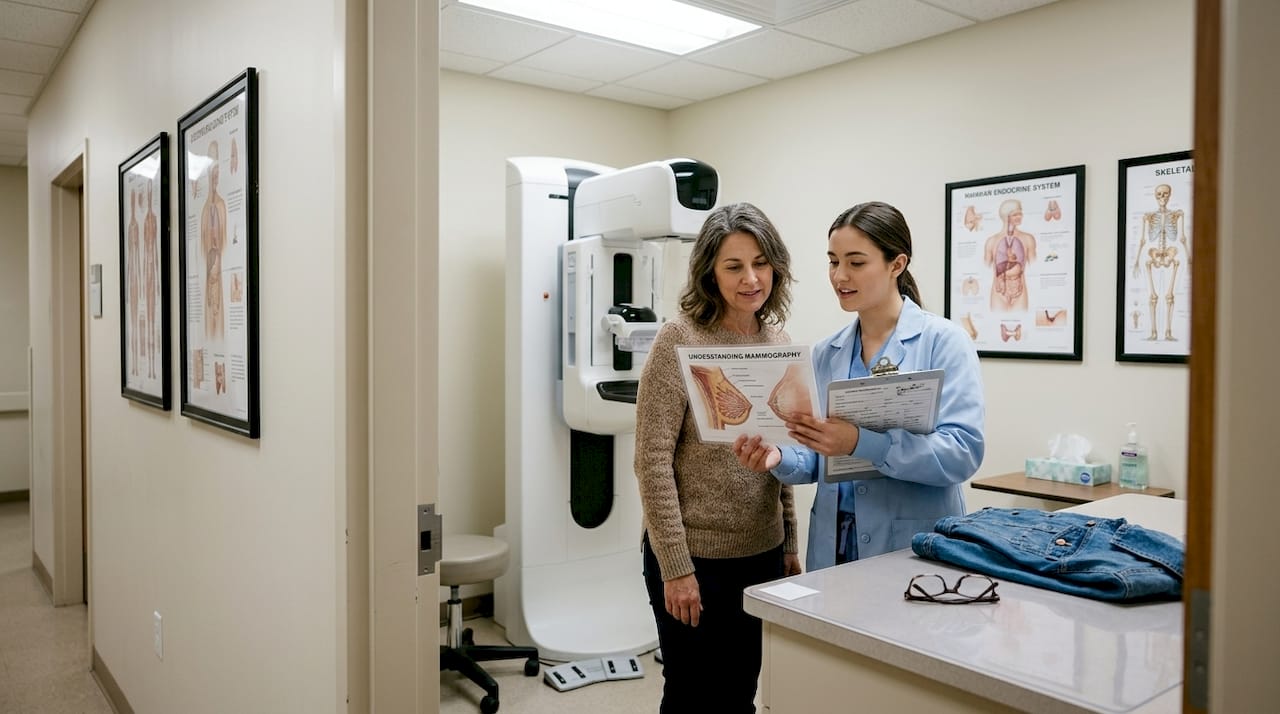
Biennial mammography is recommended starting at age 40 for women at average risk. Screening continues through age 74, with decisions after that based on individual health and life expectancy. A mammogram uses low-energy X-rays to detect tumors before they are palpable. Women with a family history of BRCA mutations or dense breast tissue may need MRI in addition to mammography.
Cervical cancer screening
Cervical and colorectal screening intervals vary by test type and age group. Cervical screening starts at age 21 with a Pap test every three years. From age 30 onward, a co-test combining Pap plus HPV testing is accepted every five years. Screening typically stops at age 65 for women with adequate prior negative results.
Colorectal cancer screening
Colorectal screening options include both invasive and non-invasive methods. Here is a direct comparison:
| Test | Method | Interval | Pros | Cons |
|---|---|---|---|---|
| Colonoscopy | Invasive scope | Every 10 years | Most thorough; treats polyps | Bowel prep; sedation needed |
| FIT (fecal immunochemical test) | Stool sample | Annually | Non-invasive; no prep | Positive result requires colonoscopy |
| Stool DNA (Cologuard) | Stool sample | Every 1-3 years | Detects DNA changes | Higher false-positive rate |
| CT colonography | Imaging | Every 5 years | No sedation | Positive result requires colonoscopy |
Lung cancer screening
Low-dose CT for lung cancer is recommended for adults aged 50 to 80 who have a 20 pack-year smoking history and currently smoke or quit within the past 15 years. Annual screening continues until the person has not smoked for 15 years or develops a health problem that limits curative treatment.
-
Confirm eligibility with your provider based on age and smoking history.
-
Schedule annual low-dose CT at a certified imaging center.
-
Receive structured results using the Lung-RADS classification system.
-
Follow up on any positive finding immediately.
Pro Tip: Ask your cancer and chronic disease test schedule in one consolidated document. Providers often focus on what is due now, and it is easy to lose track of tests that are not due for several years.
“The best screening test is the one you actually complete.” Choosing a non-invasive option you will follow through with is better than skipping a ‘preferred’ test you find intimidating. Discuss your preferences with your provider.
For additional screening procedure tips on how to prepare and maximize each visit, use reliable clinical resources alongside your provider’s guidance.
Beyond cancer: Screening for chronic diseases and mental health
Cancer screenings get most of the attention, but they are not the whole story. Chronic diseases and mental health conditions are just as prevalent and just as detectable before they cause serious harm.
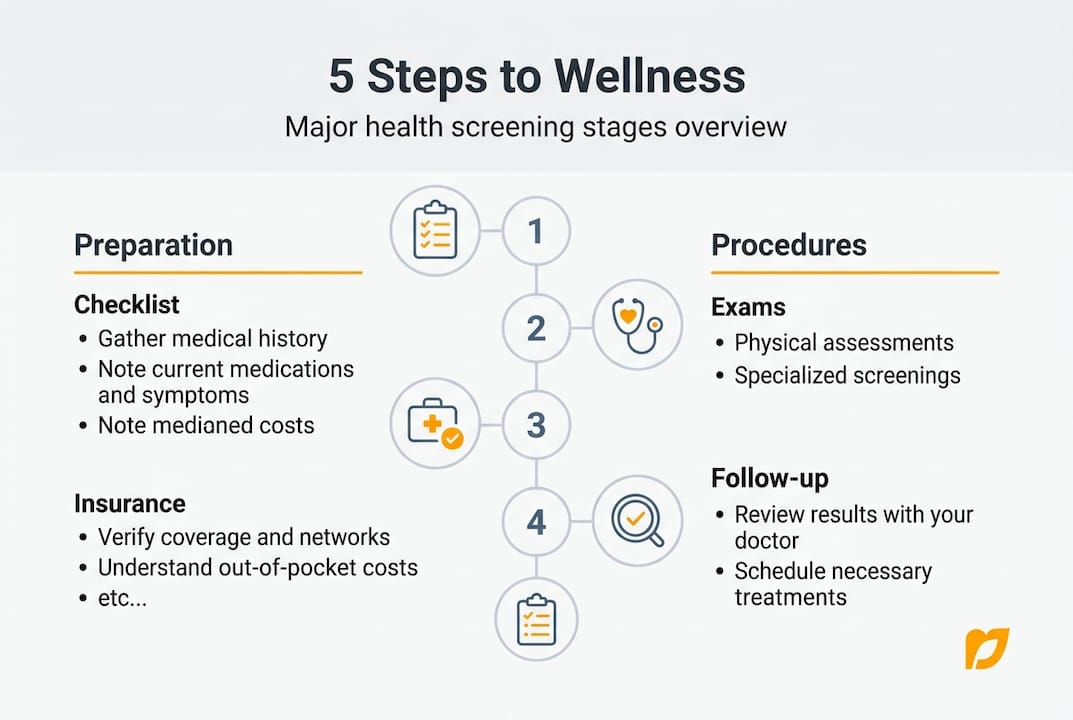
Blood pressure, cholesterol, diabetes, and depression screening are all covered preventive services for adults at recommended intervals. These are not optional add-ons. They are foundational to a complete preventive care plan.
Here is what the evidence recommends:
-
Blood pressure: Screened for all adults at every routine visit. Hypertension affects roughly 1 in 3 American adults and often produces zero symptoms.
-
Cholesterol: Lipid panel recommended for adults aged 40 to 75. Earlier testing applies if you have diabetes, obesity, or family history of cardiovascular disease.
-
Diabetes: Fasting glucose or HbA1c screening for overweight or obese adults aged 35 to 70. Earlier screening if additional risk factors are present.
-
Depression: Screened in all adults using validated tools like the PHQ-2 or PHQ-9. Particularly important during major life transitions, postpartum periods, or after significant loss.
-
HIV and STIs: HIV screening is recommended for all adults aged 15 to 65 at least once, with annual screening for those at higher risk. STI screening intervals depend on behavior and risk profile.
Mental health is not separate from physical health. Depression, anxiety, and unmanaged stress worsen chronic disease outcomes, increase hospital visits, and reduce quality of life. Treating them as equal priorities in screening is not optional.
The early detection benefits of catching hypertension or prediabetes before they advance are concrete and measurable. Blood pressure controlled before organ damage occurs means lower stroke risk, fewer medications, and better quality of life for decades. Investing in long-term wellness means treating screening as a habit, not a one-time event.
The real challenges and opportunities in health screening
Guidelines are essential. They reflect the best available population-level evidence and give clinicians a reliable framework. But here is the part that often gets lost: guidelines are a starting point, not a finish line.
USPSTF recommendations are evidence-based, but they can lag behind individual risk profiles and evolving patient needs. A guideline built on population averages does not always account for your specific combination of exposures, genetics, and lifestyle. Over-screening carries real risks too, including false positives, unnecessary procedures, and anxiety that damages quality of life. Under-screening carries the opposite risk.
The answer is not to ignore guidelines or to follow them blindly. It is shared decision making. When you sit with your provider and weigh your personal risk, your values, and the available evidence together, you arrive at a screening plan that is genuinely yours. That conversation, informed by both data and lived experience, is where real prevention happens.
This wellness guide perspective on individualized care reflects what we believe at Globallmed: that population tools must flex for personal needs, and that empowered patients get better outcomes.
Take the next step: Access trusted health screening support
Putting a screening plan into action is much easier when you have experienced, qualified clinicians guiding the process alongside you.

At Globallmed, our private medical center in Macau offers personalized health checkup packages designed around your age, risk factors, and health goals. From women and child screening packages to chronic disease monitoring and cancer early detection programs, our clinical team tailors every visit to your specific needs. Booking is straightforward online, and our multilingual staff supports international patients at every step. Explore our full range of health screening services and take the first step toward a clearer, more confident picture of your health.
Frequently asked questions
Which health screenings are covered without cost-sharing under the ACA?
USPSTF A and B screenings such as blood pressure, cholesterol, diabetes, cancer, and depression are covered without out-of-pocket costs for most adults on qualifying health plans.
How often do I need a colonoscopy or colorectal cancer screening?
Colonoscopy is typically recommended every 10 years for adults aged 45 to 75 at average risk; non-invasive stool tests may be repeated annually or every one to three years depending on the method used.
When should women start mammograms and Pap smears?
Women should begin breast cancer screening with mammography at age 40 and cervical cancer screening with a Pap test at age 21, with frequency adjusted by individual risk and age.
Are mental health screenings like depression covered?
Yes, depression screening for adults is an A-grade recommended preventive service and is covered without cost-sharing under ACA-compliant health plans.