
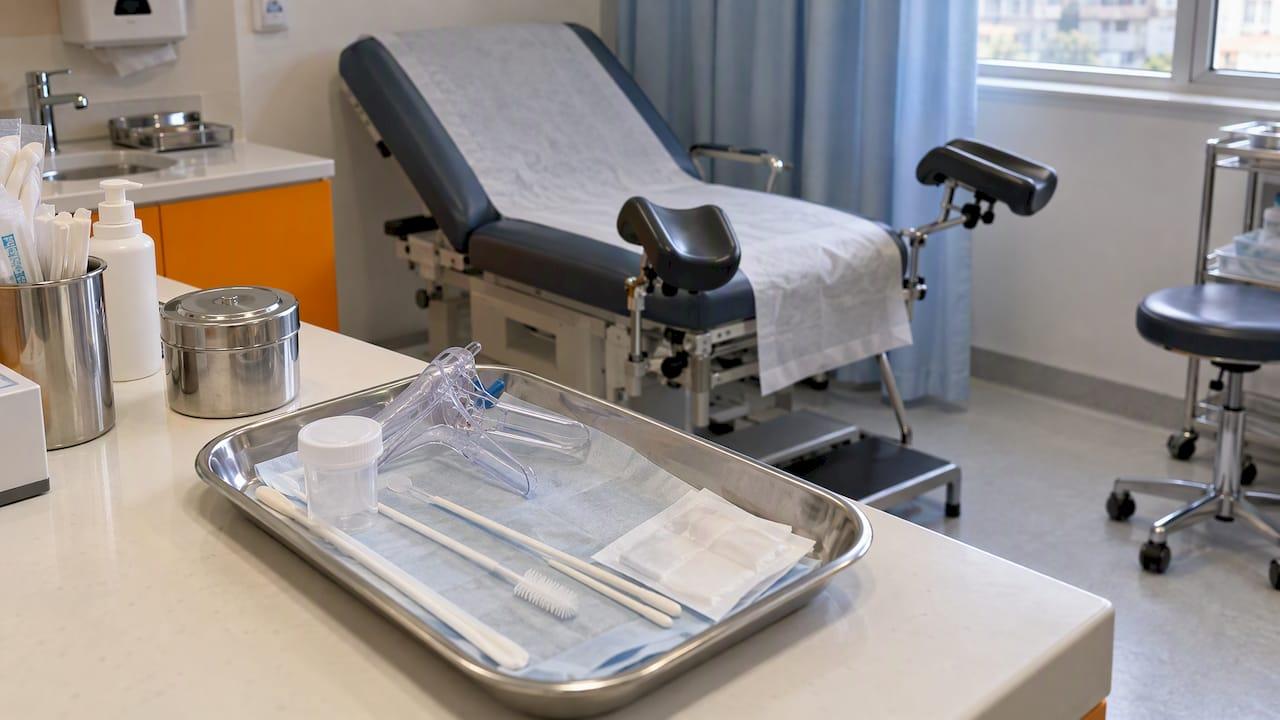
Gynecology is the medical specialty that covers the female reproductive system: the uterus, ovaries, fallopian tubes, cervix, vagina and vulva. It also includes breast-related symptoms, contraception, menstrual disorders, menopause and screening for gynecological cancers. If you live in Macau, Hong Kong or elsewhere in the Greater Bay Area and are deciding when to see a gynecologist, what a first consultation involves, or how gynecology differs from obstetrics, this guide sets out the answers in clinical terms.
At Globallmed Medical Center, gynecology and obstetrics are provided together in our OB & GYN department, part of a private outpatient clinic that serves residents and international patients in Macau.
Table of Contents
- What gynecology covers
- Gynecology and obstetrics: what is the difference?
- When to see a gynecologist
- Cervical cancer screening: the essential preventive test
- Prenatal care and the obstetric pathway
- Women's health across the life course
- Men's health, urinary health and where they fit
- Choosing where to receive gynecological care in Macau
- How to prepare for your appointment
- Book gynecology and women's health care at Globallmed
- Frequently asked questions
What gynecology covers
A gynecologist manages health conditions across a woman's life, from adolescence to postmenopause. The scope is wider than many patients expect, and it is not limited to pregnancy or to women with symptoms.
The main areas of practice are:
- Routine preventive care: pelvic examination where indicated, cervical screening, breast awareness advice, and review of vaccination status, including HPV vaccination.
- Menstrual disorders: heavy, prolonged, irregular or painful periods, and absent periods.
- Contraception: counseling on hormonal and non-hormonal methods, intrauterine devices, and emergency contraception.
- Pelvic pain and benign conditions: fibroids, ovarian cysts, endometriosis, and recurrent infections.
- Fertility concerns: an initial assessment of why conception has not occurred, and referral where further testing or treatment is needed.
- Menopause and midlife health: management of vasomotor symptoms, vaginal dryness, bone health and cardiovascular risk discussions.
- Gynecological cancer detection: screening for precancerous cervical changes and evaluation of abnormal bleeding or masses.
Some conditions need a surgical approach. A gynecologist may perform minor procedures in the outpatient setting and refer to a surgical team when an operation is necessary. Our clinic also offers general surgery and other hospital-level specialties in the same outpatient setting, which helps when a gynecological finding needs a coordinated opinion.
Gynecology and obstetrics: what is the difference?
The two terms are often combined as "OB/GYN" because in many countries one physician is trained in both. They describe different parts of care.
| Gynecology | Obstetrics | |
|---|---|---|
| Focus | Reproductive health outside pregnancy | Pregnancy, childbirth and the postpartum period |
| Typical patients | Girls and women of any age with or without symptoms | Women who are pregnant, planning pregnancy or recently delivered |
| Common services | Screening, contraception, period problems, menopause | Antenatal visits, ultrasound review, delivery planning, postnatal checks |
| Frequency of visits | Usually annual or as needed | Scheduled series through pregnancy |
In practice, a woman may see the same specialist for both. A preconception visit, for example, sits between the two: the physician reviews cycle history, chronic conditions, medications and vaccination before pregnancy, then continues into antenatal care if conception occurs.
When to see a gynecologist
Many women wait until something is wrong. A better approach is to establish care before symptoms arise, then return promptly when any of the following occur.
Reasons to book a consultation
- Periods that are very heavy, last longer than a week, or arrive far outside your usual pattern.
- Bleeding between periods, after intercourse, or after menopause. Postmenopausal bleeding always warrants prompt medical evaluation.
- Pelvic pain that is persistent, worsening, or interferes with daily activity.
- Unusual vaginal discharge, itching, odor or recurrent infection.
- A breast lump, nipple discharge or skin change. Seek assessment without delay.
- Difficulty conceiving after 12 months of regular unprotected intercourse, or after 6 months if you are over 35.
- Planning a pregnancy, or a positive pregnancy test.
- Needing contraception advice, or wanting to change method.
- Menopausal symptoms that affect sleep, mood or quality of life.
If you experience sudden severe abdominal pain, heavy bleeding that soaks through a pad in an hour, fainting, or pain with a positive pregnancy test, do not wait for a routine appointment. Go to an emergency department.
Cervical cancer screening: the essential preventive test
Cervical cancer is largely preventable. Most cases result from persistent infection with high-risk human papillomavirus (HPV), and the changes that precede cancer develop slowly enough to be found by screening and treated.
Health authorities in Hong Kong and Macau both recommend regular screening for women who have ever had sexual contact. The Hong Kong Department of Health and Primary Healthcare Office guidance sets out the principles as follows:
- Screening begins in the twenties, depending on the guideline and the woman's risk profile.
- For average-risk women in their thirties to early sixties, acceptable options include cervical cytology (the Pap test) at intervals of about three years, or HPV testing at intervals of about five years.
- Screening may stop at 65 if recent results over the previous decade have been consistently normal.
- Women at higher risk, including those with a history of abnormal results or a weakened immune system, need individual advice and sometimes more frequent testing.
The exact start age and interval differ slightly between published guidelines, so confirm the schedule that applies to you with your physician rather than relying on a single figure.
In Macau, the Health Bureau launched a Cervical Cancer Screening Reminder Program in March 2025. Eligible female residents can receive reminders and arrange screening through the Macau One Pass app, working with non-profit healthcare partners. Residents may use that route, a private clinic, or both. If you are an expat or a visitor who is not eligible for the public program, a private gynecology consultation is the direct way to arrange a test.
A screening test takes only a few minutes. It is not a diagnostic test for every gynecological problem, so symptoms should be assessed separately even when your last result was normal.
HPV vaccination
Vaccination against HPV is most effective before exposure to the virus, which is why public health programs focus on adolescents. Women who were not vaccinated earlier can still discuss it with a physician. Vaccination does not replace screening: both measures are recommended together.

Prenatal care and the obstetric pathway
Prenatal care is the series of visits that monitors the health of mother and baby from early pregnancy to delivery. It usually begins as soon as pregnancy is confirmed and continues at intervals that become more frequent in the third trimester.
A typical antenatal pathway includes:
- Confirmation and dating: an early assessment of gestational age and the expected delivery date.
- Baseline review: medical history, current medications, blood pressure, weight, and routine blood and urine tests.
- Screening discussions: options for chromosomal and anatomical screening, which the physician explains so you can decide what is right for you.
- Ongoing monitoring: blood pressure, fetal growth and movement, and screening for conditions such as gestational diabetes.
- Delivery planning: discussion of place and mode of delivery, and what to do when labor begins.
- Postnatal care: a check of the mother's recovery, mood, feeding and contraception, along with the baby's first examinations.
For international patients, one practical question is continuity: where will you give birth, and who will manage your records? Raise this at the first visit. After delivery, our pediatrics team and the Women & Child check-up package provide a route to ongoing care for the mother and child within one outpatient center.
Women's health across the life course
The World Health Organization notes that women's health has historically been underserved, partly because much medical research was based on male bodies. It encourages a life-course approach, in which reproductive health, chronic noncommunicable disease and mental health are treated as connected rather than separate topics.
This has practical consequences for your consultation:
- Cardiovascular risk rises after menopause. Blood pressure, cholesterol and glucose checks belong in midlife women's health, not only in a general check-up.
- Mental health and hormones interact. Low mood in the postnatal period, or around perimenopause, deserves attention. Our psychology and therapy services are available when support is needed beyond the gynecology visit.
- Nutrition and weight affect cycles and fertility. Where relevant, a referral to dietetics can complement medical management.
- Pelvic floor health matters after childbirth and in later life. Physiotherapy can help with pelvic floor symptoms such as leakage, and is offered within our multi-therapy department.
Contraception after a cancer diagnosis
Patients with a history of breast, ovarian, uterine or cervical cancer should not assume that every contraceptive method is unavailable to them, nor that every method is safe. Current clinical recommendations from the Society of Family Planning emphasize person-centered shared decision-making between the patient, the gynecologist and the oncology team, because the risks of hormonal methods depend on the tumor type and the treatment history. For many patients with a breast cancer history, non-hormonal options are commonly the first consideration. Bring your oncology records and treatment summary to the appointment so that the decision rests on your actual history.
Men's health, urinary health and where they fit
Searches about gynecology often sit beside questions on men's health, urinary symptoms and prostate health. These are not gynecological topics, but they belong to the same family of outpatient care, and couples often seek assessment together, for example during a fertility work-up.
- Urinary symptoms in women: frequent urination, burning, urgency or leakage may arise from infection, pelvic floor weakness, or hormonal change. A gynecologist can assess the pelvic cause and refer when a urological evaluation is needed.
- Urinary and prostate concerns in men: difficulty passing urine, a weak stream, nighttime urination, or blood in the urine should be evaluated by a urologist. Our urology service sees these concerns in the outpatient setting.
- Preventive check-ups for men: the Executive - Men check-up is designed as a structured health assessment for men.
For women, the equivalent structured option is the Executive - Women check-up, which is a convenient way to combine several preventive assessments in a single visit.
Choosing where to receive gynecological care in Macau
Macau's health system has several layers. Public primary health centres provide basic and preventive services, including some free screening programs for eligible residents. Large public hospitals deliver specialist and inpatient care, and access to hospital specialist clinics generally runs through referral and triage. Private outpatient clinics provide a direct route to a specialist without a referral, with appointment times set by the patient.
When comparing options, the criteria below are the ones that matter most.
| Criterion | What to ask |
|---|---|
| Access | Can I book directly online or by phone? How soon is the first available appointment? |
| Language | Does the physician and the support staff speak my language, or can an interpreter be arranged? |
| Qualification | Are the physicians certified by the local health authority to practice in Macau? |
| Continuity | Are related specialties, such as pediatrics, urology, dermatology and therapy, available on the same site? |
| Insurance | Does the clinic bill my insurer directly, or must I pay and claim later? |
| Records | Can I obtain a clear summary of results and recommendations to share with other doctors? |
GlobalLmed is Macau's largest private outpatient clinic, and we serve more than 60 nationalities with multilingual staff and government-certified medical professionals. We offer direct billing with major international insurers, which reduces paperwork for patients who hold overseas or expatriate cover. Please confirm with our team whether your specific policy is accepted before the visit. Our clinic has also received recognition through the EFQM Excellence Award.
For visitors from Hong Kong and the Greater Bay Area
Residents of Hong Kong and neighboring cities often consider Macau for outpatient care because of proximity. Plan the practical details in advance: bring your identity document, a list of current medications, any previous screening results and imaging reports, and details of your insurance. If you are traveling for care, ask the clinic how follow-up will be handled once you return home, so that abnormal results are not left without an owner.
How to prepare for your appointment
A little preparation makes the consultation more productive.
- Note your cycle. Record the first day of your last period, the usual cycle length, and any bleeding between periods.
- List symptoms. Write down what you notice, when it started, and what makes it better or worse.
- Gather your history. Include previous Pap or HPV results, pregnancies, surgeries, allergies, and family history of breast, ovarian, uterine or colon cancer.
- Bring medication details. Include supplements and contraceptives.
- Time the visit. For a cervical screening test, many clinics prefer that you are not menstruating. Ask when you book. Avoid vaginal products or intercourse for a day or two beforehand if your clinic advises it.
- Prepare questions. Ask about the meaning of results, when to return, and what warning signs should prompt an earlier visit.
You are entitled to ask for a chaperone, and to ask for an explanation at each step of an examination. A good consultation is a conversation, not just a procedure.
Book gynecology and women's health care at Globallmed
If you are ready to arrange a consultation, our OB & GYN service covers gynecological and obstetric care in an outpatient setting in Macau. For a broader preventive review, our check-up programs include options for women, children and executives. You can book an appointment through the form on our website, and our team supports international patients in several languages. Pricing is not published online, so please contact us for details of a consultation or package.
Frequently asked questions
Why do you see a gynecologist?
You see a gynecologist for preventive care, such as cervical screening and contraception advice, and for symptoms involving the reproductive system, such as pain, abnormal bleeding or discharge. Many women also consult one for menopause, fertility concerns and pregnancy planning. A visit is appropriate even when you feel well.
What is the difference between OB and gyn?
Gynecology concerns the health of the female reproductive system outside pregnancy. Obstetrics concerns pregnancy, childbirth and the postpartum period. In many places a single physician trains in both and is called an OB/GYN, so you can often receive both kinds of care from the same specialist.
How often should I have cervical screening?
The interval depends on your age, the test used and your risk profile. For average-risk women in their thirties to early sixties, guidance in the region describes cytology about every three years or HPV testing about every five years. Your physician will set the schedule for you, particularly if you have had abnormal results before.
Do I need a referral to see a gynecologist at a private clinic?
At a private outpatient clinic you can usually book directly, without a referral from a general practitioner. If you use insurance, check your policy terms before booking, since some insurers have their own requirements. Our team can advise on direct billing before your appointment.
Can I see a gynecologist if I am not pregnant and have no symptoms?
Yes. Preventive visits are a core part of gynecology. They allow screening, vaccination review, contraception planning and a baseline discussion of your health history, so that any later change is easier to interpret.