
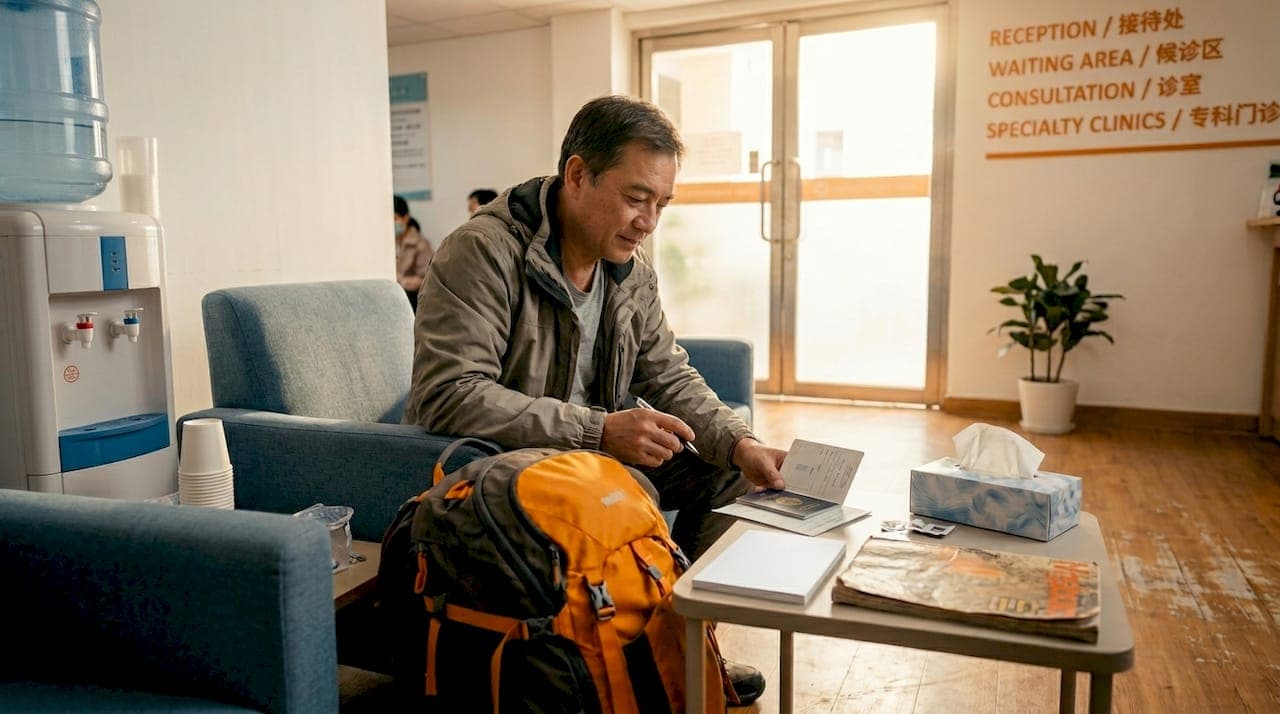
Many people still assume that meaningful medical treatment means checking into a hospital for days at a time. That assumption is outdated. Global outpatient care now covers everything from specialist consultations and diagnostic imaging to cosmetic procedures and wellness therapies, all without an overnight stay. For international patients exploring medical tourism in destinations like Macau, this model is a game-changer. You get access to world-class treatment, spend less money, and return to your hotel or home the same day. This guide explains exactly how it works, what to expect, and why Macau has become one of Asia's most compelling outpatient destinations.
Table of Contents
- What is global outpatient care?
- Key services and treatment types in Macau's global outpatient centers
- Benefits of global outpatient care for international patients
- Understanding standards, safety, and the global context
- Why global outpatient care is reshaping medical travel — and what patients often miss
- Explore trusted outpatient care options in Macau
- Frequently asked questions
Key Takeaways
| Point | Details |
|---|---|
| Outpatient definition | Global outpatient care lets you access major treatments and diagnostics without hospital stays. |
| Savings and speed | International patients benefit from up to 40 percent lower costs and faster scheduling. |
| Macau’s options | Macau offers specialty, cosmetic, and wellness outpatient centers tailored for medical tourists. |
| Safety and quality | Global standards and special international centers ensure a safe outpatient experience. |
| Plan ahead | Advance preparation and use of local facilitators make the outpatient journey smooth and successful. |
What is global outpatient care?
At its core, outpatient care means you receive treatment and leave the same day. No hospital bed, no overnight monitoring, no prolonged admission process. You show up, get the care you need, and walk out. What surprises many travelers is just how broad that definition has become.
Outpatient services worldwide now include consultations, diagnostics, minor procedures, and treatments delivered in clinics, ambulatory surgical centers, or hospital outpatient departments. The scope has grown significantly over the past decade, driven by advances in minimally invasive techniques, faster-acting anesthetics, and sophisticated monitoring equipment that allows complex work to happen safely in non-hospital settings.
How it differs from inpatient care
The simplest contrast is this: inpatient care requires a formal hospital admission, with at least one overnight stay. Outpatient care does not. But the differences run deeper than bed usage.
Cost is the most immediate factor. Outpatient care costs up to 40% less than equivalent inpatient treatment because you are not paying for room, board, overnight nursing, or extended hospital overhead.
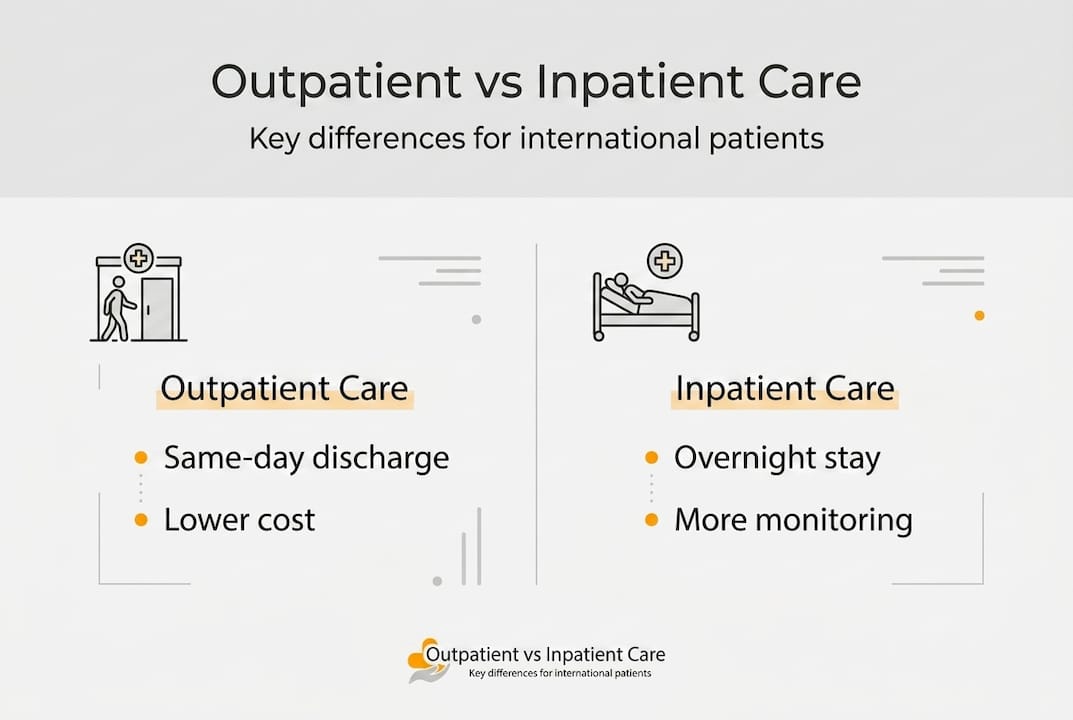
Recovery time is another distinction. Outpatient procedures are typically less invasive, which means shorter recovery arcs. A patient who undergoes a laparoscopic procedure or a skin resurfacing treatment at a clinic can often resume normal activities within days rather than weeks.
Flexibility matters enormously for international patients. When you are traveling for care, an inpatient stay adds complexity to flights, accommodations, and schedules. Same-day discharge lets you maintain control of your travel plans.
Here is a quick comparison of how the two models stack up across common decision factors:
| Factor | Outpatient care | Inpatient care |
|---|---|---|
| Length of stay | Same-day discharge | One or more nights |
| Average relative cost | Up to 40% lower | Higher baseline |
| Scheduling speed | Often within days | Longer lead times |
| Recovery disruption | Minimal | Significant |
| Travel compatibility | High | Low |
| Typical procedures | Diagnostics, minor surgery, cosmetics, wellness | Major surgery, intensive monitoring |
What qualifies as an outpatient procedure?
The list is longer than most patients expect. You can explore many specific outpatient procedures in Macau that fall under this model, but the general categories include:
- Diagnostic services: blood panels, imaging (MRI, CT, ultrasound), biopsies, ECGs
- Surgical procedures: cataract removal, hernia repair, endoscopy, minor orthopedic work
- Medical cosmetology: laser treatments, fillers, skin rejuvenation, body contouring
- Wellness therapies: physiotherapy, traditional Chinese medicine (TCM), nutritional counseling
- Health assessments: executive checkups, pre-travel screenings, chronic disease monitoring
The expansion into cardiovascular and orthopedic ambulatory settings is particularly notable. Procedures once considered too complex for same-day settings are now performed routinely outside traditional hospital walls, thanks to better technology and clinical protocols.
Key services and treatment types in Macau's global outpatient centers
Macau has quietly built a robust outpatient infrastructure, partly because of its position as a regional hub, and partly because of deliberate healthcare investment tied to its medical tourism ambitions. When you land in Macau for care, you are not limited to basic clinics.
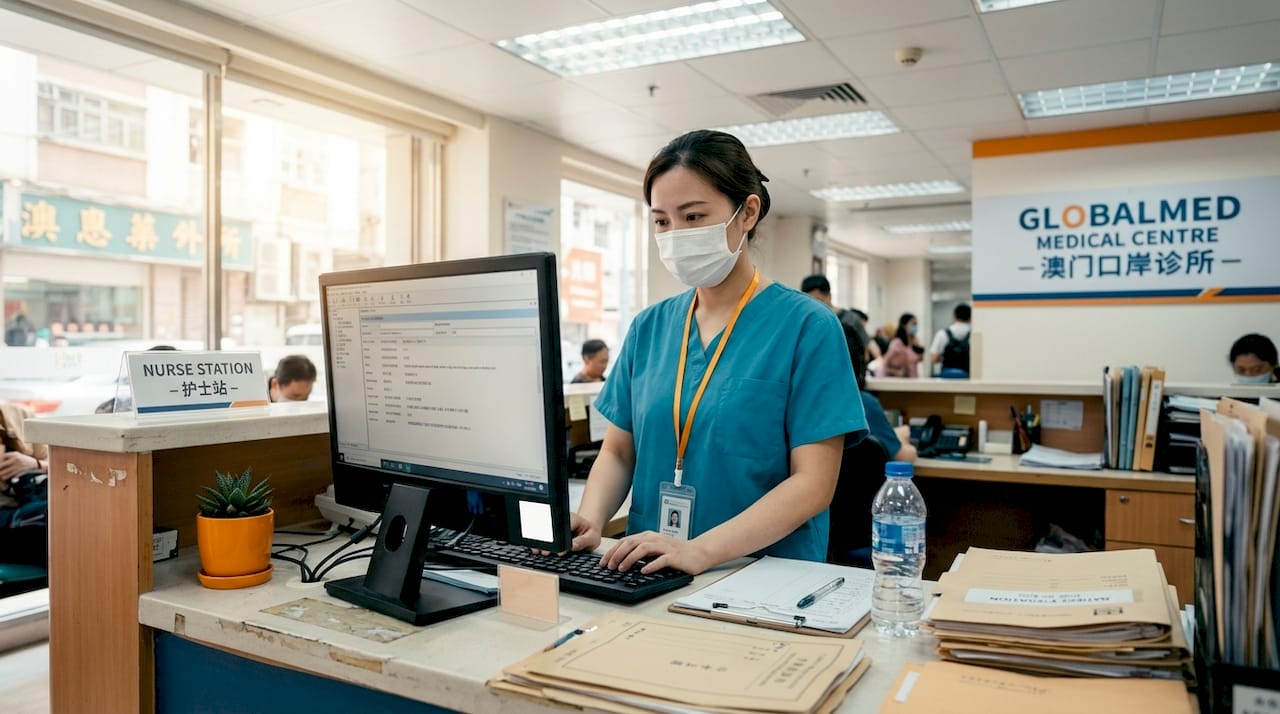
International patients in Macau can access specialty clinics across more than 52 departments at facilities like the PUMCH Macao Medical Center, medical cosmetology at centers like Yin Kui Hospital, health assessments, physiotherapy, and a range of wellness services including TCM. That is a genuinely full-spectrum offering.
Specialty medical clinics
Macau's specialty clinics cover cardiology, orthopedics, dermatology, ophthalmology, and more. For international patients, the key advantage is access to internationally trained specialists who understand the documentation and communication needs of foreign clients. Many clinics maintain English and Mandarin-speaking staff, and some facilitate coordination in other languages through professional interpreters.
You can learn more about the outpatient workflow in Macau to understand how appointment flow, triage, and specialist referral work in practice.
Medical cosmetology and aesthetics
This is one of the fastest-growing reasons international patients visit Macau. Aesthetic treatments like laser hair removal, chemical peels, dermal fillers, botulinum toxin injections, fractional laser resurfacing, and skin brightening procedures are widely available at accredited centers. These treatments are highly compatible with the outpatient model because they are non-invasive or minimally invasive, require no anesthesia, and have short recovery windows.
Pricing in Macau for aesthetic procedures is often more competitive than in Western markets, and the quality of equipment and training at leading centers matches or exceeds what you would find in major European or North American cities.
Wellness, TCM, and physiotherapy
Traditional Chinese medicine has been a cornerstone of healthcare in the region for centuries, and Macau's outpatient centers have integrated it meaningfully into their wellness offerings. Acupuncture, herbal medicine consultations, cupping, and tui na massage are all available at dedicated outpatient wellness departments.
Physiotherapy services attract patients recovering from sports injuries or orthopedic procedures who want specialized rehabilitation without committing to an extended hospital-based program. These services, described in more detail under health and wellness services, are often bundled with specialist consultations for a coordinated care experience.
Health assessments
Executive-style health screenings are extremely popular with international visitors. A structured health assessment can be completed in half a day and includes blood work, imaging, cardiovascular screening, and a physician consultation. You leave with a detailed report you can share with your home doctor.
Pro Tip: Many Macau outpatient centers offer bundled packages that combine a comprehensive health checkup with a cosmetic consultation or a physiotherapy session. These packages are often significantly cheaper than booking each service separately and can be completed across one or two days.
Benefits of global outpatient care for international patients
The practical advantages of outpatient care are significant, but the specific benefits for international travelers go beyond the obvious.
Cost savings remain the top driver. Cost savings up to 40% compared to inpatient alternatives are well documented across ambulatory settings worldwide. When you factor in the lower cost of living in Macau relative to many Western countries, the overall financial benefit to medical tourists can be substantial.
Speed of access is the second major factor. Outpatient scheduling in Macau's international centers often moves faster than in public hospital systems, with appointments available within days rather than weeks or months. For international patients who have planned travel around their care, this predictability is essential.
No overnight logistics simplifies your entire trip. Inpatient care means coordinating hospital stays, potential extensions, discharge paperwork, and the unknowns that come with recovery in an unfamiliar medical environment. Outpatient care lets you stay at your hotel, rest on your own terms, and resume travel as planned.
Here are the core benefits in practical terms:
- Financial efficiency: Lower procedure costs plus no hospital accommodation fees
- Schedule control: Faster booking windows and same-day discharge
- Reduced infection exposure: Less time in clinical environments means lower risk of hospital-acquired infections
- Travel compatibility: Treatments that fit neatly within a short trip
- Access to specialist care: Conditions that might have long waiting lists at home can be addressed promptly
The global market reflects this demand. The outpatient care sector is projected to continue strong growth through 2025 and beyond as ambulatory care adoption accelerates worldwide.
Pro Tip: Before finalizing your Macau outpatient appointment, ask the clinic directly whether they offer language support for international coordination. Some centers have dedicated international patient coordinators who can assist with documentation, insurance paperwork, and pre-visit preparation from your home country.
For international patients ready to take the next step, understanding booking outpatient appointments in Macau will save you time and eliminate confusion about the intake process.
Understanding standards, safety, and the global context
One of the most common concerns international patients raise is whether outpatient care abroad meets the safety and quality standards they expect. The short answer is yes, when you choose accredited facilities. The longer answer is that global outpatient care operates within an increasingly standardized regulatory framework.
Global safety protocols and measurement tools
A specific tool called the Global-PPS Outpatient Module standardizes measurement of antimicrobial prescribing in outpatient settings worldwide. It is used in clinics and primary care facilities to ensure antimicrobial stewardship, meaning that antibiotics and other prescriptions are given appropriately and tracked consistently. This matters for international patients because it signals that outpatient facilities using global standards are not operating in isolation. They are part of a worldwide network of quality monitoring.
How Macau maintains standards for international patients
"Macau balances local priority with tourism via separate international centers," which maintain tailored protocols designed to meet the expectations of foreign patients, including documentation in multiple languages and coordination with international insurance providers.
This structural separation is important. International centers in Macau are specifically equipped to handle the administrative, linguistic, and clinical nuances that come with treating patients from different countries. You are not dropped into a general-purpose clinic and expected to navigate on your own.
Potential hurdles to plan for
Even in well-organized systems, international patients can encounter friction. Common challenges include:
- Medical record access: Your home doctors may use different record formats. Bring complete documentation in both your language and English if possible.
- Language gaps: Even at international centers, some specialist consultations may require interpreter support that must be arranged in advance.
- Continuity of care: Follow-up after you return home requires a well-documented discharge summary that your home physician can act on.
- Insurance classification: Not all international health policies cover outpatient care abroad in the same way they cover inpatient treatment. Clarify this before you travel.
For a deeper look at how care quality is evaluated, the Macau outpatient quality standards resource outlines accreditation benchmarks and what to ask when vetting a clinic.
Always confirm whether the clinic you are considering holds international accreditation and whether they have a dedicated international patient services team. These two factors alone significantly reduce the risk of logistical problems.
Why global outpatient care is reshaping medical travel — and what patients often miss
Here is what we observe repeatedly with international patients who come through Macau's outpatient systems: they underestimate the logistical sophistication the model requires.
Outpatient care looks simple on paper. You arrive, you receive treatment, you leave. But in a medical tourism context, that simplicity is partly an illusion. You still need to coordinate pre-travel diagnostic records, manage insurance pre-authorization, confirm appointment timing across time zones, and arrange appropriate local accommodation that supports post-procedure rest.
The same-day care model used in medical tourism contexts means insurers distinguish care via admission order, not just procedure type. That nuance catches many patients off guard. A procedure that looks "outpatient" at home might be classified differently abroad, affecting reimbursement.
What truly differentiates a great outpatient experience for international patients is not just the quality of the clinical care. It is the scaffolding around it. Pre-visit coordination, reliable communication with the clinic, and post-visit documentation are where things can go wrong if you have not prepared.
Pro Tip: If you are booking multiple outpatient appointments in Macau across specialties, use a facilitator or coordinator who understands both the local system and your insurance structure. Trying to manage the logistics independently across time zones, language barriers, and unfamiliar systems is where patients lose time and money.
The patients who have the best outcomes are not necessarily those who found the cheapest procedures. They are the ones who invested time in streamlining your outpatient journey before they ever boarded a plane.
Explore trusted outpatient care options in Macau
If this guide has clarified what global outpatient care can offer, the next step is finding the right provider for your specific needs.
At Globallmed Macau, we offer a full range of outpatient services designed specifically for international patients, including specialist consultations, diagnostics, and a dedicated team with experience in cross-border patient coordination. Our clinical team speaks your language, literally and logistically. You can explore our full Globallmed outpatient services catalog or browse specific offerings like beauty and wellness treatments designed for medical tourists. Booking is straightforward, and our international patient support is available from your first inquiry.
Frequently asked questions
What types of treatments are most commonly offered in global outpatient care?
Common treatments include diagnostics, minor surgeries, cosmetic procedures, physiotherapy, and wellness services, all without overnight stays, as defined in the scope of outpatient services across clinics and ambulatory centers worldwide.
Is outpatient care in Macau safe for international patients?
Yes. Macau operates dedicated international centers that maintain high safety standards and protocols tailored to foreign patients, as confirmed by policy research on Macau's healthcare model.
Are outpatient procedures really cheaper than inpatient care?
Outpatient care is up to 40% less expensive than equivalent inpatient stays, making it a compelling financial choice for most elective and non-emergency treatments.
What should I prepare before my outpatient visit to Macau?
Bring complete medical records in English, confirm language support with the clinic, verify whether your insurance covers outpatient care abroad, and double-check your appointment timing well before you travel.
How do insurers distinguish between inpatient and outpatient procedures?
Insurers typically use the admission order and discharge timing to classify care. Same-day discharge without formal hospital admission is the standard marker for outpatient classification, though policies vary and should be verified with your provider in advance.