

Most patients can fly a few days after minor outpatient procedures, but many surgeries require a wait of several days to weeks, and major orthopedic, chest, or eye surgery involving intraocular gas can require weeks or more. The exact window depends entirely on your procedure, your mobility, and your bleeding risk, which is why written surgeon clearance always comes before you book a flight. The driving concern behind these ranges is blood clot risk, since immobility during surgery and travel both raise the odds of deep vein thrombosis.
TL;DR:
- Patients on blood thinners or with complications like slow-healing wounds may need to wait longer than standard timelines before flying.
- Intraocular gas or residual pneumothorax requires imaging confirmation of resolved trapped air before air travel, often extending the wait to 2 to 6 weeks.
- A long-haul flight within four weeks after major orthopedic or abdominal surgery can significantly increase the risk of blood clots and should only be considered with medical clearance.
- Using compression stockings, staying hydrated, and walking regularly during flight are critical in reducing clot and swelling risks during recovery travel.
- Any signs of sudden breathlessness, leg swelling, or worsening incision issues during or after the flight demand immediate evaluation rather than delay.
Table of Contents
- How Long to Wait Before Flying After Surgery
- What Are the Main Risks of Flying After Surgery?
- Before You Book: A Pre-Travel Checklist
- In-Flight Precautions for a Safer Recovery Flight
- Warning Signs During or After the Flight
- Special Cases: Joint Replacement, Eye Surgery, and Chest Procedures
- What Do the Guidelines Actually Say?
How Long to Wait Before Flying After Surgery
Timing guidance varies by procedure because the risks differ. A hernia repair carries a different profile than a knee replacement or a retinal detachment surgery, and the wait reflects that.
- Minor outpatient procedures (skin biopsies, cataract surgery without gas, minor dental work): often 24 to 72 hours, once bleeding has stopped and pain is controlled.
- Laparoscopic procedures (gallbladder removal, laparoscopic appendectomy): typically 3 to 7 days, allowing incisions to seal and residual anesthesia effects to clear.
- Orthopedic surgery (joint arthroscopy, fracture repair): commonly 1 to 4 weeks depending on mobility and swelling control.
- Major abdominal or chest surgery: usually 4 to 8 weeks, since these procedures carry higher clot risk and slower tissue healing.
- Eye surgery involving intraocular gas: 2 to 6 weeks, and only after imaging or an ocular exam confirms the gas has resorbed.
These ranges shift the moment anticoagulation, a wound infection, or a surgical complication enters the picture. A patient on blood thinners after a hip replacement may face a longer wait than the standard window, while someone who develops a seroma or a slow-healing incision may need an extra clinical check before flying. Any procedure near the chest or lungs that risks trapped air, including a residual pneumothorax, needs radiographic clearance before departure, not just a calendar countdown.
What Are the Main Risks of Flying After Surgery?
Four physiological problems drive nearly all the caution around post-operative air travel: clotting, bleeding, infection, and gas expansion.
Blood clots (DVT/VTE) form more easily after surgery because tissue trauma triggers clotting factors, and prolonged sitting slows blood flow in the legs. Hospitals and specialty centers note an elevated clot risk for several weeks after most surgeries, and a long flight during that period compounds the danger further, since cabin immobility mimics the same conditions that raise DVT risk on the ground.
- Dehydration from low cabin humidity thickens blood and adds to clot risk.
- Anticoagulant adjustments made around surgery can swing the balance toward either clotting or bleeding, depending on timing.
- Delayed wound care during travel, including missed dressing changes, raises infection risk.
- Gas trapped in the eye, chest, or abdomen can expand at reduced cabin pressure, since commercial aircraft cabins are typically pressurized to the equivalent of 6,000 to 8,000 feet elevation.
Bleeding risk deserves its own mention. Surgeons often pause or reduce anticoagulants before an operation and restart them gradually afterward, and flying during that adjustment period without a clear plan can push a patient toward either a clot or a bleeding event. Infection risk climbs when a wound goes unchecked for hours during travel, particularly with orthopedic hardware or abdominal incisions still healing.
Before You Book: A Pre-Travel Checklist
Booking a flight before you have clearance in hand is the single most common mistake patients make. Work through this sequence instead.
- Get written medical clearance from your surgeon that states the recommended wait time, any activity restrictions, and flags specific to your procedure.
- Finalize your anticoagulation plan. Confirm whether you need to adjust blood thinner timing around the flight and get those instructions in writing.
- Contact the airline about assistance. If you need oxygen, a wheelchair, or extra boarding time, airlines require advance notice and often specific medical documentation.
- Pack wound care supplies and medications in your carry-on. Extra dressings, prescribed pain medication, and any compression garments should never go in checked luggage.
- Notify your travel insurer. Recent surgery can affect coverage, and some policies exclude complications from procedures within a defined window before travel.
Pro Tip: Ask your surgical team for a one-page clearance letter you can show airline staff or airport medical personnel on the spot. It saves time at security and reassures cabin crew if you need help mid-flight.
If your recovery involves ongoing physiotherapy or wound checks, scheduling a follow-up visit through the medical clinic department before departure gives you a documented baseline to compare against if something feels off during travel.
In-Flight Precautions for a Safer Recovery Flight
Once you're cleared to fly, a handful of habits meaningfully lower your risk during the flight itself.
- Get up and walk the aisle every hour, and do ankle pumps and calf flexes while seated.
- Book an aisle seat so you can move without disturbing seatmates or straining to climb over anyone.
- Drink water steadily and skip alcohol, which dehydrates you and can mask early warning symptoms.
- Keep your regular medication schedule, including pain control, and set a phone alarm if the flight crosses time zones.
- Wear graduated compression stockings if your surgeon recommends them. These get measured and prescribed properly by a clinician, not picked off a pharmacy shelf.
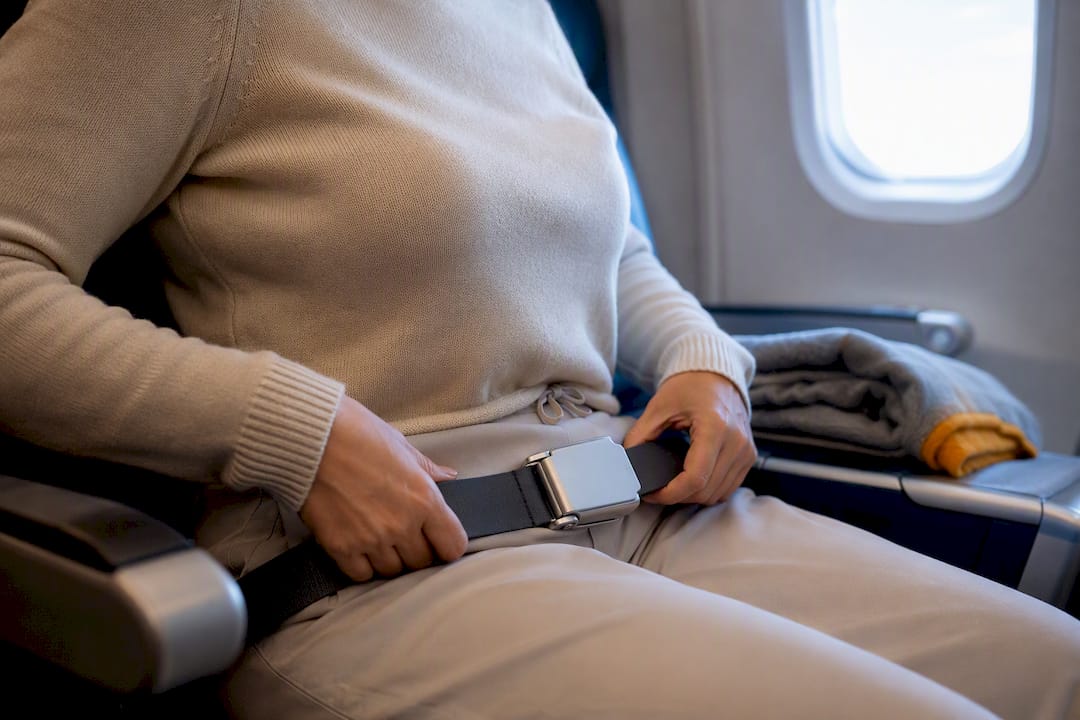
- Use a pillow or blanket to pad any seatbelt pressure point near an incision or cast, and keep dressing supplies within reach in your bag.
Public health travel guidance consistently frames these measures—hydration, mobility, and compression—as low-cost steps with a real payoff for anyone at elevated clot risk during travel.
Pro Tip: If your incision sits near the beltline, ask for a seatbelt extender or loop the belt lower across your hips rather than tightening it directly over the wound.
Warning Signs During or After the Flight
Certain symptoms mean you stop everything and get evaluated immediately, not when you land.
- Sudden shortness of breath or chest pain (possible pulmonary embolism)
- Sudden calf or leg pain, swelling, or warmth (possible DVT)
- Fever, spreading redness, or increasing drainage from an incision
- Sudden vision loss, severe headache, or new neurological symptoms after eye or brain surgery
Tell the flight crew immediately if you're airborne. They can radio ahead for emergency services to meet the plane. On the ground, head to the nearest emergency department rather than waiting for a scheduled appointment.
Special Cases: Joint Replacement, Eye Surgery, and Chest Procedures
A few procedure types come with rules that override the general timing guidance above.
- Joint replacement: extended VTE prevention is common, and many surgeons ask patients to delay long-haul flights 4 to 12 weeks or more depending on how mobility is progressing.
- Intraocular gas (retinal surgery): flying before the gas bubble resorbs risks a dangerous pressure change inside the eye; imaging or an ocular exam should confirm resorption, typically 2 to 6 weeks out, before booking.
- Thoracic or abdominal surgery with residual air: a chest X-ray confirming no trapped pneumothorax is standard before clearing air travel.
- Patients on home oxygen or with cardiopulmonary disease: arrange in-flight oxygen and clearance well ahead of the trip, since airline approval processes take time.
Specialty centers, particularly orthopedic and ophthalmology practices, routinely require a targeted imaging or clinical check before signing off on flying when gas or trapped air is a realistic concern, rather than relying on a calendar date alone.
What Do the Guidelines Actually Say?
Clinical guidance converges on a few consistent points, even though much of the underlying evidence comes from observational studies rather than large controlled trials.
- Clot risk stays elevated for roughly 4 to 6 weeks after most surgeries.
- Several hospital guidelines advise avoiding flights longer than four hours for several weeks after elective surgery, and recommend additional preventive measures for flights taken during the recovery period.
- Intraocular gas and major orthopedic procedures get their own, longer timelines tied to imaging or mobility milestones rather than a fixed date.
Some observational research suggests carefully selected patients can fly safely sooner than these general windows suggest, which is exactly why individualized clinical judgment, not a one-size-fits-all rule, drives the final decision. If you're weighing a trip during recovery, a consultation through Globallmed's medical center can confirm whether your healing is on track for the flight you have in mind, and the full range of surgical and outpatient services covers the follow-up care most post-operative travelers need before they board.
This article is general information, not a substitute for advice from a qualified doctor. Consult a qualified healthcare professional about your own circumstances before acting on anything here.