
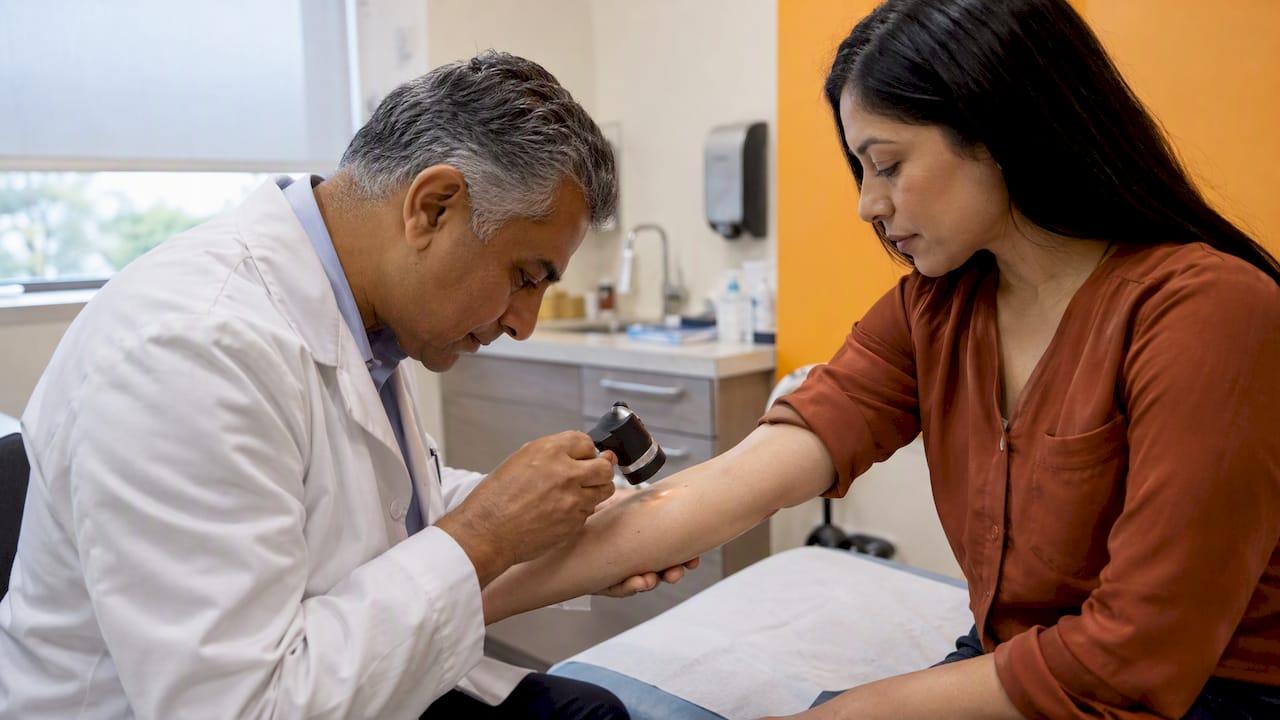
Dermatology is the medical specialty devoted to the diagnosis, treatment and prevention of diseases of the skin, hair and nails. A dermatologist is a physician with postgraduate specialist training, not a beauty practitioner. The role covers common problems such as acne and eczema, chronic conditions such as psoriasis, infections, hair and nail disorders, the assessment of moles and suspicious lesions, and the skin signs of illness elsewhere in the body.
This guide explains how the specialty works in practice: what conditions it covers, what a consultation involves, which procedures are typical, how to look after skin between visits, and how to decide when a concern needs a specialist. Readers in Hong Kong and the wider Greater Bay Area who are considering care across the border will also find a short section on dermatology at Globallmed in Macau.
Table of Contents
- What dermatology covers
- Conditions dermatologists diagnose and treat
- Dermatology and rheumatology: where the specialties meet
- What happens during a dermatology consultation
- Common dermatology treatments and procedures
- Everyday skin health
- When to see a doctor
- Dermatology and neighboring specialties
- Dermatology at Globallmed in Macau
- Book a dermatology appointment
- Frequently asked questions
What dermatology covers
The skin is the largest organ of the body. It forms a barrier against infection, regulates temperature, limits water loss and registers touch and pain. Because it is visible, skin disease is easy to notice, but it is not always easy to interpret. Many conditions look alike on the surface and differ in cause, course and treatment.
Dermatology therefore sits between two worlds. It is a diagnostic specialty, relying on careful examination, targeted investigations and, where needed, laboratory correlation. It is also a procedural specialty, with minor surgery, light-based treatments and topical and systemic drug therapy. Cosmetic dermatology is one branch, but it rests on the same medical foundation.
The specialty is usually described through four broad areas:
- Medical dermatology: inflammatory, infectious, allergic and autoimmune skin disease.
- Surgical dermatology: biopsy, removal of benign and malignant lesions, and reconstruction of small defects.
- Paediatric dermatology: skin disease in infants and children, which often differs in presentation from adult disease.
- Cosmetic dermatology: treatments aimed at appearance, such as pigmentation, scarring and ageing-related change, ideally planned after a medical assessment.
Conditions dermatologists diagnose and treat
The range is wide. The following are the problems most patients present with.
Eczema and dermatitis
Eczema is a group of skin conditions marked by itch, redness, swelling, and dry or cracked skin. Atopic dermatitis is the most frequent chronic form. It is linked to genetic and immune factors and often occurs alongside allergic rhinitis or asthma. It tends to run a relapsing course, with flares and quiet periods. Contact dermatitis, caused by an irritant or an allergen, is a separate entity that is managed by identifying and avoiding the trigger.
Acne
Acne is a disorder of the oil glands and hair follicles. It ranges from occasional blackheads to inflammatory nodules that can leave permanent scars. Early, appropriate treatment is the most reliable way to limit scarring, and persistent or painful acne warrants a specialist assessment rather than repeated over-the-counter trials.
Psoriasis
Psoriasis is a chronic immune-mediated disease that produces well-defined, scaly plaques, most often on the elbows, knees and scalp. It can affect the nails and, in some patients, the joints. Modern treatment is graded to severity, from topical therapy to light therapy and systemic medication.
Fungal and other infections
Tinea (ringworm and athlete's foot), nail fungus, warts (verrucae), bacterial skin infections and viral rashes all fall within dermatology. Hong Kong's warm, humid climate favors fungal infection, so these are frequent complaints. Accurate diagnosis matters, because a rash treated as fungal when it is not, or the reverse, can worsen with the wrong preparation.
Pigmentary disorders
Melasma, post-inflammatory hyperpigmentation, vitiligo and age spots belong here. Each has a different cause and a different response to treatment, and sun protection is a part of nearly every plan.
Hair and nail disorders
Hair loss has many causes: hereditary pattern loss, autoimmune patchy loss (alopecia areata), scarring conditions, hormonal change, nutritional deficiency, stress and medication. Nail changes may reflect a local fungal infection or a systemic disease. Distinguishing between these is a clinical task, not a cosmetic one.
Skin growths and skin cancer
Moles, cysts, benign growths and sun-related lesions are assessed routinely. The key task is to separate harmless lesions from those that need a biopsy. Skin cancer is among the more common cancers in many populations, and early detection improves the likelihood of successful treatment. Changes in an existing mole, or a new spot that grows, bleeds, itches or does not heal, should be examined promptly.
Skin signs of other disease
The skin often reflects internal conditions: thyroid disease, diabetes, liver and kidney disease, allergies, medication reactions and autoimmune disease. A dermatologist may be the first doctor to suspect one of these.
Dermatology and rheumatology: where the specialties meet
Patients sometimes ask how dermatology relates to rheumatology. The two overlap because several autoimmune and inflammatory diseases affect both the skin and the joints or connective tissues.
Examples include:
- Psoriasis and psoriatic arthritis: a proportion of people with psoriasis develop joint inflammation. Skin findings, particularly nail changes, can be an early clue.
- Lupus erythematosus: this may cause a facial rash, photosensitivity and scarring patches, alongside joint, kidney and other organ involvement.
- Dermatomyositis: characteristic skin changes accompany muscle inflammation.
- Scleroderma (systemic sclerosis): thickening and tightening of the skin occurs with involvement of internal organs.
- Vasculitis: inflammation of blood vessels can first appear as purple spots or ulcers on the skin.
In these cases the dermatologist often makes or supports the diagnosis through examination and biopsy, while a rheumatologist directs the management of the systemic disease. Treatment may share medicines that act on the immune system, so coordination between the two is important. If you have unexplained joint pain, swelling or stiffness together with a rash, mention both complaints at the same visit.
What happens during a dermatology consultation
A first visit follows a consistent sequence. Knowing it in advance makes the appointment more productive.
- History. The doctor asks when the problem began, how it has changed, what makes it better or worse, and what you have already tried. Expect questions about itch, pain, family history of skin disease or allergy, occupation, sun exposure, travel, and current and past medication, including creams and supplements.
- Consent. The doctor explains any examination or procedure that is proposed and obtains your agreement before proceeding.
- Examination. The skin is inspected in good light, often with a handheld magnifying instrument called a dermatoscope. The doctor may examine the scalp, nails, mouth and skin folds, even if your concern is limited to one area. A full skin check is standard when moles are the issue.
- Investigations. Depending on the findings, these may include skin scrapings for fungus, swabs for infection, patch testing for contact allergy, blood tests, or a skin biopsy.
- Diagnosis and plan. The doctor explains the likely diagnosis, the treatment options, what to expect and when to return. Treatment is based on evidence and tailored to your age, health and priorities.
Preparing for the visit
Bring a list of all products you apply, including cosmetics and herbal preparations, and your current medication. Photographs of the problem on a day when it was at its worst are useful for conditions that come and go. Avoid applying heavy make-up over the affected area. If you are pregnant or planning pregnancy, tell the doctor early, as this changes which treatments are suitable.
Biopsy
When a lesion is suspicious or a rash cannot be identified by appearance alone, a biopsy may be advised. The area is numbed with local anesthetic, a small sample is taken, and a pathologist examines it under the microscope. Results typically take about a week, and the doctor will review them with you.
Common dermatology treatments and procedures
Treatment is chosen according to diagnosis and severity. Most patients begin with simple measures and move to stronger options only when needed.
Topical treatments
Creams and ointments are the mainstay. They include topical corticosteroids of different strengths, used for short periods to control flares, and non-steroid options such as calcineurin inhibitors for sensitive areas like the face and skin folds. Topical retinoids, antibiotics, antifungals and agents for pigmentation are also common. The strength, quantity and duration should follow the doctor's instruction, because misuse of potent steroids can thin the skin.
Oral medication
When topical therapy is not enough, the doctor may prescribe antihistamines for itch, antibiotics or antifungals for infection, or systemic drugs that act on the immune system for severe eczema, psoriasis or autoimmune disease. These require monitoring and a clear discussion of benefits and risks.
Phototherapy and laser
Controlled ultraviolet light can calm psoriasis, eczema and some pigmentary conditions. Lasers and light-based devices treat vascular lesions, pigmentation, scars and unwanted hair. Their suitability depends on skin type and diagnosis, which is why a medical assessment should precede a device-based treatment.
Minor surgery
Dermatologic surgery, sometimes called dermatosurgery, includes biopsy, excision of moles, cysts and skin cancers, cryotherapy (freezing) for warts and some superficial lesions, and electrosurgery. Where larger reconstruction is needed, a plastic surgeon may be involved.
Skin care education
A large part of dermatology is teaching. For eczema, guidance commonly includes applying moisturizer at least twice daily and straight after bathing, keeping baths lukewarm and short, and using gentle, fragrance-free cleansers. Identifying and avoiding personal irritants and allergens is part of the plan, as is follow-up to check that treatment is being used correctly.
Everyday skin health
Good daily habits reduce the number of visits required. They do not replace medical care, but they support it.
- Protect against the sun. Use broad-spectrum sunscreen, seek shade at midday and wear a hat. In a subtropical climate, ultraviolet exposure is strong for much of the year.
- Moisturize. Dry skin is more prone to irritation and flares. Apply moisturizer after washing.
- Cleanse gently. Avoid harsh soaps, very hot water and vigorous scrubbing.
- Manage humidity and sweat. Change out of damp clothing promptly and dry skin folds and feet well to limit fungal growth.
- Check your skin. Look over your body periodically for new or changing spots, and ask someone to check areas you cannot see.
- Do not self-treat repeatedly. Leftover steroid creams, borrowed prescriptions and online remedies can mask a diagnosis or aggravate it.
When to see a doctor
Mild, short-lived problems can be handled with basic skin care and advice from a general practitioner. Book a dermatology consultation when:
- a mole changes in size, shape or color, or a new spot grows, bleeds or does not heal;
- a rash persists for more than a few weeks or keeps returning;
- itch disturbs sleep or daily activity;
- acne is painful, scarring or unresponsive to simple treatment;
- hair loss is sudden, patchy or accompanied by scalp symptoms;
- nails change in color or shape, or separate from the nail bed;
- a skin condition is accompanied by fever, joint pain or general illness;
- a child has a persistent or severe rash.
Seek urgent medical attention for a rapidly spreading red, hot and painful area, blistering with fever, or a widespread rash after starting a new medicine. These can signal serious infection or drug reaction.
For many people, a general practitioner is a sensible first step. Mild eczema, for example, is often diagnosed and managed in primary care, with referral to a specialist if the condition is severe, urgent or does not respond. At Globallmed, the general practice and medical clinic departments can assess a first complaint and coordinate onward care.
Dermatology and neighboring specialties
Skin disease seldom exists in isolation, and good care often involves more than one discipline.
- Allergy and general medicine: for eczema with asthma or hay fever, or for suspected drug reactions.
- Pediatrics: children with eczema, birthmarks and infections benefit from age-appropriate assessment.
- OB and GYN: pregnancy changes the skin and limits some treatments; vulvar skin conditions need joint assessment.
- Dietetics: nutrition may be relevant to acne, weight-related skin changes and some deficiencies.
- Psychology: chronic visible skin disease affects confidence and mood, and itch and stress feed one another. Support from a psychologist can be part of a treatment plan.
- Plastic surgery: scar revision, larger excisions and reconstruction.
An integrated outpatient center makes these connections easier, since the records and the referrals stay within one team.
Dermatology at Globallmed in Macau
Globallmed is a private outpatient medical center in Macau and describes itself as the territory's largest private outpatient clinic, serving patients of more than 60 nationalities with multilingual staff. Dermatology is offered within the beauty, wellness and wellbeing department, alongside dietetics and plastic surgery. That arrangement allows a medical diagnosis, a cosmetic treatment plan and nutritional advice to be considered together rather than in separate places.
For patients, the center states that it works with direct billing arrangements with major international insurers and provides support for international patients. If you intend to use insurance, confirm coverage and the billing process with the center when you book. Fees for individual consultations are not published on the site, so the center should be contacted for current information.

Skin and general health together
Skin findings sometimes point to something systemic, and a skin consultation can be combined with a broader assessment. Globallmed offers regular and executive health check-ups, including executive programs for women and men. Patients who have had recurrent skin symptoms along with fatigue, weight change or other concerns may find it useful to discuss the options with the clinic.
Travelling from Hong Kong
Residents of Hong Kong and the Greater Bay Area who choose to be seen in Macau should plan the visit around travel time and any follow-up. For conditions needing repeated review, such as acne, eczema or psoriasis, ask at the first appointment how follow-up can be arranged, including what can be handled remotely and what must be done in person. Bring your previous records and a list of current medication.
Book a dermatology appointment
If you have a skin, hair or nail concern that has lasted, recurs or worries you, an early specialist assessment is usually more efficient than repeated self-treatment. You can review the services of the beauty, wellness and wellbeing department and request an appointment through the Globallmed website. Multilingual staff can assist international patients with the booking process.
Frequently asked questions
What is the difference between a dermatologist and an aesthetician?
A dermatologist is a licensed physician who has completed specialist medical training and can diagnose disease, prescribe medication and perform procedures. An aesthetician provides cosmetic skin care such as facials and does not diagnose or treat medical conditions. If a skin problem might be a disease, see a physician first.
What is dermatologic surgery called?
It is usually called dermatologic surgery or dermatosurgery. It includes skin biopsy, removal of moles, cysts and skin cancers, cryotherapy for warts, and other minor procedures, generally performed under local anesthetic as an outpatient.
Do I need a referral to see a dermatologist?
Requirements depend on the provider and on any insurance policy you hold. In a private outpatient setting you can usually book directly, but your insurer may have its own rules. Check your policy and confirm with the clinic when you make the appointment.
How long does it take to see results from treatment?
It varies with the condition. Infections and acute flares may improve within days to weeks, while acne, pigmentation and chronic conditions such as psoriasis often need several weeks to months and regular review. Your doctor should give you a realistic timeline at the first visit.
Can dermatology help with hair and nail problems?
Yes. Dermatologists diagnose causes of hair loss, scalp disorders and nail changes, using examination, tests and sometimes biopsy, and then recommend treatment suited to the cause.