
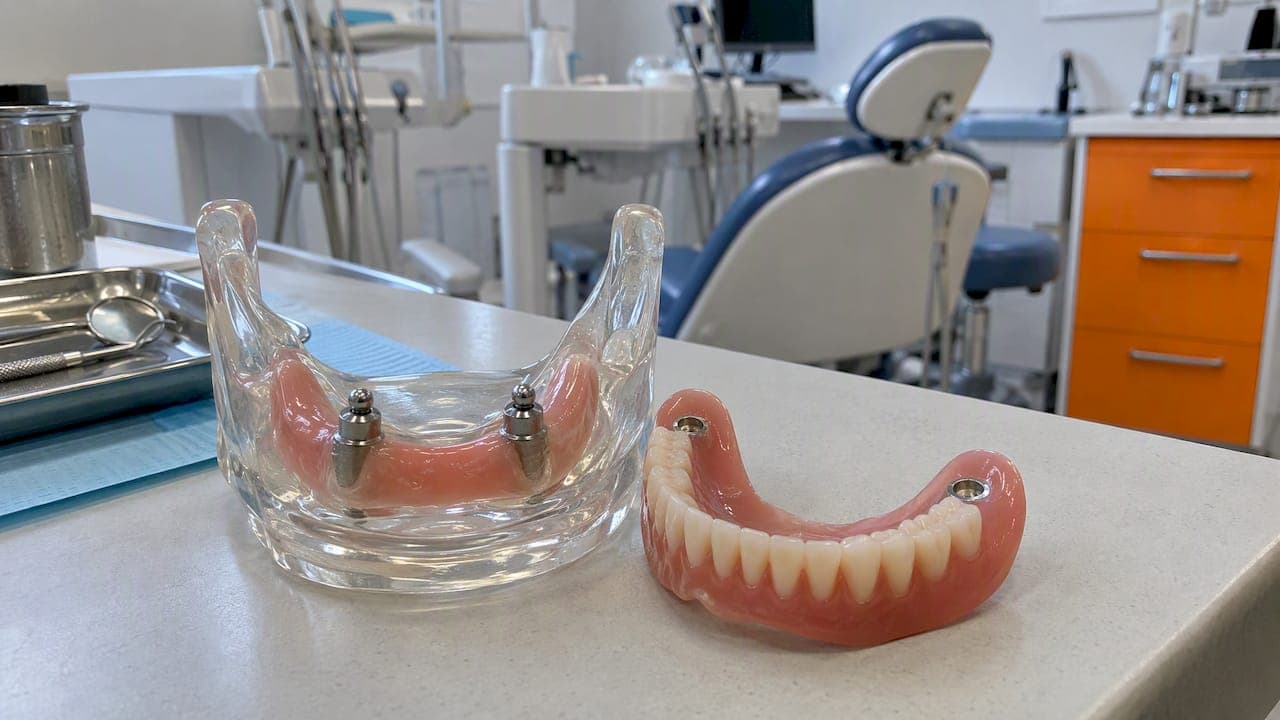
Dental implants generally offer better long-term stability, chewing strength, and bone preservation, while dentures cost less upfront and avoid surgery entirely. The right choice depends on your bone health, budget, and how soon you need a working bite. Implant-supported overdentures often bridge the two, and a clinical assessment is the only way to confirm which path fits your mouth.
Table of Contents
- How dental implants work
- What dentures are and how they fit
- Comparing cost, comfort, and longevity side by side
- Who makes a good candidate for each option
- What the treatment timeline looks like for each path
- Daily care, common complications, and long-term follow-up
- How to decide between dentures and implants
- How we approach tooth replacement at Globallmed Medical Center
- Book a dental consultation at Globallmed
- FAQ
- Sources
How dental implants work
A dental implant consists of three parts: a titanium fixture placed into the jawbone, an abutment that connects to the visible prosthesis, and a crown or denture attached on top. The fixture fuses with surrounding bone through a process called osseointegration, which is what gives implants their stability and helps preserve the jawbone that would otherwise shrink after tooth loss.
Healing typically takes four to nine months, depending on bone quality and whether the implant is placed immediately after extraction or staged in a separate procedure. Once integration is complete, the prosthesis attaches and function approaches that of natural teeth, including a meaningfully stronger bite force than removable options provide.
Implants are used in several configurations: a single crown for one missing tooth, an implant-supported bridge for several teeth in a row, a fixed full-arch prosthesis for an entire jaw, or anchors that retain a removable overdenture. Each configuration suits a different combination of bone volume, number of missing teeth, and patient priorities, which your dental provider at our outpatient specialties can assess during a consultation.

What dentures are and how they fit
Dentures fall into two broad categories: complete dentures, which replace an entire arch, and partial dentures, which fill gaps while natural teeth remain. Within complete dentures, immediate dentures are fitted right after extractions, while conventional dentures are made several weeks later once the gums have healed.
Retention comes from suction against the gums, denture adhesives, or metal clasps anchored to remaining teeth for partials. These retention methods affect speech and chewing, since a denture that shifts during eating limits bite force and can make certain foods harder to manage.
Most dentures need relining or replacement every five to eight years as the jawbone and gum tissue change shape over time. Dentures remain the practical choice for patients with significant medical risk factors for surgery, severe bone loss that would require extensive grafting, or tighter timelines and budgets that make a non-surgical option more realistic right now.
Comparing cost, comfort, and longevity side by side
The upfront cost gap between dentures and implants is real: conventional dentures cost less to produce and fit immediately, while implants involve surgical placement, healing time, and a separate prosthesis phase. Over a longer horizon, the comparison shifts, since dentures typically need relining or full replacement every five to eight years, while a well-maintained implant can last decades.
- Comfort and function: dentures rely on tissue and suction support and typically deliver about 25% of natural bite force, while implants integrate with bone and restore chewing strength much closer to natural teeth.
- Maintenance: dentures require daily removal, cleaning, and overnight soaking, while implants are cared for like natural teeth with brushing and interdental cleaning.
- Longevity: denture replacement cycles run every five to eight years, while implant failure occurs in roughly 5 to 10% of cases, with most successful implants lasting many years when maintained.
- Bone health: dentures accelerate jawbone resorption over time, while implants help preserve bone volume through ongoing functional load.
Patients with implant-supported prostheses report higher quality-of-life and satisfaction scores than those with conventional dentures, largely because stability and chewing function matter more to daily comfort than any single cost figure.
Implant-supported overdentures sit between the two extremes: they cost more than conventional dentures but less than a full fixed arch, and they improve retention and chewing without the full surgical commitment of multiple implants per tooth.
Who makes a good candidate for each option
Candidacy depends on bone volume and density, smoking status, uncontrolled systemic disease, certain medications such as bisphosphonates, and your ability to maintain daily oral hygiene. Patients with thin or resorbed jawbone sometimes need a bone graft or sinus lift before implant placement, which extends the timeline by several months and adds to the overall cost.
- Adequate bone volume and good gum health generally favor implants over dentures.
- Smoking and poorly controlled diabetes can slow healing and raise implant failure risk.
- Severe bone loss or medical contraindications to surgery often point toward dentures or a staged overdenture plan.
- Patients who value long-term durability over lower upfront cost tend to lean toward implants once cleared for surgery.
Pro Tip: Bring a list of current medications and any history of jaw or sinus surgery to your first consultation so your provider can assess candidacy accurately.
Complex anatomy, multiple missing teeth, or significant comorbidities usually warrant a referral to a specialist who can plan grafting or sequencing in detail.
What the treatment timeline looks like for each path
Both paths start with a clinical exam, imaging such as a CBCT scan, and sometimes study models to plan the prosthesis.
- For implants: the fixture is placed first, followed by four to nine months of healing while osseointegration occurs, then the abutment and final crown or prosthesis are attached.
- For dentures: impressions are taken, a try-in appointment confirms fit and bite, the final denture is delivered, and follow-up visits handle adjustments and relines.
- Immediate options exist for both: immediate dentures the day of extraction, or immediate-load implants in select cases, though both carry a short-term adjustment period before the final fit stabilizes.
Recovery after implant surgery involves some swelling and a soft-food period, while dentures require no surgical recovery but do need an adjustment period for speech and chewing.
Daily care, common complications, and long-term follow-up
Implants are cleaned like natural teeth: brushing, interdental brushes, and flossing around the crown and gumline keep tissue healthy. Dentures need daily removal for cleaning with a denture solution, an overnight soak, and should not be worn while sleeping, since continuous wear increases the risk of gum irritation.

Common complications include peri-implantitis around implants, prosthetic wear on denture teeth or clasps, and denture-related ulcers from poor fit. Watch for persistent redness, swelling, or pain, which signal that a professional check is needed rather than home adjustment.
A typical maintenance schedule includes regular recall visits, professional cleanings, periodic relines for dentures, and crown replacement for implants after ten to fifteen years in many cases. Implant survival remains stable even when prosthetic complications occur, largely because consistent follow-up care catches issues before they affect the underlying integration.
How to decide between dentures and implants
Start with a short checklist before your consultation: ask for a detailed cost breakdown, who performs the surgical portion, the estimated timeline, whether grafting is likely, the follow-up plan, and any guarantees on the prosthesis.
- Rank function first if chewing strength and stability matter most to your daily life.
- Rank longevity second if you want to avoid repeated replacements over the coming decade.
- Rank cost third once you know how function and longevity affect your timeline and budget.
An implant-supported overdenture is worth raising directly if you want better retention than a conventional denture without committing to a full fixed-arch implant plan. Bring any prior dental records or imaging to your appointment, and ask for a second opinion if the treatment plan involves extensive grafting or multiple implants.
How we approach tooth replacement at Globallmed Medical Center
Dental care is one of the outpatient specialties available through our medical clinic department, where patients can book a dental assessment directly online. Our staff and professionals support patients, and billing arrangements with insurers help manage the administrative side of treatment.
A typical pathway starts with a clinical assessment and imaging, moves to a personalized treatment plan comparing dentures, implants, or a hybrid overdenture, and continues with scheduled follow-up visits. Every plan is built around your bone health, timeline, and priorities rather than a single default recommendation.
Book a dental consultation at Globallmed
A dental consultation at our clinic includes a clinical assessment and imaging, which gives you the specific information needed to compare dentures, implants, or an overdenture for your situation. This is the right next step whether you are leaning toward surgery now or want a lower-cost option while you plan further ahead.
- Review our dental and medical clinic services to see the full range of specialties available.
This article is general information, not a substitute for advice from a qualified doctor. Consult a qualified healthcare professional about your own circumstances before acting on anything here.
FAQ
Why do dentists discourage dentures in some cases?
Dentures rely on tissue support and suction, which typically deliver a significantly lower percentage of natural bite force and can accelerate jawbone resorption over time. For patients with adequate bone and good overall health, implants are often favored because they preserve bone and restore stronger chewing function.
Does insurance or government coverage pay for dental implants?
Coverage for dental implants varies widely by insurer, plan, and country, so there is no single universal answer. We recommend confirming your specific policy details directly with your insurer, and our outpatient clinic offers direct billing arrangements with several major international insurers for patients using covered plans.
What is the newest type of denture available?
Implant-retained overdentures represent one of the more recent developments in denture design, using two to four implants to anchor a removable prosthesis for improved retention. Attachment systems such as locator or bar designs affect how easily the overdenture can be cleaned and how firmly it stays in place.
What should patients weigh before choosing dental implants?
Implants require a healing period of several months, a surgical procedure, and a higher upfront cost compared to dentures. Patients with limited bone volume, smoking habits, or certain uncontrolled health conditions may need additional evaluation, including a possible bone graft, before implants are a suitable option.
Is it true that implants always last longer than dentures?
Implants generally last longer than dentures, with a small failure rate and successful implants often lasting many years with proper care, while dentures typically need replacement every five to eight years. Outcomes still depend on individual factors like bone health, hygiene, and follow-up care, so results vary by patient.