
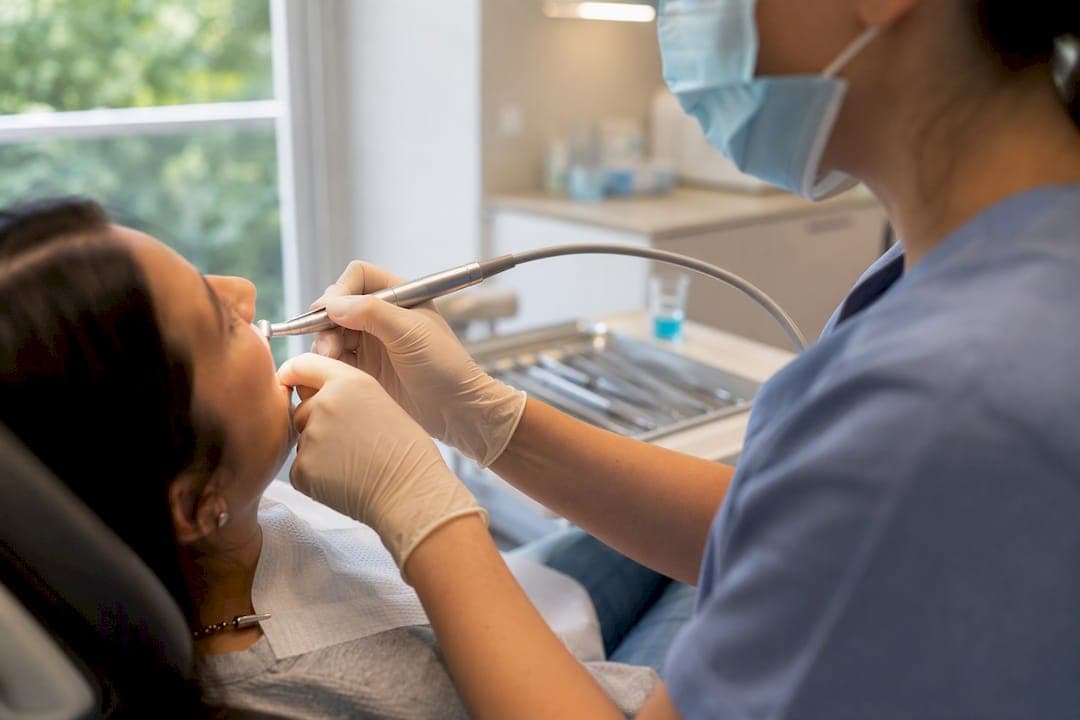
A regular dental check-up is a preventive visit that combines a professional cleaning with an exam of your teeth, gums, and mouth for signs of disease. Many dentists recommend at least one visit a year, and some patients follow a six-month schedule, but that interval is a starting point, not a fixed rule. Your own recall schedule should reflect your personal risk for cavities and gum disease.
A typical visit covers:
- Professional cleaning (prophylaxis) to remove plaque and tartar
- An oral exam checking teeth, gums, bite, and soft tissue
- X-rays when your dentist needs to see below the surface
- A screening for oral cancer and other early warning signs
Key Takeaways
A regular dental check-up combines a professional cleaning with a full oral exam, and the right frequency depends on your individual risk rather than a fixed six-month rule.
| Point | Details |
|---|---|
| Check-ups include four core steps | Health review, cleaning, exam, and X-rays as needed make up a standard visit. |
| Six months is a guideline | Cochrane review evidence supports personalized recall intervals based on individual risk. |
| Some groups need shorter intervals | Gum disease, diabetes, dry mouth, smoking, and orthodontics typically call for more frequent visits. |
| Preventive visits lower long-term costs | Public health data links routine visits to fewer major procedures and lower overall dental costs. |
| Globallmed offers risk-based check-up programs | GLOBALLMED Medical Center's Macau clinic tailors recall schedules through its executive, family, and basic check-up services. |
Table of Contents
- What Does a Dental Regular Check-Up Include?
- How Often Should You Schedule a Dental Check-Up?
- What Does a Dental Check-Up Cost, and What Does Insurance Cover?
- Who Needs More Frequent Dental Visits?
- What Happens During a Dental Check-Up Visit?
- How Do Daily Habits Affect Your Check-Up Schedule?
- How Globallmed Medical Center Supports Routine Dental Care
- Book Your Dental Check-Up at Globallmed Medical Center
- Frequently Asked Questions
What Does a Dental Regular Check-Up Include?
Every visit starts with a short conversation, not a drill. Your dentist or hygienist reviews your medical history and current medications, because conditions like diabetes and drugs that cause dry mouth directly raise your risk for decay and gum disease. Skipping this step means missing context that changes how the rest of the visit is handled.
- Health and medication review. A quick update on changes since your last visit, flagged before any instruments come out.
- Cleaning. The hygienist scales away tartar buildup and polishes your teeth. If you have not been seen in years, this may become a longer debridement session rather than a standard cleaning.
- Exam. The dentist checks for cavities, examines soft tissue for oral cancer signs, evaluates your bite, and inspects existing fillings or crowns for wear.
- X-rays as needed. Bitewing X-rays catch decay between teeth; a full-mouth series is reserved for new patients or when broader bone and root evaluation is required.
Dentists also use this exam window to look for signs of systemic disease, which is part of why routine visits matter beyond your teeth.
Pro Tip: If it has been more than two years since your last visit, tell the front desk when you book. Many offices schedule extra time for a first exam, and knowing in advance avoids a rushed appointment.
How Often Should You Schedule a Dental Check-Up?
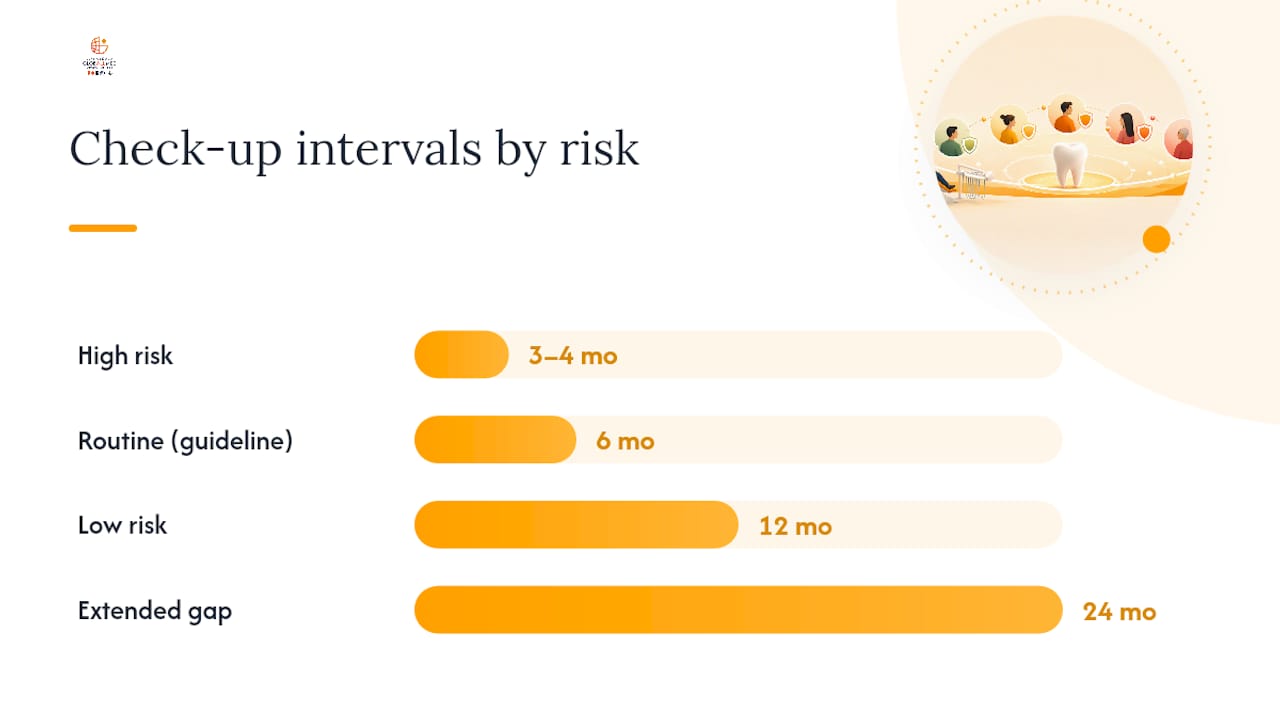
The six-month rule is a reasonable default, not a biological requirement. A Cochrane review of dental recall evidence found that personalized, risk-based intervals hold up better than a blanket schedule applied to every patient regardless of their oral health. Some people do fine checking in once a year; others need to be seen every three or four months to stay ahead of active problems.
Your dentist typically shortens the interval when you have:
- Active gum disease or a history of periodontal treatment
- A high rate of new cavities
- Dry mouth from medications or medical conditions
- A systemic condition such as diabetes that affects healing and infection risk
One finding worth remembering: the research supporting individualized recall intervals comes from a systematic review, not a single study, which is part of why so many dentists now treat six months as a guideline rather than a rule.
Ask directly at your next visit what interval fits your risk profile, and get the next date on the calendar before you leave. A gap of "we'll figure it out later" is how check-ups slip from six months to two years.

What Does a Dental Check-Up Cost, and What Does Insurance Cover?
A routine visit usually breaks into three billable pieces: the exam fee, the cleaning fee, and X-rays if they're taken that day. Costs vary by provider and region, so an exact number is less useful than knowing how to check your own.
Before your visit, it helps to:
- Call your insurer and ask specifically about preventive dental coverage and how many cleanings per year are included
- Request an itemized estimate from the dental office before treatment, especially if anything beyond a standard cleaning is likely
- Confirm the office is in-network to avoid a surprise balance bill
Public health data links regular preventive visits to fewer major procedures and lower costs over time, largely because small problems get caught before they become root canals or extractions.
Who Needs More Frequent Dental Visits?
Certain patients outgrow the standard schedule fast. If any of these apply to you, expect your dentist to recommend shorter intervals between visits:
- Active gum disease, where tartar rebuilds quickly below the gumline
- Recent extensive restorations, which need closer monitoring while they settle
- Dry mouth (xerostomia), often from medications, which removes saliva's natural cavity protection
- Diabetes, which slows healing and raises infection risk in the gums
- Smoking, a major driver of gum disease progression
- Orthodontic appliances, which trap plaque in hard-to-reach spots
- Pregnancy, which can trigger hormonal gum inflammation
Bleeding gums, persistent bad breath, a loose tooth, or unexplained pain are signals to call your dentist directly rather than wait for your next scheduled cleaning.
What Happens During a Dental Check-Up Visit?
A routine visit for an existing patient typically runs 30 to 60 minutes; a new patient exam, especially one that includes a full X-ray series, often takes longer.
- Check-in and paperwork. Update your medical history and insurance details.
- Cleaning. The hygienist removes plaque and tartar, then polishes.
- X-rays, if it's time based on your history and risk.
- Exam. The dentist reviews everything, checks soft tissue, and discusses findings.
- Recommendations. You leave with a plan and your next appointment date.
Bring a current medication list, your insurance card, and, if you're seeing a new dentist, copies or digital records of recent X-rays to avoid retaking them unnecessarily.
Pro Tip: If dental visits make you anxious, say so at check-in, not mid-cleaning. Most hygienists can adjust pacing, offer breaks, or explain each step before doing it, which makes a real difference for nervous patients.

How Do Daily Habits Affect Your Check-Up Schedule?
Brushing twice daily with fluoride toothpaste and cleaning between your teeth daily, whether with floss or another interdental tool, remains the most effective defense against the two problems check-ups exist to catch: cavities and gum disease.
Frequent sugar exposure and snacking throughout the day feed the bacteria that cause decay more than any single big dessert does. Habits matter here more than moderation in any one meal.
- Brush twice a day with fluoride toothpaste
- Clean between teeth daily
- Limit frequent sugary or acidic snacking
- Avoid tobacco, a major gum disease risk factor
Better home care can genuinely earn you a longer interval between visits over time, but that shift happens gradually and only after your dentist confirms your risk has actually dropped, not just your habits.
How Globallmed Medical Center Supports Routine Dental Care
GLOBALLMED Medical Center runs check-up programs designed around exactly this risk-based approach, rather than a single fixed schedule for every patient. Its outpatient dental team in Macau builds each recall interval around your specific exam findings and history.
- Tailored executive check-up programs for adults with more complex risk profiles
- Dedicated executive check-ups for women covering broader preventive needs
- A family and pediatric check-up track for early first visits and ongoing care
- A basic check-up option for general preventive visits
- Direct billing support for patients using insurance, plus multilingual staff for international patients
Book Your Dental Check-Up at Globallmed Medical Center
If you've read this far wondering whether your own schedule is right, the honest answer is that it depends on your risk, and that's exactly the kind of assessment GLOBALLMED Medical Center's dental team is set up to make. Rather than defaulting every patient to the same six-month slot, the clinic evaluates your gum health, cavity history, and any systemic factors before recommending an interval that actually fits you.

GLOBALLMED Medical Center's outpatient dental and medical clinic services in Macau serve both local residents and international patients, with multilingual support and direct billing arrangements for insured patients. Booking takes a few minutes through the clinic's check-up services page, where you can select the program that matches your needs and get a confirmed appointment time. If you're not sure which check-up level fits your situation, the services overview is a useful starting point before you book.
Frequently Asked Questions
How often should adults get a dental check-up? Most adults benefit from a visit every six months to a year, but your dentist may recommend shorter or longer intervals based on your gum health, cavity risk, and any medical conditions that affect your mouth.
What's the difference between a dental check-up and a dental treatment? A check-up is a preventive visit built around exam and cleaning; treatment refers to procedures that fix a specific problem, such as fillings, root canals, or scaling and root planing for gum disease.
Do I need X-rays at every check-up? No. Bitewing X-rays are typically taken every one to two years for most patients, while a full-mouth series is usually reserved for new patients or specific clinical concerns.
When should a child have their first dental visit? Professional guidance recommends a first visit by age one or within six months of the first tooth erupting, with follow-up intervals adjusted based on the child's individual risk.
What should I do if I have dental pain between scheduled visits? Contact your dentist directly. Bleeding gums, swelling, persistent pain, or a loose tooth are signs that warrant attention sooner than your next routine appointment.
This article is general information, not a substitute for advice from a qualified doctor. Consult a qualified healthcare professional about your own circumstances before acting on anything here.