
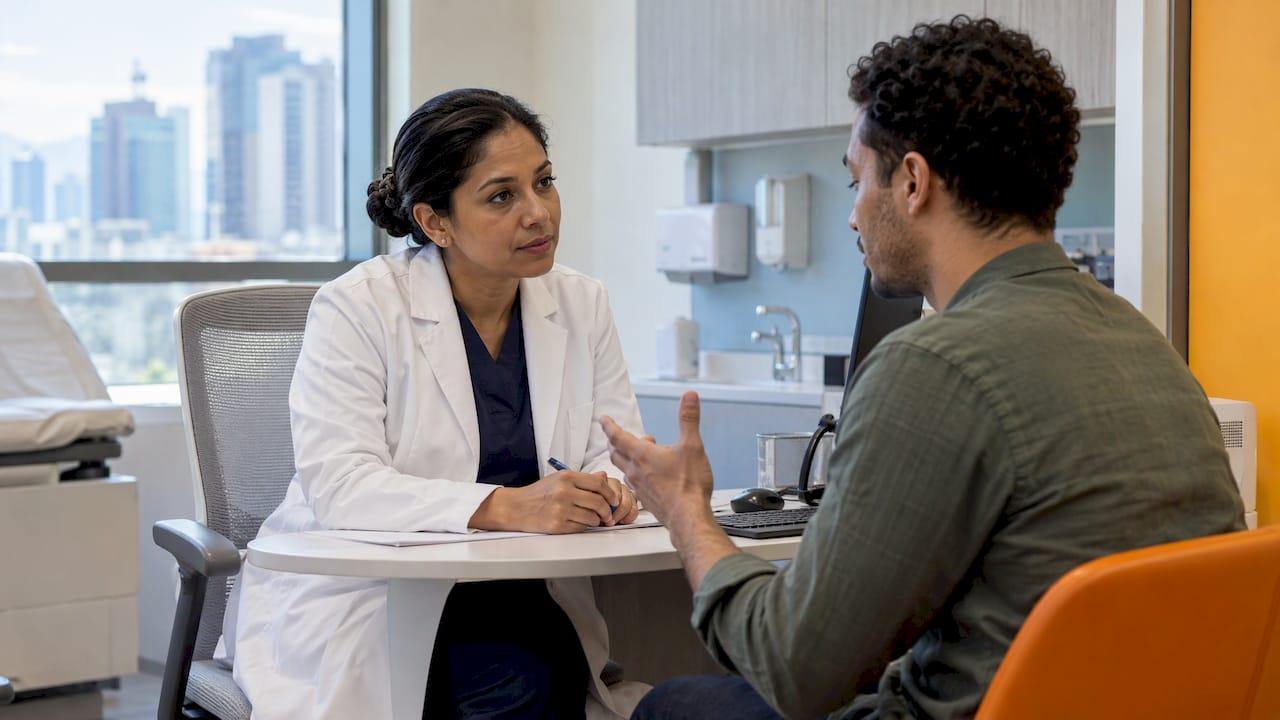
The right plastic surgeon is a licensed, government-certified doctor whose training and day-to-day practice match the exact procedure you want, who explains risks and recovery plainly, and who works in a facility that can support you before and after surgery. In Macau, Globallmed's Plastic Surgery service is part of an integrated outpatient centre with multilingual staff and government-certified medical professionals, so a consultation, related dermatology or dietetic advice and follow-up can be arranged under one roof.
This guide sets out the criteria in the order in which they should be applied. It is written for residents of Macau and the Greater Bay Area, and for international patients who are considering surgery in Macau and need a clear method for comparing surgeons.
Table of Contents
- Start by defining the procedure and the specialty
- Credentials: what to verify first
- Experience with your specific procedure
- The consultation: questions to bring
- Warning signs
- Special considerations for international patients and medical tourists
- Why the setting matters as much as the surgeon
- A practical comparison framework
- Your next step
- Frequently asked questions
Start by defining the procedure and the specialty
Before comparing individuals, establish which kind of surgery you are considering. The terms are used loosely in advertising, and the confusion can lead to the wrong consultation.
- Plastic surgery is the broad specialty. It covers reconstructive work, which restores form and function after injury, illness or a congenital condition, and aesthetic work, which changes appearance by choice.
- Aesthetic (cosmetic) surgery is the elective part of plastic surgery: for example, eyelid surgery, rhinoplasty, breast procedures or body contouring.
- Reconstructive surgery repairs or rebuilds tissue, such as after trauma, tumour removal or burns.
- General surgery concerns the abdomen and many common conditions, such as hernias, gallbladder disease or soft-tissue lumps. It is a different specialty, even though both fields involve operating.
A useful first question is therefore whether your concern is functional, aesthetic or both. A scar that restricts movement, a skin lesion that needs removal and a request for a change in facial contour may begin with different specialists. A general practice consultation at the centre can help clarify which route applies; the General Practice and General Surgery departments are the usual starting point for conditions that are medical rather than cosmetic.
A plastic surgery consultation is the appropriate step for elective aesthetic procedures and for reconstructive needs. If your goal is skin quality rather than an operation, a dermatology assessment may be the better beginning, and it is available in the same beauty, wellness and wellbeing department as plastic surgery.
Credentials: what to verify first
The first filter is not a photograph or a review. It is whether the person is a registered doctor with recognised surgical training.
Professional registration
Every surgeon who operates on you must be licensed to practise medicine in the jurisdiction where the surgery takes place. In Macau, doctors are registered with the territory's health authorities, and you are entitled to know the full name and registration status of the doctor who will treat you. If a clinic or beauty provider refers you to a doctor, ask for the doctor's full name in writing, so that the identity of your surgeon is never in doubt.
Registration is a baseline requirement, not a mark of distinction. It confirms the right to practise. It does not tell you whether the doctor is trained in the particular procedure you want.
Specialist training
Specialist status in plastic surgery is normally earned through a defined, multi-year programme of supervised surgical training, followed by examinations. When you read a surgeon's profile, look for:
- A medical degree and a licence to practise.
- Postgraduate surgical training, ideally in plastic and reconstructive surgery specifically.
- Recognised specialist qualifications, stated by name and awarding body.
- Continuing professional education, since surgical technique and materials change.
Titles deserve care. Phrases such as "aesthetic surgeon" or "cosmetic surgeon" are descriptive and are not always protected titles. A doctor may legitimately perform cosmetic procedures without being a specialist in plastic surgery, and the reverse also applies. What matters is that the training claimed is real and relevant. A clear profile will state the qualification, the institution and the years, not only an attractive title.
Who is permitted to perform the procedure
Invasive procedures, including injections, surgical incisions and deeper skin treatments, are medical acts. They should be performed by a licensed doctor, in a licensed healthcare facility, and not in a salon or by a non-medical operator. This principle is shared by many health authorities, and it is a sound rule wherever you are. At Globallmed, procedures are carried out by government-certified medical professionals in an outpatient medical centre.

Experience with your specific procedure
Plastic surgery is not one skill. Operating on the nose involves bone, cartilage and the airway. Breast surgery is largely a soft-tissue discipline. Eyelid surgery demands fine control in a small area. A surgeon may therefore be excellent in one area and less practised in another, and general experience does not substitute for procedure-specific experience.
When you meet a surgeon, ask directly:
- How were you trained in this particular procedure?
- For how many years have you performed it?
- Roughly how often do you perform it in a typical year?
- Which technique do you recommend for me, and why?
- What can be achieved realistically with my anatomy?
A surgeon who performs a procedure regularly will usually answer these questions without hesitation and will explain the reasoning behind the technique rather than offering a standard script.
Reading before-and-after photographs
Photographs are useful when they are read with discipline:
- Look for patients whose age, skin type, body shape and starting point resemble yours.
- Check consistency across many cases, not a single striking result.
- Confirm that the images are taken under the same lighting, angle and distance before and after.
- Notice whether the style of the results suits your own taste. Each surgeon has a recognisable aesthetic, and satisfaction depends partly on whether you like it.
A small number of exceptional images tells you little. A steady pattern across different patients tells you a great deal.
The consultation: questions to bring
The first consultation is the best opportunity to judge a surgeon. A proper consultation is a medical assessment, not a sales conversation. You should leave with a clear understanding of the plan, and you should never feel pressed to decide on the day.
About the procedure
- What exactly will be done, step by step?
- Which instruments, implants, sutures or materials will be used?
- Are there alternatives, including non-surgical ones?
- What result is realistic, and what is not?
About risks
Every operation carries risks. Bleeding, infection, bruising, haematoma (a collection of blood under the skin), scarring and changes in sensation are among the complications that can accompany invasive cosmetic procedures. A responsible surgeon names the risks that apply to your procedure, explains how likely they are and describes how they are managed. Make sure you understand them before you sign the consent form. Tell the surgeon about your full medical history, regular medication, allergies, previous surgery, smoking and any blood-thinning treatment, because these affect safety and healing.
About anaesthesia and the facility
- What type of anaesthesia is planned: local, sedation or general?
- Who administers it, and what is their qualification?
- Where will the procedure take place, and what emergency arrangements exist?
- Is the facility licensed for the type of procedure?
For smaller procedures an outpatient setting with local anaesthesia is often appropriate. For larger operations the surgeon should explain clearly where and how the procedure will be carried out.
About recovery and follow-up
Ask for a realistic timeline: how long before you can work, travel, exercise or take a flight. Ask who you should contact if you have a concern after the procedure, how follow-up visits are scheduled and what happens if a complication arises. The quality of aftercare is as important as the operation itself.
Warning signs
Some patterns should make you pause and reconsider the provider.
- Unclear identity. You cannot obtain the treating doctor's full name or qualifications.
- Misleading titles. The provider uses a specialist-sounding title that the credentials do not support.
- Non-medical operators. Injections or deeper skin procedures are offered by someone who is not a licensed doctor.
- Pressure. Deposits are demanded on the day, or you are offered a discount for immediate commitment.
- Guarantees. Anyone promising a perfect, risk-free or guaranteed outcome is not describing surgery honestly.
- No discussion of risk. The consultation is all about benefits and photographs.
- No follow-up plan. There is no clear answer on aftercare.
- Unsuitable setting. The procedure is proposed in a setting that does not resemble a medical facility.
Authorities in Hong Kong, for example, have repeatedly warned consumers about beauty providers that use pseudo-medical titles, and about invasive procedures being carried out by people who are not doctors. The lesson applies everywhere: verify who the person is before you verify what they promise.
Special considerations for international patients and medical tourists
Travelling for surgery adds practical questions that residents do not face. Plan for them early.
- Language. Consent, risk discussion and aftercare instructions must be understood completely. Choose a centre where the consultation can be held in a language you are comfortable with. Globallmed serves patients of more than 60 nationalities and has multilingual staff.
- Time. Many procedures need a consultation, the procedure itself and one or more follow-up visits. Allow enough days in Macau, and ask about when it is safe to fly home.
- Insurance. If your insurer covers any part of the care, for example reconstructive work or a medically necessary operation, confirm this beforehand. Globallmed has direct billing arrangements with major international insurers, which reduces the paperwork when cover applies. Purely cosmetic surgery is generally not covered, so confirm the position with your insurer.
- Records. Bring your medical history and any previous reports, and ask for a summary of your treatment to take home so that your own doctor can continue the care.
- Continuity. If you live in Macau, Zhuhai, Hong Kong or elsewhere in the Greater Bay Area, a centre close enough for follow-up visits is a real advantage.
Why the setting matters as much as the surgeon
A surgeon works within a system: nurses, anaesthesia support, sterilisation, records and follow-up. Evaluating the setting is therefore part of choosing the surgeon.
Globallmed describes itself as Macau's largest private outpatient clinic, and its centre has been recognised with the EFQM Excellence Award for high international standards. Its integrated care model matters in plastic surgery because the work often overlaps with other disciplines:
- Dermatology for skin assessment, scars and pigmentation.
- Dietetics for patients who plan body contouring or who need nutritional support to heal well.
- Psychology, available through the multi-therapy department, for patients who wish to discuss expectations and motivation.
- Physiotherapy for movement and recovery after certain reconstructive or body procedures.
- Health check-ups, such as the basic check-up packages and the executive programmes for women and men, which give a clear picture of your general health before you consider elective surgery.
Having these services in one centre means your medical history is in one place, and coordination does not depend on you carrying information between unrelated providers.
A practical comparison framework
Use the table below to compare any surgeon or clinic you consider. Score each line honestly, and do not let a single attractive element, such as a gallery of photos, outweigh a missing one.
| Criterion | What a good answer looks like |
|---|---|
| Registration | Full name given in writing; licensed to practise where you will be treated |
| Specialist training | Named qualifications, institution and years; relevant to plastic and reconstructive surgery |
| Procedure experience | Regularly performs your procedure; explains technique and trains/updates continuously |
| Photographs | Similar patients, consistent results, standardised images |
| Consultation | Unhurried, covers alternatives and realistic outcomes |
| Risk discussion | Specific risks for your procedure and your health history |
| Facility | Licensed medical setting with anaesthesia and emergency arrangements |
| Follow-up | Scheduled visits and a clear contact for concerns |
| Language and records | You understand everything; you receive a written summary |
Your next step
If you are considering plastic surgery in Macau, the most useful step is a consultation in which your goals, your health and the realistic options are discussed face to face. The Plastic Surgery service at Globallmed is available by appointment, and the centre's online booking form accepts requests from local and international patients. Bring your questions from this guide, your medical history and, if you have them, photographs that show what you have in mind. You can also begin at the Globallmed website to see the full range of departments.
Frequently asked questions
What is the difference between a plastic surgeon and a cosmetic surgeon?
Plastic surgery is the formal specialty and includes both reconstructive and aesthetic work. "Cosmetic surgeon" is a descriptive term for a doctor who performs elective appearance procedures, and it does not always indicate specialist training in plastic surgery. Ask for the doctor's specific qualifications and the procedures they perform regularly.
How many consultations should I have before deciding?
There is no fixed number. One thorough consultation may be enough if every question is answered clearly and you feel informed. Take time between the consultation and the decision, and never agree to a procedure on the day if you feel rushed.
Is plastic surgery only cosmetic?
No. A large part of plastic surgery is reconstructive: restoring form and function after injury, illness or a congenital condition. Aesthetic surgery is the elective part, in which patients choose to change their appearance.
Can I combine surgery with a stay in Macau as an international patient?
Yes, many international patients plan consultation, procedure and follow-up within one stay. Discuss the timeline with the surgeon, including when it is safe to travel home, and ask the centre about language support and, where relevant, insurance direct billing.
Do I need a general health check before elective surgery?
A health assessment helps the surgeon judge whether surgery and anaesthesia are suitable for you. Your surgeon will advise which tests are needed, and a check-up package can provide a broader baseline of your health.